













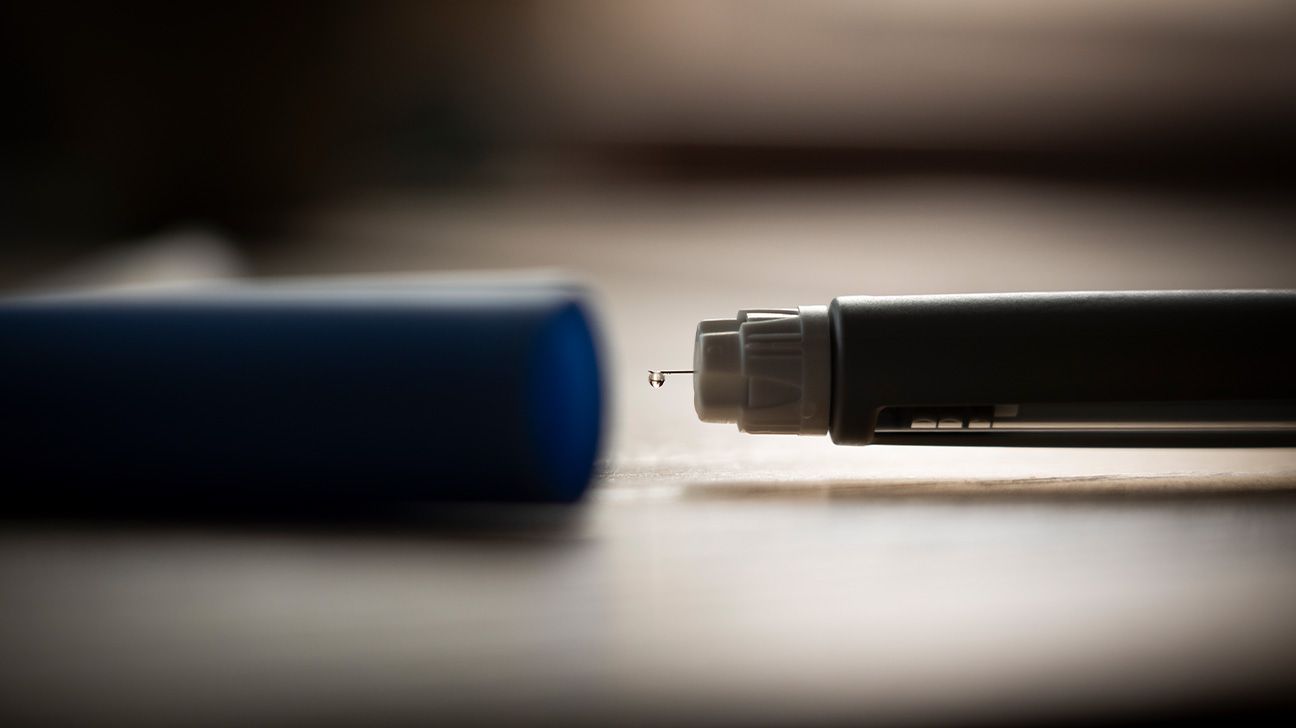
- Microdosing GLP-1 drugs is gaining popularity among people seeking to lose weight.
- The weight loss platform Noom recently launched its compounded GLP-1 microdose injections that claim to promote weight loss with fewer side effects.
- There is no current evidence to support claims about microdosing GLP-1 drugs, and experts raise questions over their safety in light of a recent FDA ban on them.
Microdosing, a so-called wellness trend that’s gained popularity in recent years, typically involves taking small amounts of psychedelic drugs to improve mental health or boost focus and creativity.
The idea was borne out of a desire to reduce any associated “high” or side effects.
Now, taking a small amount of a substance and still receiving some benefits has expanded beyond psychedelics.
Microdosing GLP-1 drugs, the class of obesity and diabetes medications that includes Ozempic, Wegovy, Mounjaro, and Zepbound, has emerged as a weight loss trend.
Anecdotal reports claim that microdosing GLP-1 drugs is more cost-effective and may still offer benefits similar to those of full-dose versions of the medication, such as weight and blood sugar management. However, those claims are not currently backed by scientific evidence or research.
“It’s just a data-free zone,” Sarah R. Barenbaum, MD, an assistant professor of clinical medicine and obesity specialist at Cornell University, told Healthline. “I would say it’s not impossible, it just hasn’t been studied,” she added.
Be that as it may, the weight loss platform Noom recently introduced mini GLP-1 microdoses for weight management.
The platform states that its GLP-1 doses are 25% of a typical starter dose of Wegovy. The cost is also significantly lower: $119 for the first month, followed by $199 a month.
Noom is marketing its GLP-1 microdoses as a more cost-effective way to lose weight with fewer side effects, which may affect GLP-1 drug adherence.
As with other microdosing trends, GLP-1 microdosing is expected to increase in popularity, particularly among telehealth providers, according to eMarketer.
Microdosing GLP-1 drugs must be done with compounded drugs, requiring a patient to draw up and dose themself correctly with a syringe and vial.
Although compounded semaglutide is no longer permitted by the Food and Drug Administration (FDA), Noom appears to be utilizing a personalized treatment exception to market and sell its miniature GLP-1 injections.
However, experts have expressed concern over the safety of compounded GLP-1 medications due to their lack of oversight and regulation. These concerns contributed to the FDA’s recent ban on compounded GLP-1s.
Caroline Apovian, MD, a professor of medicine at Harvard Medical School and the co-director of the Center for Weight Management and Wellness at Brigham and Women’s Hospital, told Healthline in an earlier interview that there is “absolutely no data” to support microdosing GLP-1s.
Apovian said there’s a real potential for overdose and contamination by patients attempting to self-administer compounded forms of GLP-1s at home. “It is not recommended. There are many things that can go wrong,” she said.
There are many reasons why someone might want to try GLP-1 microdosing. These could include:
- cost of medication
- access to medication
- side effects
- desire for a smaller amount of weight loss
- stigma around obesity medication
- weight management
Experts interviewed by Healthline say they don’t prescribe compounded GLP-1s at their clinics, but both acknowledge the ongoing challenges related to cost, insurance coverage, and access to these medications.
“A lot of insurance companies do not cover anti-obesity medication. That’s the big deal. We don’t have access,” said Apovian.
At her clinic, Barenbaum said she prescribes some GLP-1s off-label, which may involve prescribing a lower dose, most often due to cost and tolerability.
“These medications are not covered by a lot of insurance companies, and out of pocket, they can be a thousand dollars a month. They’re very expensive. So what we might do is prescribe the highest dose of Ozempic pen and teach people how to do low doses on it,” she said.
Barenbaum said name-brand Ozempic pens allow patients to manually toggle their dose.
Proponents of GLP-1 microdosing claim the mini doses help promote weight management after weight loss, but Barenbaum remains skeptical.
“If you reduce the dose after they plateau somewhere, there’s a risk of having an increased appetite, increased cravings, and regaining weight,” she said.
Research has shown that individuals who go off of a GLP-1 drug tend to regain much of the weight lost.
Learn more about how to get GLP-1 medications like Ozempic, Wegovy, and Zepbound from vetted and trusted online sources here:
Microdosing a GLP-1 drug is not inherently more dangerous than taking a standard dose, assuming you have a legitimate prescription and are working with a healthcare professional.
However, there are some very real risks related to using compounded drugs, in general.
With the growth and availability of compounded GLP-1s, overdoses and calls to poison control centers have spiked in the United States. Unlike name-brand drugs that are prescribed in pre-filled pens, compounded versions require patients to measure and administer their medication themselves.
This has led to individuals accidentally overdosing with, in some cases, as much as ten times their prescribed dose.
“You can [also] contaminate the vial and inject it into your stomach and get an infection. It’s not meant to be taken like that,” said Apovian.
Of course, because compounded drugs are not FDA-approved, they’re not held to the same rigorous standards as other medications.
The biggest potential concern about GLP-1 microdosing is that a person may not be taking enough of a medication to treat the condition for which it has been prescribed.
“Anecdotally and in my clinical practice, it’s more rare that I see people on lower doses who are very successful long term,” said Barenbaum.