














- As kratom use increases in young people, the FDA has begun to crack down on kratom products, particularly those containing the opioid substance 7-OH.
- Up to one-third of kratom users experience adverse side effects, which may involve cardiac arrest, liver damage, brain bleeding, seizures, and in some cases, overdose deaths.
- Experts say physicians should routinely ask patients about their kratom use.
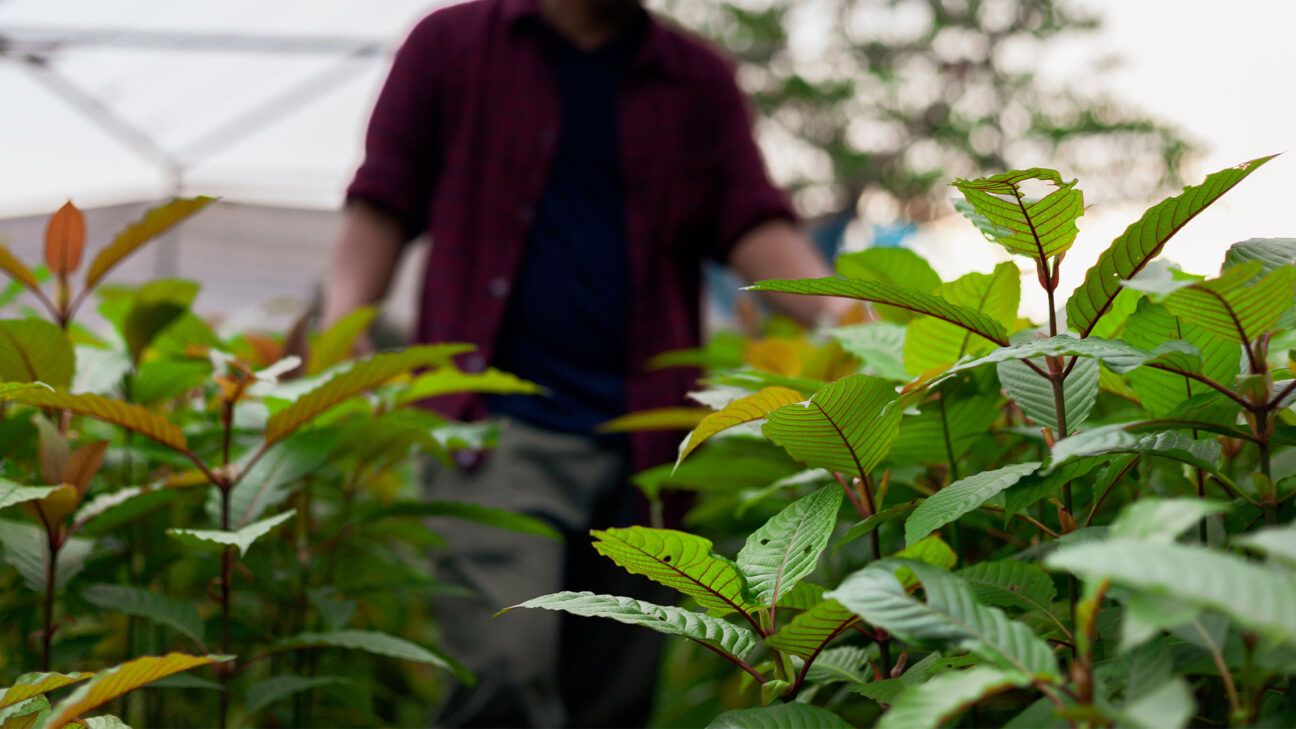
Kratom is an herbal leaf from Mitragyna speciosa, a tropical evergreen tree in the coffee family. The tree is native to Thailand, Indonesia, Myanmar, Malaysia, and other Southeast Asian countries.
People use the leaves or extracts from the kratom plant as a stimulant, mood enhancer, or sedative.
Kratom is unregulated and widely available for purchase across the United States.
An estimated 1.9 million Americans ages 12 years or older used kratom in 2022, according to the Substance Abuse and Mental Health Services Administration (SAMHSA).
Rates of kratom use were highest among young adults ages 18 to 25, followed by adults 26 or older, and adolescents ages 12 to 17, SAMHSA reports.
Now, health officials are cracking down on the widespread use of the substance.
The Food and Drug Administration (FDA) recently launched a
While only trace amounts of 7-OH can be found in kratom products, experts warn of potential adverse side effects ranging from cardiac arrest to liver damage or overdose.
Here’s what you need to know about kratom and why you may want to steer clear.
Kratom is available in tobacco, vape, and natural product stores, among others. It comes in several forms and can be smoked, vaped, drunk, or swallowed in capsule form.
Kratom is also used to relieve chronic pain, treat anxiety and depression, or reduce opioid withdrawal symptoms, such as when stopping heroin or morphine.
There is little evidence to support the use of kratom for these purposes. The drug also hasn’t been approved for medical use.
Although kratom is widely available in the United States, the Drug Enforcement Agency (DEA) considers it a “drug of concern.”
According to the
However, kratom remains unregulated in most states except Alabama, Arkansas, Indiana, Rhode Island, Vermont, and Wisconsin, according to the Congressional Research Service. Legislators in several of those states have introduced bills that would permit the sale of kratom products.
In Tennessee, the ban on kratom extends only to synthetic versions of the drug, not to the plant itself.
Although kratom is unregulated and legal, the substance produces similar effects to controlled substances.
“Kratom acts as a stimulant at low doses but acts as an opioid at higher doses,” explained Natalie Klag, MD, assistant professor of psychiatry in the Department of Psychiatry & Behavioral Health at The Ohio State University Wexner Medical Center and College of Medicine.
A 2024 research commentary called kratom an “emerging issue” and asserts that physicians should view kratom the same as other recreational drugs like cannabis, cocaine, methamphetamines, and heroin.
The authors suggest that doctors should routinely ask their patients about kratom, due to the substance’s widespread use.
“We believe it’s time for physicians to embrace asking about kratom due to its effects, safety profile, widespread availability and largely unregulated status,” researchers from the University of New Mexico School of Medicine and WorkIt Health wrote in the Annals of Internal Medicine.
Tildabeth Doscher, MD, a preventive medicine physician specializing in public health in Buffalo, NY, who was not involved in the commentary, agreed.
“Kratom is definitely something I see in my practice because it is a substance that people do become physically and psychologically dependent on,” Doscher told Healthline.
Healthgrades is owned by RVO Health. By clicking on this link, we may receive a commission. Learn more.
“[Kratom’s easy] availability communicates a level of safety that is misleading,” Klag told Healthline, “and can often lead to people delaying medical management if their use is out of control.”
In the research commentary, the authors wrote that up to one-third of kratom users experience an adverse side effect.
A 2022 study links kratom use to multiple adverse events, including:
- cardiac arrest
- irregular heart rhythm
- liver and kidney injury
- brain hemorrhage
- visual disturbances
- seizures
- aphasia (language disorder)
- neonatal abstinence syndrome (when a baby is exposed to a drug in the womb)
- death
Kratom products have also been found to contain dangerous contaminants such as toxic metals and Salmonella, the authors of the new commentary write.
According to data from the
Klag said kratom use can even complicate the prescribing of medications for other substance use disorders.
“Naltrexone, a medication commonly used for opioid use disorder and alcohol use disorder, would cause significant withdrawal symptoms if initiated in someone using kratom,” she said.
“Kratom has also been shown to have significant interactions with psychiatric medications, such as Seroquel,” she added.
There is little research on whether kratom is addictive or causes dependence.
However, “kratom has been implicated in numerous studies as a highly addictive substance,” the authors of the commentary wrote, “with reports of tolerance, dependence, and withdrawal, which is characterized by hostility, irritability, emotional lability, and delusions.”
Withdrawal from kratom is associated with psychiatric disturbances such as:
- nervousness and restlessness
- irritability and anger
- violent and intrusive thoughts
- hallucinations
- increased anxiety
- depression
A 2010 case report published in European Addiction Research found the following withdrawal symptoms in a 44-year-old man who had been using kratom:
- anxiety
- restlessness
- tremor
- sweating
- cravings
A 2016
Despite this evidence, kratom use disorder is not included in the Diagnostic and Statistical Manual of Mental Disorders, Fifth Edition, the commentary authors point out.
However, one survey found that 12.3% of people who use kratom would qualify as having a use disorder, the authors said.
In her practice, Doscher sees patients with symptoms of kratom use disorder. “At high doses, kratom is like an opioid — people go through withdrawal,” she said. “I have people who are kratom dependent, who I put on buprenorphine, same as if they were using fentanyl, methadone, etc.”
While there is no standard treatment for kratom use disorder, some research suggests that buprenorphine may be an effective treatment. This prescription drug is used to treat opioid use disorder.
Doscher has found that kratom addiction is easier to treat than an opioid addiction. “I’ve never had to treat someone with a kratom dependence with methadone,” she said.
Methadone is another prescription drug used to treat opioid addiction.
Experts advise more education around the substance and improved tools to counsel and assess a person’s kratom use.
“Physicians would need further education on how kratom works, how it is consumed, the effects of discontinuation, as well as potential medication interactions and medical complications it can cause,” Klag said.
Doscher said educating physicians about kratom should begin as early as possible in their careers. “The opportunity to train physicians [about kratom] is small,” she said. “The bigger opportunity would be to train medical students.”
Doscher, who offers substance use treatment and trains primary care doctors on substance use treatment, thinks the question that doctors ask patients should be broader: “Do you take anything at all that isn’t prescribed to you?”
“Substance use treatment should be much more widespread,” she noted. Also, “people need to understand that when they are not in control of using a substance, that’s a problem.”
Klag agreed that physicians should stay informed about the risks of kratom and emphasized open and transparent conversations with their patients.
”Patients need to feel comfortable bringing this information to us so that we can provide guidance and education in a safe environment,” she said. “Otherwise, they will get information from unreliable sources.”