














The Fast Facts
- Ashwagandha is an adaptogenic herb, which means it contains compounds that may help the body manage stress.
- Other potential benefits include reduced anxiety, improved sleep, and boosted immunity. Ashwagandha is generally considered safe for short-term use, and ongoing research is exploring its long-term effects.
- The best ashwagandha supplements contain high quality ingredients, have positive customer reviews, and undergo rigorous testing. Our top extra-strength pick is Nutricost Ashwagandha Root Extract.
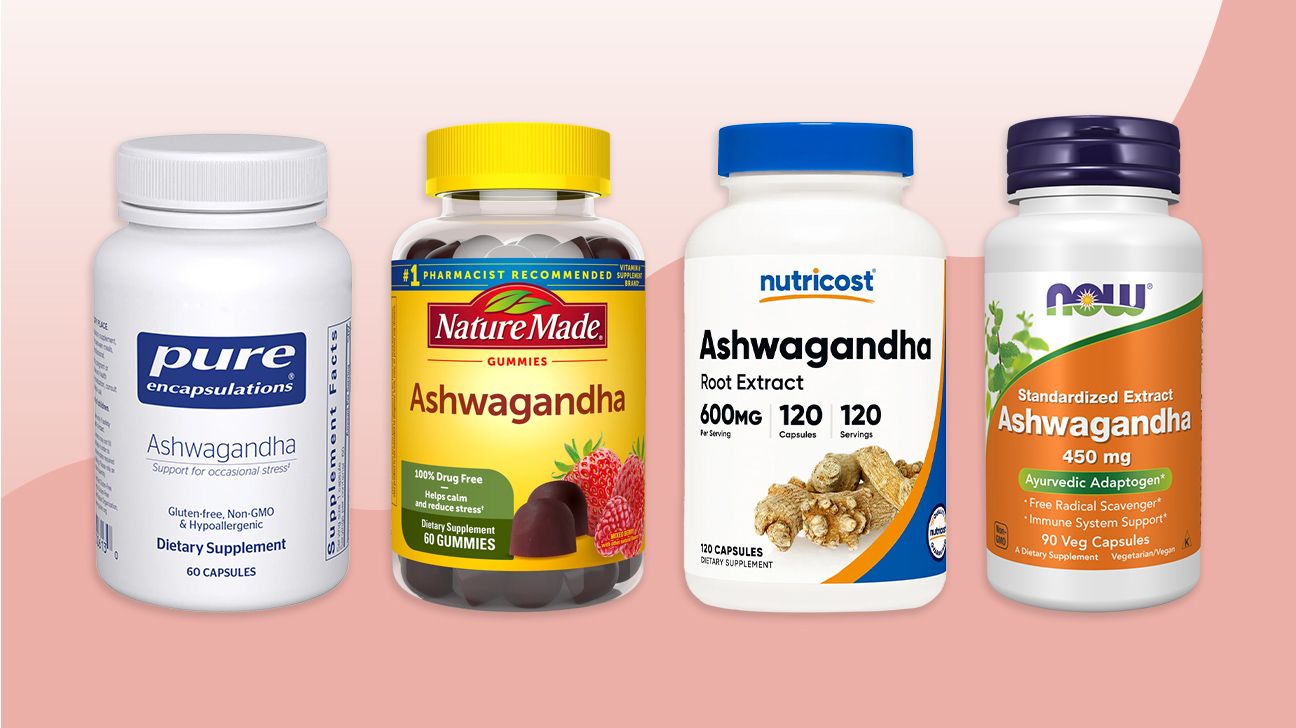
| Brand | Best for | Number of servings | Dose | Price |
|---|---|---|---|---|
| NutriCost | extra strength | 120 per container | 600 mg | $14.95 |
| Nature Made | gummies | 30 per container | 300 mg | $19.99 |
| Pure Encapsulations | capsules | 60 per container | 500 mg | $26.20 |
| New Chapter | sleep | 30 per container | 25 mg | $12.97 |
| Moon Juice | powder | 72 per container | 600 mg | $38 |
| Now Foods | vegan/budget-friendly | 90 per container | 450 mg | $10.40 |
All brands and products we feature undergo our thorough Healthline vetting process.
For this list, we considered the following factors:
- Ingredients: We looked for products that are made from high quality ingredients and contain minimal amounts of added sugars and artificial additives.
- Quality testing: In addition to ensuring the ingredients are well-sourced, we prioritized brands and products that undergo third-party testing and have certifications to show they are safe for consumption.
- User reviews: Healthline lookas at user reviews to understand how existing customers like the products and brand.
- Brand reputation: We always do our best to show reputable brands. For example, we check that every brand is compliant with labeling requirements per the Food and Drug Administration (FDA).
- Price: We included options to suit a variety of budgets.
Ashwagandha, also known as Indian ginseng, has been in use as a medicinal plant for
It comes from the extracts of the roots of an evergreen shrub that is native to India, Africa, and the Middle East.
It is considered an adaptogenic herb. This means it contains compounds called adaptogens that may help counteract the harmful effects of stress on the body.
One of these compounds is a group of substances known as withanolides, which are thought to be responsible for its benefits, such as reducing stress, improving sleep, boosting energy, and supporting overall well-being.
There are several forms of ashwagandha, and they mostly differ based on how they are prepared. The
- Root-only extracts: The most common form, reflecting traditional Ayurvedic use.
- Root and leaf extracts: Includes both plant parts.
- Whole root powder or granules: Less processed and less concentrated, so higher doses are usually needed to achieve the same effects as standardized extracts.
- Standardized extracts: Formulated to contain a specific percentage of withanolides for consistency.
KSM-66 is an example of a root-only, standardized extract formulated to contain a consistent amount of withanolides (around 5%). Many clinical trials use KSM-66 due to its reliable and reproducible effects in studies. Other formulations include Sensoril or Shoden, which are root and leaf extracts.
Ashwagandha can be taken as capsules, powders, or liquid extracts.
Most clinical studies on ashwagandha use doses of
You may prefer to take it in the morning to support energy and focus or in the evening to help with relaxation and sleep.
Powders can be mixed into water, milk, or smoothies, while you should take capsules or tablets with water.
Tips for best results
- Take ashwagandha consistently each day to notice effects over time.
- Start with a lower dose to see how your body responds, then gradually increase if needed.
- If you have medical conditions or take medications, check with a healthcare professional first.
According to a 2023 review, some potential health-promoting benefits of ashwagandha may include:
- Brain and neuroprotection: Supports memory and learning, protects neurons from damage, decreases brain inflammation, and reduces harmful proteins in the brain linked to Alzheimer’s disease.
- Mental health and mood: Reduces stress and anxiety, eases obsessive-compulsive disorder (OCD) symptoms, and supports alcohol withdrawal management.
- Immune and anti-inflammatory: Lowers inflammation, boosts immune cell activity, and supports natural killer cell function.
- Antibacterial and antifungal: Inhibits the growth of harmful bacteria, fights fungal infections, and supports oral and gut health.
- Reproductive health: Improves sperm quality and motility, supporting male fertility.
- General health and longevity: Protects cells from oxidative stress and supports healthy aging.
However, it’s important to note that research on ashwagandha is ongoing. More studies are needed to confirm its potential therapeutic uses and to determine the optimal dosage.
Ashwagandha appears to be safe for up to about
Ashwagandha may cause drowsiness, stomach upset, diarrhea, and vomiting. In rare instances, supplementation has also been linked to liver injury.
You should
- are pregnant or breastfeeding
- are about to have surgery
- have an autoimmune disease
- have a thyroid disorder
- have hormone-sensitive prostate cancer
- are taking immunosuppressants, sedatives, anticonvulsants, or medications for thyroid hormones, diabetes, or high blood pressure
There are several forms of ashwagandha, and they differ based on how they are prepared.
The four main forms used in research and supplements are:
- root-only extracts
- root and leaf extracts
- whole root powder or granules
- standardized extracts
Standardized extracts like KSM-66 (root only) and Sensoril (root and leaf) are the most studied and commonly used for overall wellness.
The most trusted brand of ashwagandha depends on quality, certifications, and customer reviews.
Brands like Nutricost, Nature Made, New Chapter, Now Foods, and Pure Encapsulations all offer good quality ashwagandha supplements.
When choosing a supplement, look for products that have transparent ingredient sourcing, relevant certifications, and positive customer feedback.
The best variety of ashwagandha often depends on your health goals and how you plan to take it. Two of the most studied formulations are KSM-66 and Sensoril.
KSM-66 is made exclusively from the root of the herb and is often used for stress reduction and general wellness. Sensoril combines both root and leaf extracts and may offer stronger effects for stress and cognitive support.
Most clinical studies on ashwagandha use doses of 300 to 600 mg per day of a standardized extract containing 2.5% to 5% withanolides. This amount is typically split into one or two doses.
The ideal level can vary based on the form, personal tolerance, and health goals, so it’s best to follow the product’s directions and seek guidance from a healthcare professional.
Ashwagandha may help the body manage stress, improve sleep, and support overall well-being.
While ashwagandha supplements are generally considered safe for short-term use, it’s important to follow recommended dosages and consult a healthcare professional if you have underlying health conditions or take medications.
With a variety of supplement forms and strengths available, choosing a high quality, reputable product can help you get the most reliable benefits.
As research continues, ashwagandha remains a promising natural option for supporting both mental and physical health.