














Key takeaways
- Melatonin is a hormone naturally produced by the brain that helps regulate sleep by responding to darkness.
- Research suggests that melatonin supplements may support better sleep quality in some people.
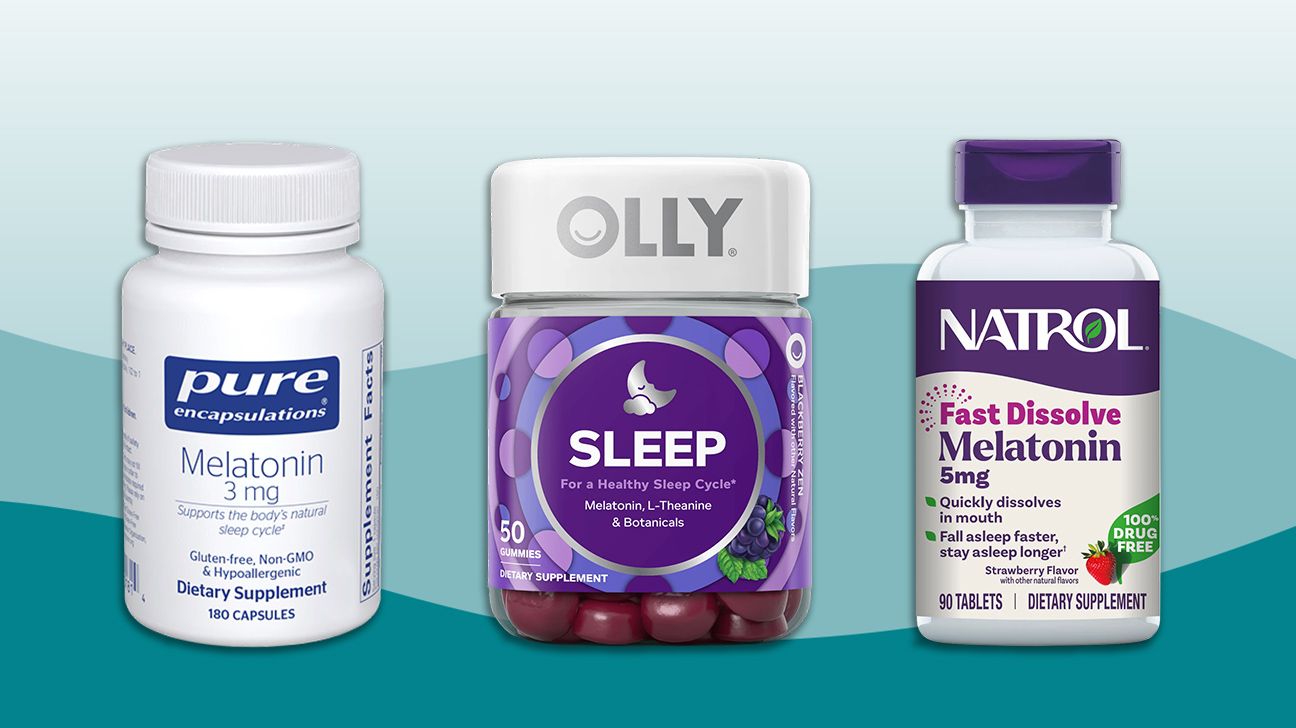
- After reviewing nearly 20 melatonin supplements, we chose Pure Encapsulations Melatonin Capsules as our top pick for their clean, high-quality ingredients.
According to the Centers for Disease Control and Prevention (CDC), roughly
But melatonin, a widely available supplement, may help with several sleep issues.
A
Keep reading for our picks of the 7 best melatonin supplements.
A note on price
General price ranges are indicated below with dollar signs ($–$$$$). One dollar sign means the product is rather affordable, whereas four dollar signs indicate a higher cost.
Generally, prices range from $0.03–$1.67 per serving, or $12.39–$49.95 per container, though this may vary depending on where you shop.
Pricing guide
- $ = under $0.20 per serving
- $$ = $0.20–$0.50 per serving
- $$$ = 0.51–$1.00 per serving
- $$$$ = over $1.00 per serving
Here’s a quick look at how our top picks compare:
• passionflower extract
• lemon balm extract
• L-theanine
• calcium
• reishi mushroom extract
• L-theanine
• apigenin
How we chose
When selecting the best melatonin supplements, we considered the following factors:
- Ingredient transparency: Packaging for all products on our list states exactly what’s in each dose.
- Customer reviews: All these products have mostly positive reviews on retail sites.
- Quality testing: We chose products that are tested throughout the manufacturing process to ensure purity and potency, ideally by a third-party organization.
We also aimed to choose supplements with a variety of price points, application methods, ingredients, and flavors.
Why you should trust us
Every brand and product on our list has been vetted to ensure that it aligns with Healthline’s brand integrity standards and approach to well-being. Each product in this article:
- adheres to allowable health claims and labeling requirements, per Food and Drug Administration (FDA) regulations
- is manufactured in facilities that adhere to
current good manufacturing practices (CGMPs) established by the FDA. - is produced by a medically credible company that follows ethical, legal, and industry best standards
- is made by a company that provides objective measures of trust, such as having its supplements validated by third-party labs
Melatonin is a hormone that your brain naturally produces. It
Melatonin supplements are
Not all melatonin supplements are the same. Read and follow the label carefully. If you’re not sure what to do, ask a pharmacist for instructions on how to take melatonin.
Doses of melatonin used in research studies are
Little is known about the long-term effects of taking melatonin. If you find that you have to take it most nights for more than 1 month, you should talk with a healthcare professional to rule out underlying sleep disorders or other health conditions that may be affecting your sleep.
Short-term melatonin use is safe for most people. However, at higher doses, it may lead to side effects such as:
- headaches
- dizziness
- nausea
- drowsiness
People who are pregnant or nursing
Melatonin can interact with other drugs and supplements. If you’re taking over-the-counter or prescription medication or other supplements, it’s especially important to talk with your doctor before taking melatonin.
Unfortunately, not all supplement brands are trustworthy. This is why consumers should purchase supplements only from trusted brands that produce safe, high quality supplements.
In addition to factors such as price, flavor, route of administration, and dose, it’s important to assess the product label and packaging.
Look for the following:
- Does the label make claims that sound too good to be true? For instance, does it claim to cure insomnia? Exaggerated claims can signal a scam.
- Has the company or product received an
FDA warning letter orrecall alert ? If so, you’ll want to steer clear of it. - Are the ingredients listed? Does the supplement contain
ingredients that are banned by the FDA ? - Does the product have a USP verification mark or NSF certification? This signals that the ingredients in the product correspond to those on the label.
The most effective brand of melatonin supplements may vary depending on individual needs.
Pure Encapsulations Melatonin Capsules are our top pick because they contain clean, high-quality ingredients, are free from common allergens and additives, and come in multiple strengths to suit different preferences.
According to the National Center for Complementary and Integrative Health, more research is needed to determine whether melatonin is safe for long-term use.
If you find that you’re relying on nightly doses, it may be more effective to talk with a healthcare professional about any potential underlying sleep disorders or health conditions that may be the root cause.
In short, it depends on what you’re looking for.
Each form has pros and cons. Capsules and tablets have a longer shelf life than other forms. However, liquids and powders may be easier for some people to take.
You should take melatonin about 2 hours before bedtime, as this is when it tends to be most effective. However, it’s best to follow the instructions on the supplement label, since formulations can vary.
Melatonin typically has a half-life of 1–2 hours, meaning it stays active in your system for a short time, which is why timing is important.
The National Center for Complementary and Integrative Health cautions that there’s a lack of research on the effects of melatonin during pregnancy and breastfeeding, so those who are pregnant or nursing may want to avoid melatonin supplements.
Melatonin is also not recommended for those with certain medical conditions, such as epilepsy. People taking blood thinners should also discuss potential medication interactions with their doctor.
There is no officially established highest recommended dose of melatonin. Doses can range from as low as 0.1 mg to over 20 mg, depending on the intended use. However, typical doses are between 1 to 5 mg, and research suggests that doses under 1 mg may be just as effective as higher ones.
Melatonin is a hormone that makes you feel sleepy when it’s dark outside. Taking a melatonin supplement may improve sleep quality.
There are hundreds of melatonin supplements on the market, including capsules, tablets, gummies, liquids, and sprays. When shopping for a supplement, it’s important to evaluate the manufacturer’s claims critically.
Always ask a doctor or pharmacist if you’re not sure whether a product is right for you or how to use it. Consult a healthcare professional before trying any new supplement.