














The Fast Facts
- While thinning hair can be caused by a combination of factors, including health, habits, and genetics, certain shampoo ingredients can help strengthen hair.
- We curated our list of shampoos for thinning hair by looking at current research and customer feedback.
- Our top picks are Happy Head Shampoo and Hims Thickening Shampoo.
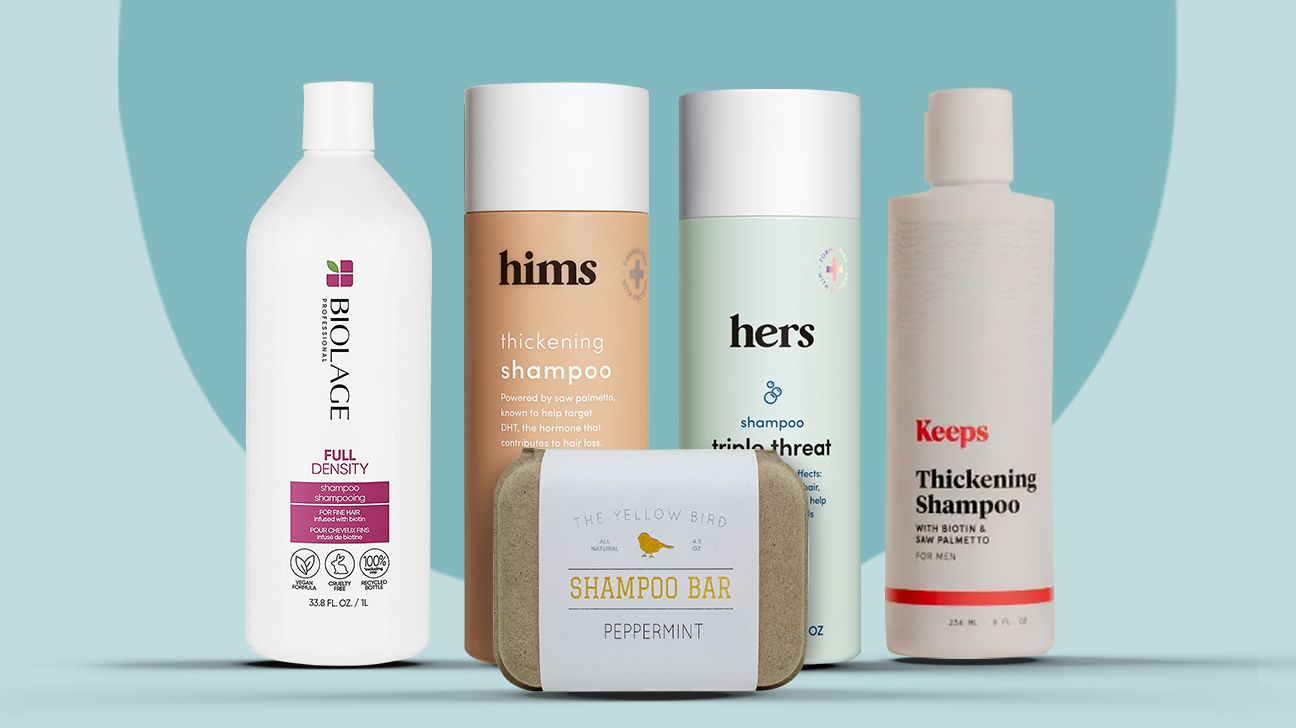
- Best for hair loss caused by UV rays: Herbal Essences BioRenew Argan Oil Shampoo and Conditioner | Skip to review
Thinning hair and hair loss can occur for several reasons. Determining the underlying cause, as well as having a trial-and-error approach to the types of shampoos and products you use, can make a difference.
Some shampoos on this list contain ingredients that have been shown to be beneficial for reducing hair loss. Others provide a cosmetic fix by thickening or adding volume to existing hair.
We reviewed scientific data and studies to identify the most effective shampoo ingredients. We also considered factors such as customer reviews to compile this list.
If you’re experiencing hair thinning, you’ll want to choose a shampoo that has active ingredients to help the problem at hand.
To select the best shampoos for thinning hair, we considered many factors, including:
- Brand reputation: We chose brands you can trust and vetted each product against our brand and content integrity standards. Read more about our product selection process here.
- User reviews: We searched for products that received positive reviews from buyers.
- Formulation and active ingredients: Wherever possible, we select shampoos that contain natural ingredients proven to help thicken and strengthen hair.
- Price: We have done our best to include options for every budget.
Hair thinning refers to a gradual process where hair gets sparse in certain areas. It’s different from hair loss, which is defined by hair breakage from the scalp or when hair falls out from the root.
Hair loss can lead to baldness, whereas hair thinning doesn’t necessarily do so.
Genetics, medical conditions, and life circumstances (or a combination of all three) can cause hair thinning. Some of these include:
- vitamin deficiency, particularly vitamin D, iron, B12, and folic acid
- skin disorder or infection
- treatment for autoimmune disease or immune system deficiencies
- hormonal changes (including stopping birth control pills or having a baby)
- sudden, significant weight loss
- chronic stress
There are also lifestyle habits that can cause hair thinning. These include:
- using harsh products on your hair, like gel and hair spray
- overtreating your hair with relaxers and perms, chemical hair color, or heat styling tools
- wearing tight hairstyles, like ponytails and up-dos
Beneficial shampoo ingredients for thinning hair include:
- Histidine: This amino acid absorbs excess copper from hair, shielding it from UVA and UVB damage.
- Phyto-caffeine: Caffeine has been found to suppress excess testosterone in the hair root. Testosterone can suppress hair growth on the head in men and women.
- Niacin (vitamin B3): This vitamin promotes hair fullness. It also stimulates circulation and blood flow in the scalp.
- Biotin (vitamin H): Biotin is a water-soluble vitamin that’s part of the B vitamin family. It’s important to have biotin in your diet for hair growth. Some shampoos also contain this ingredient, which may promote hair fullness and reduce breakage.
- Essential oils: Several essential oils have been shown to thicken hair and improve its health, thereby reducing its susceptibility to breakage. They include peppermint, lavender, lemongrass, rosemary, and thyme.
- Minoxidil: The Food and Drug Administration (FDA) has approved this ingredient for the treatment of hair loss when used as a 2% topical solution for women and 5% for men. Some shampoos also contain minoxidil as an active ingredient.
It’s possible for some people to grow back hair after thinning or loss, but it varies from person to person and is based on different factors. For example, if the cause of your hair loss is genetic or the result of scarring, it may not be possible to regrow hair.
But many people have found success with over-the-counter hair thickening products or with prescription medications like minoxidil and finasteride.
If you’re experiencing hair loss, consider talking with a doctor or a hair loss specialist who can diagnose what’s causing your hair loss and what treatment options may be best for you.
Hair loss — meaning hair that falls out from the scalp — can occur as the result of genetics, diet, a health condition, stress, medications, and more. Addressing the underlying cause of thinning hair often reduces hair loss over time.
Once you’ve addressed the underlying cause, a shampoo with the following ingredients may be helpful:
- amino acid histidine
- peppermint
- phyto-caffeine (caffeine with a plant-based ingredients)
You may also notice that your hair appears to break off more easily and seems to be thinner and weaker than it was in the past.
Hair breakage may be the result of styling habits over time, like using heat to style your hair. Using harsh shampoos, overwashing, and not conditioning your hair can also cause it to break and thin. Modifying these habits can help restore your hair.
Shampoo ingredients that may strengthen hair and help it appear fuller include:
- ginseng
- biotin
- collagen
- aloe vera
Since diet can affect hair growth, eating enough iron and protein may also be beneficial.
There are several vitamins and nutrients that are beneficial for hair growth. Too much of others, like vitamins A and E, may actually worsen hair loss.
Always consult a healthcare professional before adding supplements to your diet.
There are many other treatments for thinning hair, in addition to shampoo.
Scalp massage, either with your fingers or a handheld device, can stimulate hair follicles and encourage growth. Laser therapy, used in office by a dermatologist or with an at-home device, can help regrow hair as well. But these treatments don’t work for everyone, and they can take months to see results.
Platelet rich plasma injections, which help create a healthier environment for hair growth, are also an option.
Another way to address thinning hair is by making sure your body is sufficient in vitamins, especially iron, vitamin D, folic acid, and zinc.
While vitamins can’t reverse hair loss, taking a daily multivitamin that includes iron, vitamin D, folic acid, and zinc can help hair grow thick and strong. (A blood test can determine if you’re low in nutrients.)
Supplements like omega-3 and omega-6 fatty acids and biotin can also have a positive effect on your scalp and hair health.
Thinning hair and hair loss can be caused by a wide range of conditions, including stress, aging, genetics, and illness. Styling habits can also cause hair to become thin and breakable.
There are several active ingredients that can help reduce hair thinning and promote the appearance of fullness.
It’s important to understand and address the underlying cause of your thinning hair.