














The fast facts
- Existing research has analyzed CBD dosages and effects ranging from 10 to 1,500 mg daily. Results vary. It’s always best to start small and increase slowly until you reach your desired effect.
- Your ideal CBD dosage depends on many factors, like your body weight, body chemistry, and the concentration of CBD in the product you’re using.
- CBD is not currently regulated by the Food and Drug Administration (FDA), and there are no official CBD dosage recommendations. It’s best to speak with a healthcare professional about the right starting dose for you.
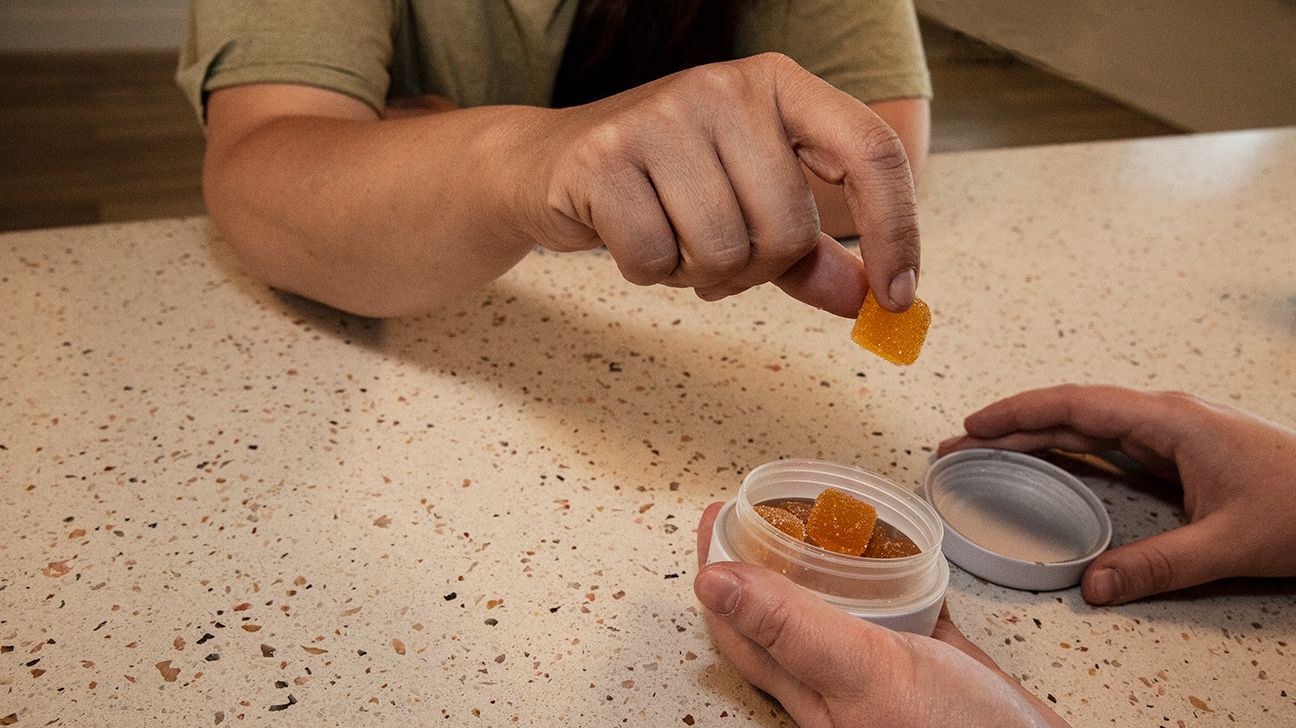
You’ve probably heard about CBD’s health benefits, but how much should you take to experience them?
No matter what symptoms you’re trying to treat, giving yourself an adequate CBD dosage is key — or it might not work for you. It’s worth remembering there’s still a lot about CBD that we don’t know.
Here’s what to know about figuring out how much CBD to take.
As this
Instead, they underscored the fact that different people (and, in the animal studies, different animals) respond to different dosages of CBD. Most of the human studies use dosages anywhere between 20 and 1,500 milligrams (mg) per day.
A more recent review in 2021 also concluded that effective CBD dosages widely vary by person and condition, ranging from 10 to 900 mg per day. In most cases, doses under 100 mg were not as effective, but it’s still best to start small if you’re new to CBD.
The amount of CBD you should take depends on a range of factors, including:
- your body weight
- your individual body chemistry
- the concentration of CBD in each pill, capsule, drop, or gummy
In other words, there are a lot of variables that go into deciding how much CBD to take. Before trying CBD, be sure to talk with your doctor about an appropriate dosage and any potential risks. If your doctor tells you how much to use, stick to their recommendation.
This is especially important if you’re taking a prescription medication that contains CBD, such as Epidiolex, a form of seizure medication.
If your doctor doesn’t provide a recommendation, it’s best to start with a small CBD dosage and gradually increase. This could mean starting with 20 to 40 mg a day. After a week, increase this amount by 5 mg. Continue this until you feel that it’s effectively relieving your symptoms.
For example, you might start off with 40 mg to treat severe pain. You can take 40 mg on days when you’re in a lot of pain. After a week, you increase it to 45 mg, and after a second week, you use 50 mg. At this point, you might feel that your pain is bearable.
It helps to log how much CBD you’re taking and whether your symptoms are getting better. Write it down on paper or in a notes app on your phone.
How to calculate dosage
Some products, such as CBD gummies, capsules, or pills, tell you how much is in a single serving. For example, the packaging on a bottle of CBD capsules might indicate that there are 5 mg of CBD per capsule.
If you’re using CBD oil, it’ll likely come in a dropper bottle. The packaging might specify how much CBD is in a single dropper full (which is usually 1 mL in volume). From there, you can figure out how much to use.
Keep in mind that one drop of CBD is about 0.05 milliliters (mL) — not a full dropper, just a single drop.
This means that a 10-mL bottle of CBD oil contains 200 drops. And if the packaging for that 10-mL bottle says that the bottle contains 1,000 mg of CBD, each drop will contain about 5 mg of CBD.
So, to have 20 mg of that type of CBD oil, you should take four drops.
A
A
If you’re currently taking medication and would like to try CBD, it’s essential to discuss this with your doctor.
Possible side effects
There are very few known side effects of CBD. When side effects do occur, however, they may include diarrhea, appetite changes, and fatigue.
- fatigue
- diarrhea
- changes in appetite
- changes in weight
Is CBD legal? The 2018 Farm Bill removed hemp from the legal definition of marijuana in the Controlled Substances Act. This made some hemp-derived CBD products with less than 0.3% THC legal at the federal level. However, CBD products containing more than 0.3% THC still fall under the legal definition of marijuana, making them illegal at the federal level. Some states have legalized CBD, so be sure to check state laws, especially when traveling. Also, keep in mind that the FDA has not approved nonprescription CBD products, and some products may be inaccurately labeled.