














Key takeaways
- Eating foods that are low in fiber and easy to digest may help reduce your symptoms during a Crohn’s flare-up.
- Digestive health experts suggest following a low FODMAP diet to manage your symptoms during a flare-up and then gradually returning to a more varied diet during remission periods.
- Individual dietary needs vary, so it’s important to take note of how different foods affect your symptoms and consult a doctor or dietitian for guidance.
The foods you eat can affect the severity of a Crohn’s disease flare-up. People with Crohn’s often find that some foods make their symptoms worse, while other foods ease their symptoms.
Some digestive health experts recommend following a low FODMAP diet during a Crohn’s flare-up. FODMAPs (fermentable oligo-, di-, and monosaccharides and polyols) are a category of carbohydrates that are harder to digest. Reducing your intake of FODMAPs may help decrease your symptoms.
Still, trigger foods and well-tolerated foods can vary from person to person. A diet that works well for someone else might not work for you or may even make your symptoms worse.
Over time, you’ll learn which foods help you feel best, and you may be able to adjust your diet to make flare-ups easier to manage.
Read on to learn more about six foods that might help reduce your symptoms during a Crohn’s flare-up.
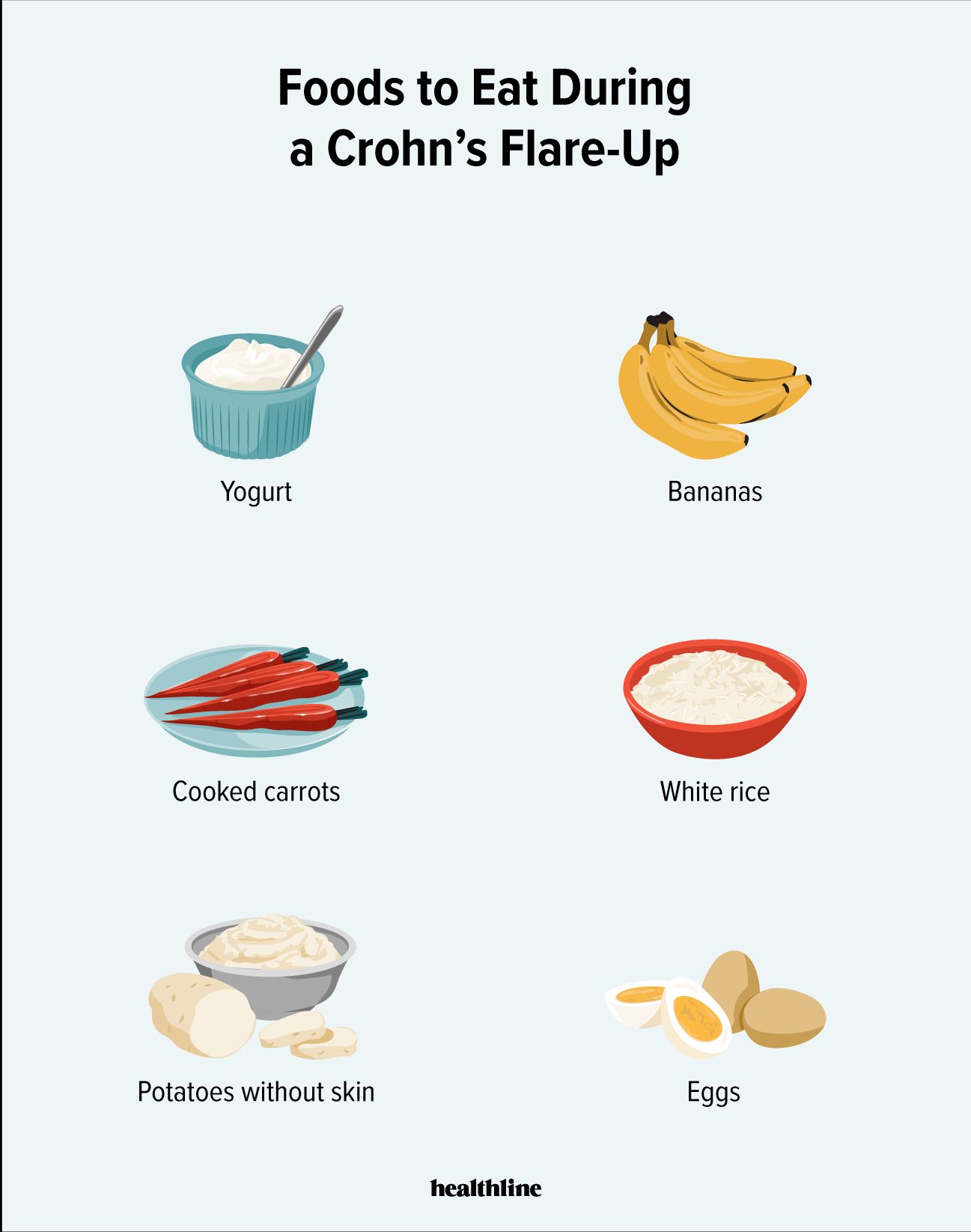
Yogurt’s smooth texture may make it an easy-to-eat option when you’re dealing with intestinal inflammation. Greek yogurt is also high in protein, a nutrient you need to eat more of during a flare-up.
Live-culture yogurts contain probiotics, which can help maintain the balance of healthy and harmful bacteria in your digestive system. According to a 2022 research review, probiotics may help reduce intestinal inflammation in some cases, although studies have not found a link between probiotics and improvement in Crohn’s symptoms.
If you have trouble digesting lactose, you might assume you need to avoid yogurt, since those digestive difficulties can worsen Crohn’s symptoms such as diarrhea and gas. But if you still want to include yogurt in your diet, you might choose a lactose-free product or try Greek yogurt, which contains less lactose than regular yogurt.
While many raw fruits can be hard to digest, bananas are a softer option that may be easier on your digestive system. Opt for firmer, less ripe bananas, since very ripe bananas are high in FODMAPs, which can worsen Crohn’s symptoms.
Bananas are also a
Other low FODMAP fruits, such as blueberries, kiwi, cantaloupe, grapes, oranges, and pineapple, can be good choices as well. But be sure to add fruits to your diet slowly to avoid worsening your symptoms.
Carrots get their bright orange color from beta-carotene, an antioxidant that may help reduce inflammation in your body.
During a Crohn’s flare-up, it’s important to cook the carrots well, until they’re soft and tender. Alternatively, you might want to try pureeing them into a smoothie or soup to make them easier to digest.
The Crohn’s & Colitis Foundation also recommends squash, green beans, and leafy greens as beneficial vegetables to include in your diet.
To avoid aggravating your symptoms, make sure any vegetables you eat are peeled and well cooked, and add them to your diet a little at a time rather than all at once.
White rice is a refined grain, which means it has been processed to remove its fiber-rich outer layer. (Brown rice, on the other hand, is a whole grain and still has that layer.)
Refined grains are easier to digest because they
White rice and some foods made from it, such as rice cakes and rice noodles, are also low in FODMAPs, so they may be good options for you if you’re following a low FODMAP diet.
Potato skins are high in insoluble fiber and may be harder to digest, but the flesh of potatoes can be a great food option during a Crohn’s flare-up. Mashing the potatoes may make them even easier for you to eat.
Like bananas, potatoes are a
Your body needs more protein during a Crohn’s flare-up, but some protein sources, such as red and processed meats, may contribute to inflammation and make your symptoms worse.
Eggs are a good source of protein and other nutrients, and because they are soft, they can be relatively easy to digest. You can prepare them any way you like, but make sure they’re fully cooked since cooked foods can be easier on your digestive system.
You may be able to reduce the effects of a Crohn’s flare-up by choosing foods that are easier to digest, including those that are low in fiber and have soft textures.
Some digestive health experts recommend following a low FODMAP diet during a flare-up and slowly returning to a more varied, Mediterranean-style diet once your symptoms decrease.
You can talk with your doctor about your diet and ask any questions you have about your Crohn’s symptoms or specific foods. Your doctor might refer you to a registered dietitian for additional help with planning meals.
If you’re having trouble meeting your nutritional needs, your doctor or dietitian might also recommend that you take certain supplements.
To find more resources for living with Crohn’s, you may want to join Bezzy IBD, a community where you can access expert-approved information on Crohn’s and find peer support through one-on-one conversations and live group discussions.