Key takeaways
- Aimovig is a brand-name medication that is prescribed to prevent migraine episodes in adults. It is administered via injection, not for treating symptoms as they occur.
- Common side effects of Aimovig may include constipation and injection site reactions. More serious side effects like high blood pressure and allergic reactions are less common.
- Aimovig works by blocking a protein that contributes to migraine episodes. It’s not a cure, but it may reduce the frequency of migraine attacks.
Aimovig (erenumab-aooe) is a prescription drug used to help prevent migraine episodes in adults. Aimovig comes as a solution for injection under your skin.
Aimovig basics
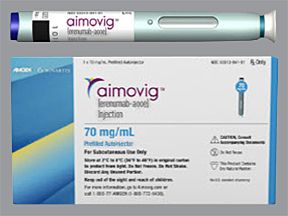
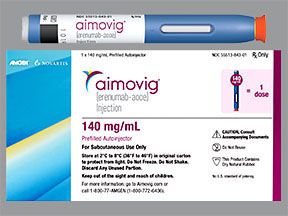
Aimovig comes as a solution inside prefilled syringes and prefilled autoinjector pens. You’ll give yourself Aimovig injections under your skin.
Aimovig contains the active drug erenumab-aooe, which is a biologic medication. A biologic drug is made from parts of living organisms. The drug isn’t available in a biosimilar form. (Biosimilars are like generic drugs. But unlike generics, which are made for nonbiologic drugs, biosimilars are made for biologic drugs.)
Aimovig is used to help prevent migraine episodes (periods when you experience migraine symptoms) in adults. Migraine episodes are also referred to as migraine attacks.
Migraine is a condition that may cause a severe headache along with other symptoms. These can include nausea, vomiting, and problems with speech or vision. Aimovig is meant to help prevent migraine episodes (periods when you experience migraine symptoms). The drug is not meant to ease symptoms when they occur.
How Aimovig works
Aimovig works to help prevent migraine symptoms by blocking the activity of a certain protein in your body. To learn more about using Aimovig for headaches and other symptoms caused by migraine, talk with your doctor.
Like most drugs, Aimovig may cause mild or serious side effects. The following lists describe some of the more common side effects that Aimovig may cause. These lists don’t include all possible side effects.
Keep in mind that side effects of a drug can depend on:
- your age
- other health conditions you have
- other medications you may be taking
Your doctor or pharmacist can tell you more about the potential side effects of Aimovig. They can also suggest ways to help reduce side effects.
Note: After the Food and Drug Administration (FDA) approves a drug, it tracks and reviews side effects of the medication. Sharing your experience helps make medications safer for everyone by giving doctors and researchers more information about how the drug works in real life. If you develop a side effect during Aimovig treatment and want to tell the FDA about it, visit MedWatch or call 800-332-1088.
Mild side effects
Here’s a short list of some of the mild side effects that Aimovig can cause. To learn about other mild side effects, talk with your doctor or pharmacist, or read Aimovig’s prescribing information.
Mild side effects of Aimovig that have been reported include:
- muscle spasms (muscle tightening that you can’t control) or cramps
- mild constipation
- reactions at injection sites
For more information about some of these side effects, see the “Side effect focus” section.
Mild side effects of many drugs may go away within a few days to a couple of weeks. But if you experience side effects from Aimovig that become bothersome, talk with your doctor or pharmacist.
Serious side effects
Serious side effects from Aimovig can occur, but they aren’t common. If you have serious side effects from Aimovig, call your doctor right away. However, if you think you’re having a medical emergency, you should call 911 or your local emergency number.
Serious side effects of Aimovig that have been reported include:
There were no reports of these side effects in studies of Aimovig, but they were reported after the drug became available for use.
For more information about some of these side effects, see the “Side effect focus” section.
Side effect focus
Learn more about some of the side effects Aimovig may cause.
Constipation
You may have constipation with Aimovig. Mild constipation was a common side effect in studies of the drug. And severe constipation has been reported since the drug became available for use.
With mild constipation, you’ll typically have less than three bowel movements per week. These bowel movements may be painful. You may also pass hard, dry stools.
With severe constipation, your symptoms may be so severe that your condition needs to be treated in a hospital. It’s possible that you might need surgery to relieve severe constipation.
What might help
Talk with your doctor if you have any symptoms of constipation while using Aimovig. They can suggest ways to relieve your symptoms.
For example, your doctor may recommend that you drink plenty of water or eat foods that are high in fiber. (Examples of these foods include raw vegetables, dried fruit, and whole grains.) Doing these things can help relieve constipation.
Your doctor can also let you know whether your constipation is severe enough to require immediate treatment at a hospital.
Long-term side effects
The length of time that Aimovig’s side effects last is likely to vary from person to person.
For many drugs, most side effects are short term. They’ll usually go away after your body gets used to the drug or shortly after you stop taking it. With Aimovig, there weren’t any long-term side effects reported in initial studies of the drug.
But other side effects of Aimovig, such as high blood pressure, have been reported since the drug became available for use. And this condition can cause complications that are long term. Examples include damage to your heart or arteries (blood vessels that carry blood away from your heart).
What might help
If you have questions about possible long-term side effects of Aimovig, talk with your doctor or pharmacist.
Reactions at your injection sites
You may have certain reactions at your Aimovig injection sites. This was the most common side effect reported in studies of the drug.
Examples of injection site reaction symptoms include:
- itching
- skin color changes
- pain
- bruising
What might help
If you have a reaction at an Aimovig injection site, it’ll usually go away within a few days after your injection. But if you have reactions that are bothersome or don’t go away, talk with your doctor or pharmacist. They can recommend ways to reduce these reactions.
Before injecting Aimovig, remove it from the refrigerator and let it sit at room temperature for at least 30 minutes. This can help lessen any discomfort with the injection. Do not try to warm the drug by using hot water or a microwave. Keep Aimovig in its original packaging, out of direct sunlight.
Allergic reactionSome people may have an allergic reaction to Aimovig. While allergic reaction wasn’t reported in studies of Aimovig, this side effect has been reported after the drug became available for use.
Symptoms of a mild allergic reaction can include:
A more severe allergic reaction is rare but possible. Symptoms of a severe allergic reaction can include swelling under your skin, typically in your eyelids, lips, hands, or feet. They can also include swelling of your tongue, mouth, or throat, which can cause difficulty breathing. This drug may even cause anaphylaxis, a life threatening allergic reaction.
Call your doctor right away if you have an allergic reaction to Aimovig. But if you think you’re having a medical emergency, call 911 or your local emergency number.
Your doctor will recommend the dosage of Aimovig that’s right for you. Here, you’ll find commonly used dosages, but always follow the dosage your doctor prescribes.
Form and strengths
Aimovig comes as a solution inside prefilled syringes and prefilled SureClick autoinjector pens.
It is available in two strengths:
- 70 milligrams per milliliter (mg/mL)
- 140 mg/mL
Recommended dosages for the prevention of migraine episodes
The recommended dosage of Aimovig is 70 mg once per month. You should give yourself an injection on the same day each month.
If this dosage isn’t working well to help prevent migraine episodes, your doctor may increase your dosage to 140 mg once per month.
Whether you have health insurance or not, price may be a factor when you’re considering using Aimovig. What you’ll pay for Aimovig may depend on several things, such as your treatment plan and the pharmacy you use.
Here are a few things to consider regarding Aimovig and cost:
- Comparing pharmacies: The price of Aimovig may vary depending on which pharmacy you use, so it can help to compare prices across pharmacies to find the lowest cost.
- Drug coupons: You may be able to find drug coupons on prescription discount websites that can reduce the cost of your medication. These coupons cannot be used with insurance copays or benefits, but the discounted price may be lower than what you would pay through insurance.
- Financial assistance: Some websites provide details about drug assistance programs, ways to make the most of your insurance coverage, and links to savings cards and other services. Two such websites are:
Also, an Aimovig copay card is available from the drug’s manufacturer if you have eligible insurance. To learn more, visit the company’s website or call 833-246-6844.
Optum Perks is owned by RVO Health. By clicking on this link, we may receive a commission. Learn more.
Here are answers to some commonly asked questions about Aimovig.
Does Aimovig cause anxiety, depression, fatigue, or hair loss?
No, this isn’t likely. Anxiety, depression, fatigue (low energy), and hair loss weren’t reported as side effects in initial studies of Aimovig.
But it’s important to remember that migraine can cause many different symptoms, including depression and fatigue. Aimovig is used to help prevent migraine episodes. So you may have these symptoms while receiving the drug. But these symptoms may be related to migraine, not Aimovig.
People who have received Aimovig after it became available for use have reported hair loss.
Hair loss can happen because of stress, and stress can also trigger a migraine episode. So you may have hair loss related to migraine or stress during Aimovig treatment. But these symptoms may not be caused by Aimovig.
If you have these symptoms with Aimovig, talk with your doctor. They can help figure out whether these symptoms might be caused by Aimovig, your condition, or something else.
What is Aimovig’s mechanism of action (how it works)?
Aimovig is used to help prevent migraine episodes (periods when you experience migraine symptoms). Migraine is a condition that may cause a severe headache along with other symptoms. These symptoms can include nausea, vomiting, and problems with speech or vision.
Aimovig’s mechanism of action (the way the drug works in your body) is to block the activity of a protein called calcitonin gene-related peptide (CGRP). CGRP can play a role in causing migraine episodes. By blocking CGRP, Aimovig helps prevent migraine episodes.
If you’d like to know more about how Aimovig works, talk with your doctor or pharmacist.
Will I have withdrawal symptoms if I stop receiving Aimovig?
No, it isn’t likely that you’ll have withdrawal symptoms if you stop receiving Aimovig.
Withdrawal symptoms are side effects that may happen after you suddenly stop taking a drug. Withdrawal symptoms weren’t reported in studies of Aimovig.
However, it’s important not to change or stop your Aimovig treatment without your doctor’s recommendation. Stopping Aimovig treatment may cause more frequent migraine episodes.
To learn more about what to expect with Aimovig, talk with your doctor or pharmacist.
Can Aimovig use lead to weight gain or weight loss?
No, weight gain and weight loss weren’t side effects reported in studies of Aimovig.
Other medications that help prevent migraine headaches can cause weight changes as side effects. For example, propranolol (Inderal LA, Innopran XL) may cause weight gain, and topiramate (Topamax) may cause weight loss.
If you’re concerned about weight gain or weight loss during Aimovig treatment, talk with your doctor. They can recommend ways to reach or maintain a weight that’s healthy for you.
Does Aimovig cause memory problems, diarrhea, insomnia, or muscle pain?
No. Aimovig isn’t known to cause memory problems, diarrhea, or insomnia (difficulty sleeping). These side effects weren’t reported in studies of the drug.
There were reports of muscle cramps and spasms, which could be a source of muscle pain.
Note that diarrhea and insomnia are possible symptoms of a migraine episode, which Aimovig helps prevent. So you may have diarrhea and insomnia while using Aimovig. But it’s possible that these symptoms may be caused by migraine, not Aimovig.
If you have any of these side effects during Aimovig treatment, talk with your doctor. They can suggest ways to ease your symptoms.
Is Aimovig used for cluster headaches or vestibular migraine?
Aimovig isn’t currently approved to treat cluster headaches or vestibular migraine. But the drug may be prescribed off-label for these conditions. Off-label use means prescribing a drug for a condition other than what the Food and Drug Administration (FDA) has approved it to treat.
With cluster headaches, you may have painful headaches that happen in clusters. A cluster describes several headaches that happen over a short period of time.
With vestibular migraine, you don’t usually have headaches. Instead, you may have dizziness or other migraine symptoms that can last for several hours.
If you’re interested in using Aimovig for cluster headaches or vestibular migraine, talk with your doctor. They can recommend the treatment that’s best for you.
You may want to know how Aimovig compares with other migraine treatments, such as Emgality.
Doctors may prescribe Aimovig or Emgality to help prevent migraine episodes in adults. But Emgality may also be prescribed to treat episodic cluster headaches as they happen.
Both drugs are calcitonin gene-related peptide (CGRP) antagonists, but their active ingredients are different. (An active ingredient is what makes a drug work.) The active ingredient in Aimovig is erenumab-aooe, and the active ingredient in Emgality is galcanezumab-gnlm.
For preventing migraine episodes, you’ll give yourself Aimovig or Emgality as an injection under your skin once per month.
Read on to learn about other alternatives to Aimovig. Also, be sure to talk with your doctor about which drug is right for you.
Aimovig vs. Ajovy
Like Aimovig, Ajovy is prescribed to help prevent migraine episodes in adults. Both belong to the same group of drugs, CGRP antagonists. The active ingredient in Aimovig is erenumab-aooe, and the active ingredient in Ajovy is fremanezumab-vfrm.
You’ll give yourself Aimovig or Ajovy as an injection under your skin. Aimovig is typically injected once per month. Ajovy may be injected once per month or once every 3 months, depending on what your doctor recommends.
Aimovig vs. Botox
Like Aimovig, Botox may be used to help prevent migraine episodes in certain adults. But Botox has several other medical uses, including treatment of overactive bladder and cervical dystonia (neck muscle spasms).
Aimovig is a CGRP agonist, and its active ingredient is erenumab-aooe. Botox belongs to a different group of drugs called neuromuscular blockers, and its active ingredient is onabotulinumtoxinA. These drugs work differently to help prevent migraine episodes. Your doctor or pharmacist can tell you more about how these drugs work.
You’ll give yourself Aimovig as an injection under your skin once per month. A healthcare professional will administer Botox as a series of injections into muscles in your head and neck. You’ll receive these injections once every 3 months.
Your doctor will explain how you should administer Aimovig. They’ll also explain how much to give yourself and how often. Be sure to follow your doctor’s instructions.
Instructions for administering Aimovig
Aimovig comes as a solution inside prefilled syringes and prefilled autoinjector pens. You’ll give yourself Aimovig injections under your skin. You can inject Aimovig into your thigh, upper arm, or abdomen.
You’ll administer your Aimovig injections once per month, on the same day each month.
Before injecting Aimovig, remove it from the refrigerator and let it sit at room temperature for at least 30 minutes. This can help lessen any discomfort with the injection. Do not try to warm the drug by using hot water or a microwave. Keep Aimovig in its original packaging, out of direct sunlight.
Your doctor or another healthcare professional will show you how to give yourself Aimovig injections. You can also watch a video with step-by-step instructions for injecting Aimovig on the drug manufacturer’s website or read Aimovig’s prescribing information.
Before receiving Aimovig, it’s important to talk with your doctor about other medical conditions you have and your overall health.
These and other considerations are discussed here in more detail.
Interactions
Taking a medication with certain vaccines, foods, and other things can affect how the medication works. These effects are called interactions.
Before using Aimovig, be sure to tell your doctor about all medications you take, including prescription and over-the-counter types. Also, describe any vitamins, herbs, or supplements you use. Your doctor or pharmacist can tell you about any Aimovig interactions these items may cause.
Interactions with drugs or supplements
There aren’t any known interactions between Aimovig and other medications, according to the drug’s prescribing information. But this doesn’t mean interactions with Aimovig can’t happen.
Your doctor or pharmacist can tell you more about possible interactions that may occur with the use of Aimovig.
Warnings
Before starting Aimovig, discuss your health history with your doctor. Aimovig may not be right for you if you have certain medical conditions or other factors affecting your health. Be sure to talk with your doctor if any of the following apply to you:
- high blood pressure
- allergic reaction
- Raynaud’s phenomenon
- taking medication that slows your digestive system
Aimovig and alcohol
It’s generally considered safe to drink alcohol while receiving Aimovig.
But keep in mind that drinking alcohol can be a migraine trigger. If alcohol typically triggers your migraine symptoms, you’ll probably want to avoid drinking alcohol during Aimovig treatment.
If you drink alcohol, your doctor can recommend whether alcohol may be safe for you to drink while you’re receiving Aimovig.
Pregnancy and breastfeeding
If you can become pregnant or are breastfeeding, it’s important to consider whether Aimovig is a safe choice for you.
It’s not known whether Aimovig is safe to inject during pregnancy or while breastfeeding.
Do not administer more Aimovig than your doctor prescribes. Using more than this can lead to serious side effects.
What to do in case you receive too much Aimovig
Call your doctor if you think you’ve received too much Aimovig. You can also call 800-222-1222 to reach America’s Poison Centers or use its online resource. But if you have severe symptoms, immediately call 911 or your local emergency number. Or go to the nearest emergency room.
Disclaimer: Healthline has made every effort to make certain that all information is factually correct, comprehensive, and up to date. However, this article should not be used as a substitute for the knowledge and expertise of a licensed healthcare professional. You should always consult your doctor or another healthcare professional before taking any medication. The drug information contained herein is subject to change and is not intended to cover all possible uses, directions, precautions, warnings, drug interactions, allergic reactions, or adverse effects. The absence of warnings or other information for a given drug does not indicate that the drug or drug combination is safe, effective, or appropriate for all patients or all specific uses.