














Guide dogs for low vision and blindness can be beneficial. This may include moving around, avoiding obstacles, and mental health.
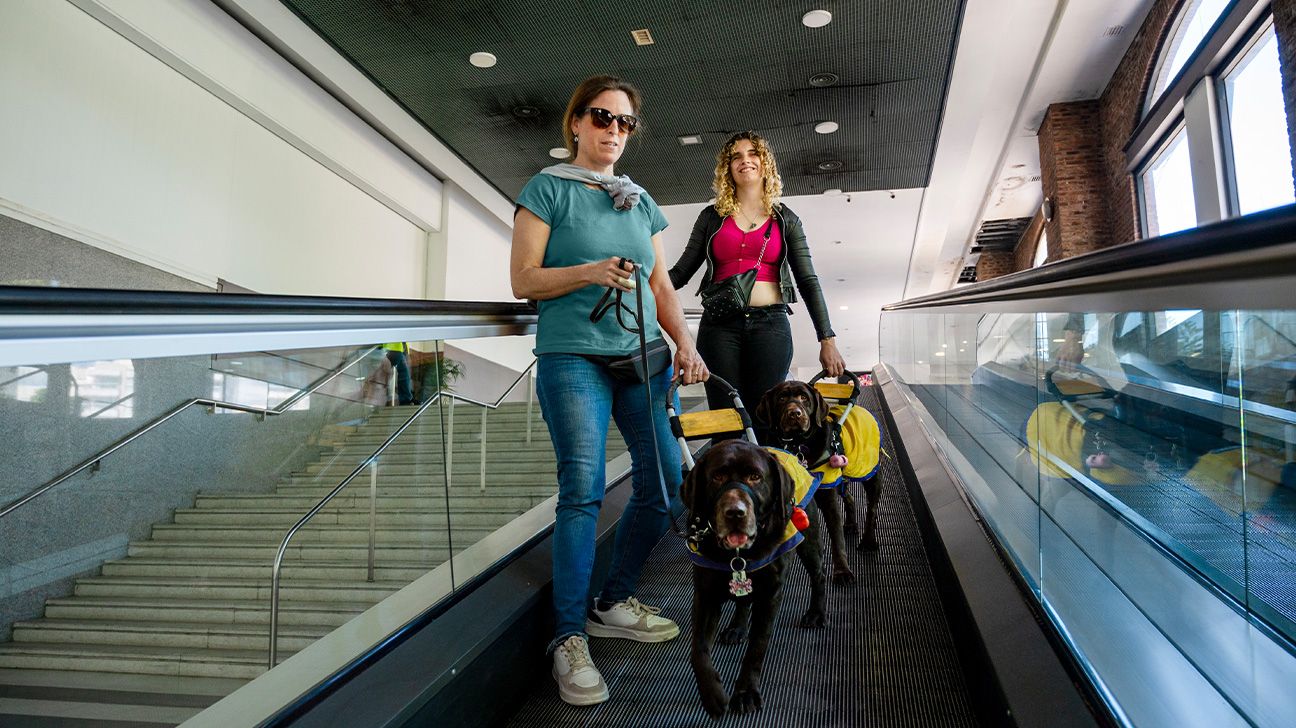
Service dogs for people with low vision and blindness are specially trained to assist people who are blind or have low vision. They may also be referred to as guide dogs, leader dogs, or seeing-eye dogs.
Guide dogs are highly trained to act as mobility aids, providing their handlers with greater safety, independence, and confidence in public and unfamiliar environments. While these can be challenging to access, guide dogs are shown to help those who live with blindness or low vision.
A guide dog and their human partner work together as a team, with the handler providing the directional commands and the dog ensuring a safe path.
Some common tasks that guide dogs help with include:
- Obstacle avoidance: The dog guides the handler safely around obstacles in their path, such as people, trash cans, construction zones, or low-hanging objects like tree branches. This is known as “clearance work.”
- Maintaining a straight path: They lead the handler in a straight line from one point to another, avoiding all hazards along the way.
- Signaling elevation changes: They stop at all changes in ground level, including curbs (up or down), steps, and stairs. The handler uses this signal to determine where to place their feet.
- Locating destinations and objects: On command, a guide dog can help find specific landmarks or objects, such as a door, an empty seat, an elevator, a pedestrian crosswalk button, or a bus stop.
- Intelligent disobedience: If a handler gives a command that would lead to danger, such as stepping off a curb when a car is approaching, the dog is trained to refuse the command and keep the handler safe.
- Companionship: Beyond their guiding tasks, they provide loyal companionship and can often encourage more social interaction for their handlers.
Most guide dogs have a special harness with a stiff, U-shaped handle, allowing the person to feel the dog’s movements.
This includes the dog’s turns, stops, and shifts as they navigate around obstacles, communicating information about the environment.
Each organization has slightly different rules and criteria for obtaining a guide dog. This may include:
- you must be legally blind (even while wearing vision correction, such as glasses or contacts)
- must be 18 or older, but some programs allow younger applicants
- must be able to travel independently with a cane, as guide dogs act as replacements for canes
- must be able to walk for a minimum of 30 minutes without stopping
- financially able to take care of your dog
- able to complete a type of mobility training or have a past history of owning a guide dog
Always verify with the specific organization about their rules and criteria, and ask questions before starting the application process.
Organizations that provide guide dogs for low vision and blindness have intensive training programs.
Typically, medical service dogs are trained as young puppies, and they’re paired with a person or handler by the time they’re 24 months old. They generally have a working life of 8 to 10 years.
People who are best-matched with a dog typically describe having the most optimal experiences with their guide dog.
While many different breeds can be trained for guide work, guide dog schools and organizations worldwide rely on a few common breeds due to their predictable temperament, size, intelligence, and trainability.
This means that these dogs, in general, are in better physical shape and have better health, which makes them preferred for training and working as medical service, alert, and guide dogs.
The vast majority of guide dogs are specific breeds or crossbreeds of them:
- Labrador retriever: This is the most widely used and successful guide dog breed worldwide. This is due to their ideal traits, including intelligence and trainability, temperament, and a medium to sturdy build with a shorter coat of hair.
- Golden retriever: Often viewed interchangeably with Labrador retrievers, goldens share many of the same qualities, including intelligence, trainability, loyalty, and an attitude that is known for being sensitive and responding to their person’s emotions and needs.
- Crossbred lab and golden (goldador): Many leader dog organizations cross-breed labradors and golden retrievers, combining the best traits of both parents. Some research shows this offers an even better balance between temperament, high trainability, and overall health.
- German Shepherd: These were among the first breeds used for guide dog work. They are very loyal, courageous, and highly intelligent. However, they generally require a more confident and assertive handler, so some programs use them less frequently.
- Poodle: Poodles are highly intelligent and trainable. They are especially valued because they have hair instead of fur, which results in very little shedding and makes them a suitable option for handlers with dog allergies.
This is a tricky question, particularly for certain medical service dogs, such as those trained to assist individuals with low vision or blindness.
Training and caring for a guide dog can be expensive, with some estimates ranging up $50,000 or more per dog over the course of its working lifetime. This cost covers breeding, raising, and intensive training for the dog, as well as the important task of matching that dog with their human.
However, most reputable and charitable guide dog programs and organizations utilize grants and donations to provide guide dogs and initial training at little or no cost to those in need who qualify.
Often, people with a medical guide dog will be responsible for the ongoing care of their dog. Some organizations do provide continued funding, but that’s not always the case.
Other tools and tips to help with low vision
For those who may not have access to a medical service or guide dog, you can find many other resources to help manage life with low vision or blindness.
Explore those options here at Healthline.