














Performing targeted exercises and stretches may help alleviate trigger finger symptoms and increase flexibility. It’s essential to perform the exercises consistently to achieve the best results.
Trigger finger occurs when the tendons that flex your finger become swollen and inflamed, and have difficulty gliding through the sheaths that surround them.
Some experts suggest that combining hand exercises and stretches with traditional treatments may help alleviate pain, enhance strength and mobility, and support recovery after surgery.
Keep reading to learn more about how to do trigger finger exercises correctly and when to see a doctor.
Before getting started
These exercises and stretches are simple and can be done anywhere.
Start gently by performing hand gliding exercises, which target the tendons to help them move more smoothly through their surrounding sheaths.
As you get stronger, you can add more strength-focused exercises. The only things you’ll need are a tabletop, an elastic band, and small objects like coins, bottle tops, and pens.
It’s okay if you can’t complete the full range of motion for the exercises. Similarly, it’s normal to feel some discomfort, but stop immediately if you feel pain. Only do as much as you can manage.
Hand gliding exercises are effective for supporting tendon movement and relieving pain, inflammation, and swelling.
Try performing 10 repetitions of each exercise at least 3 to 5 times daily.
1. Hand clench
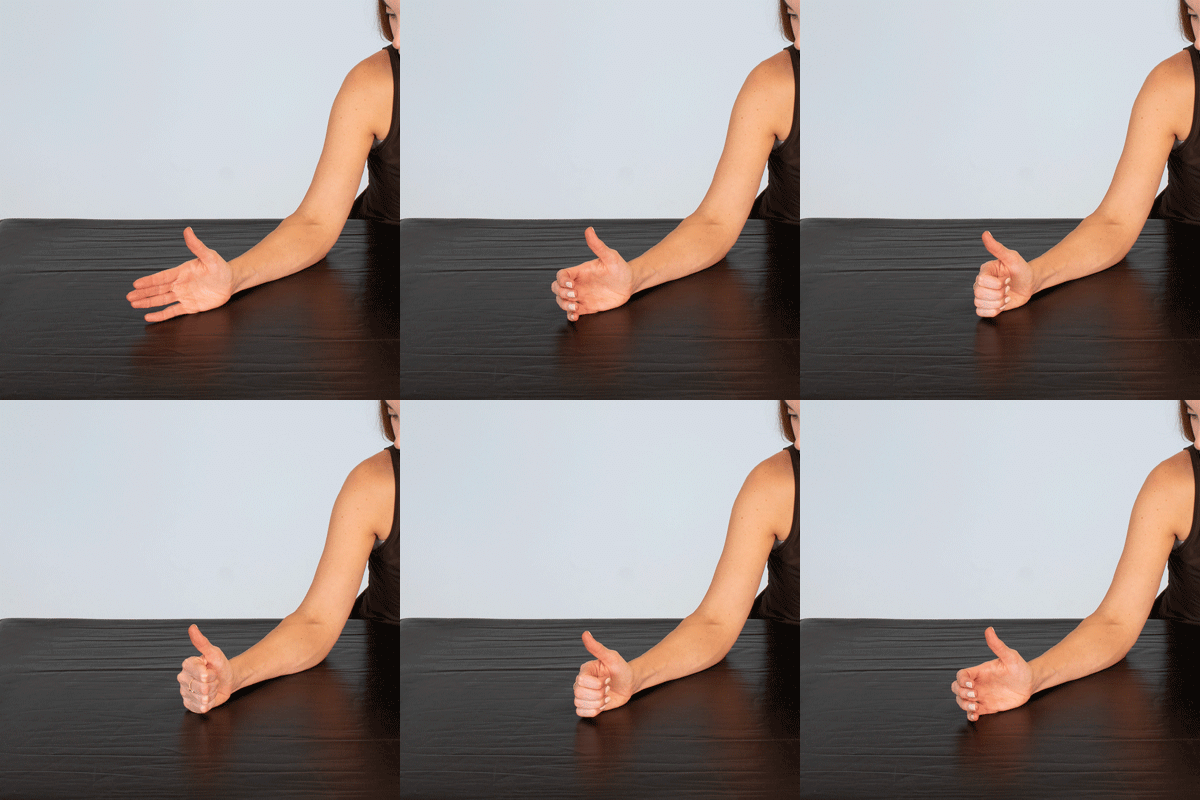
This is one of the most common hand gliding exercises for trigger finger.
- Lay the side of your hand down on a tabletop.
- Spread your fingers as wide as possible.
- Bend your fingers so that your fingertips touch the top of your palm.
- Straighten your fingers again and spread them wide.
This is considered one repetition.
2. Finger touch
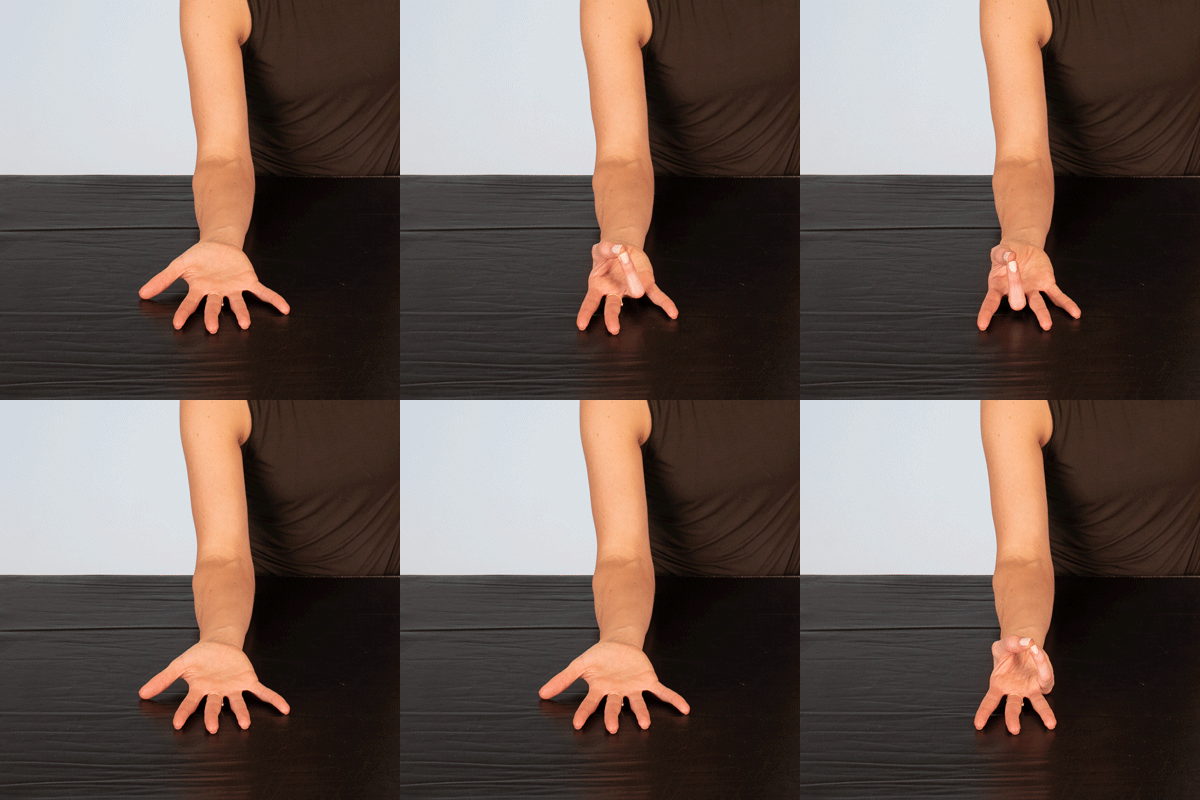
This exercise can help stretch and activate each finger individually.
- Lay your hand flat on a table, palm facing up toward the ceiling.
- Spread your fingers as wide as possible.
- Curl your pinky inward and bring your thumb up to touch it, then spread your fingers out again. Repeat this movement with each finger, meeting the thumb in the middle.
Touching the thumb with each finger once counts as one total repetition.
3. Single finger joint bend
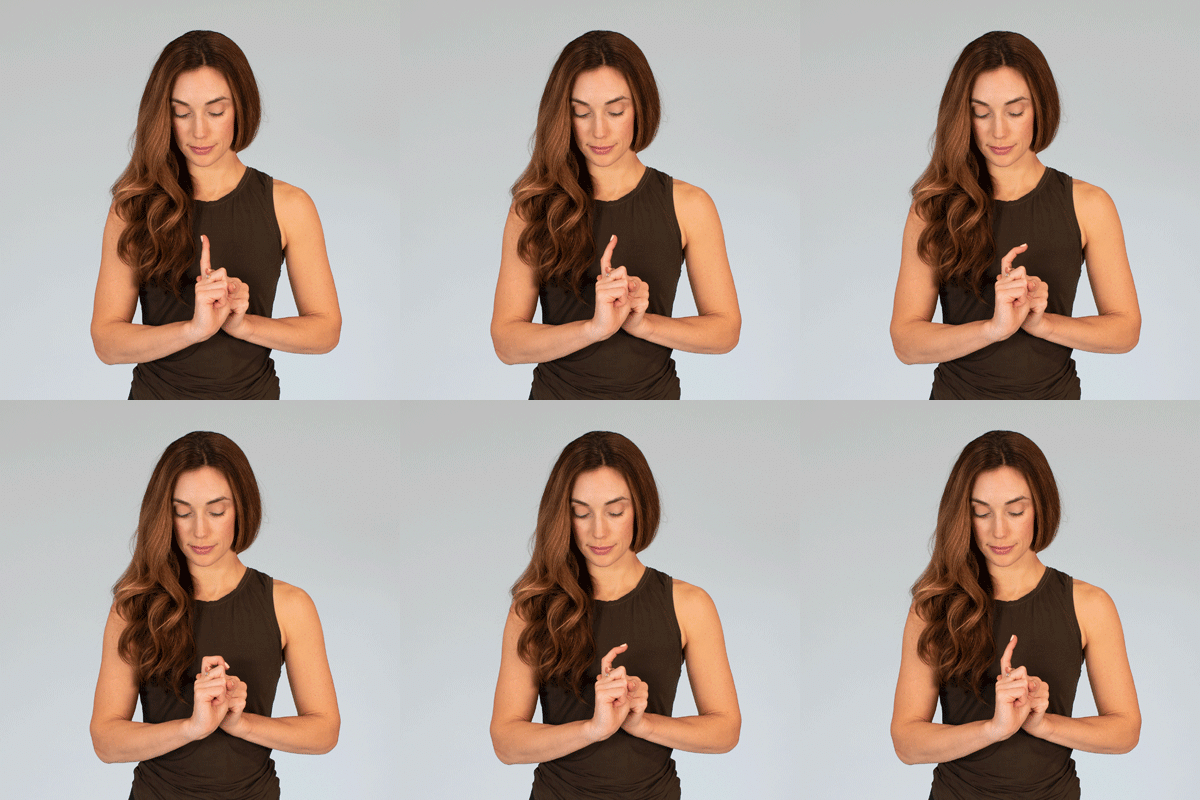
This exercise isolates the affected finger.
- Hold the hand with the injured finger in front of you with your fingers loosely clenched.
- Use the thumb and index finger on your other hand to isolate the injured finger by pinching it around its base, just above the knuckle.
- Slowly extend the injured finger, then bring it back down.
This counts as one repetition.
4. Sideways wrist bends
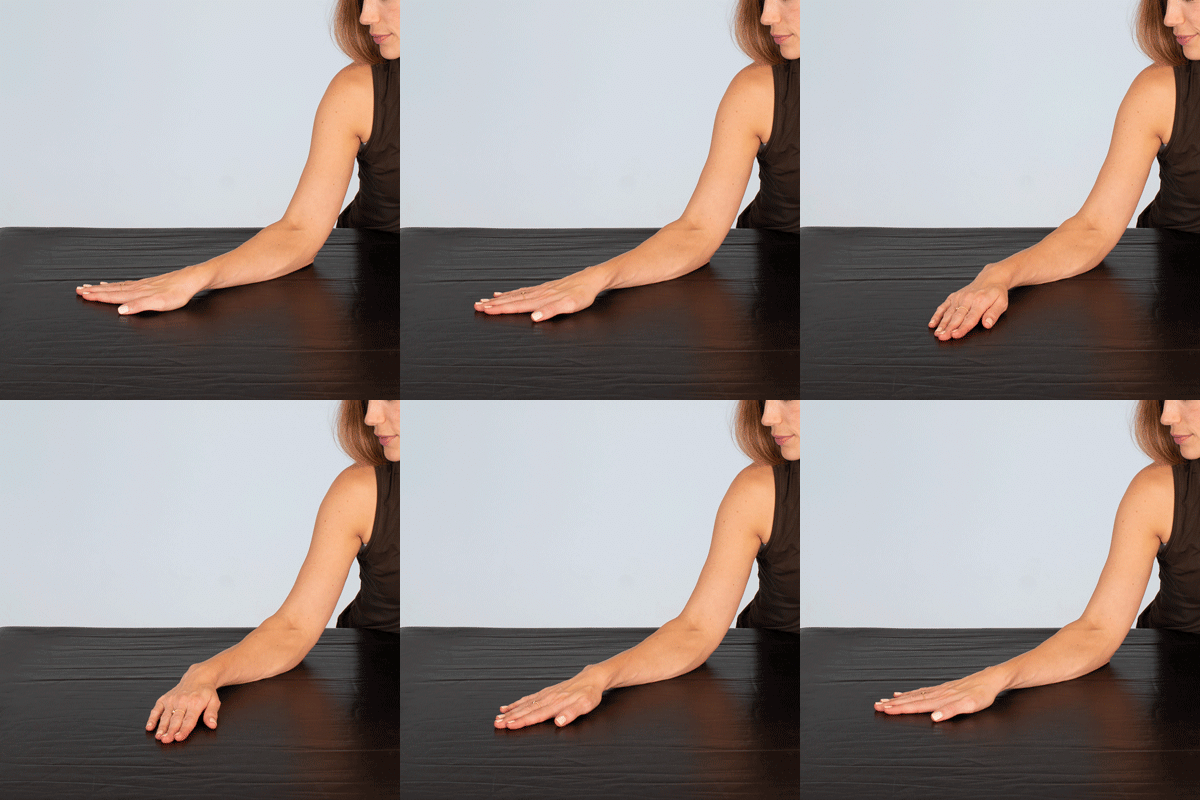
This exercise can gently stretch the tendons as they move through the wrist.
- Place your hand on a flat surface, palm down. Keep your fingers together.
- Move your hand rightward by bending your wrist until it cannot go any further, then move it all the way to the left side.
- Continue this side-to-side movement, like a windshield wiper.
One movement to the right and one movement to the left count as one repetition.
5. Finger extensor stretch
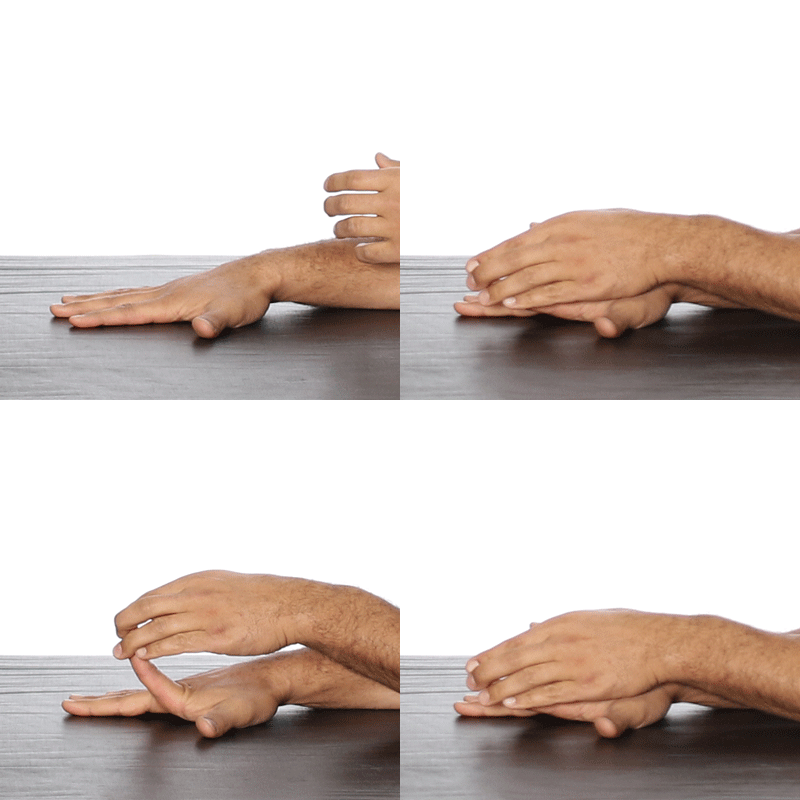
This exercise can help increase the mobility in the affected finger.
Before doing this exercise, ensure you’ve completed the other hand gliding exercise to warm up your fingers. Also, don’t pull the finger back too much, as this may cause injury.
- Lay your hand out flat, palm down, on a table or solid surface.
- Slowly lift up the affected finger with your other hand. Keep the rest of your fingers flat.
- Lift and stretch the finger as high as it will go without straining. Hold it here for 2 seconds and release it back down.
This counts as one repetition. You can do this stretch on all of your fingers and your thumb.
6. Finger abduction
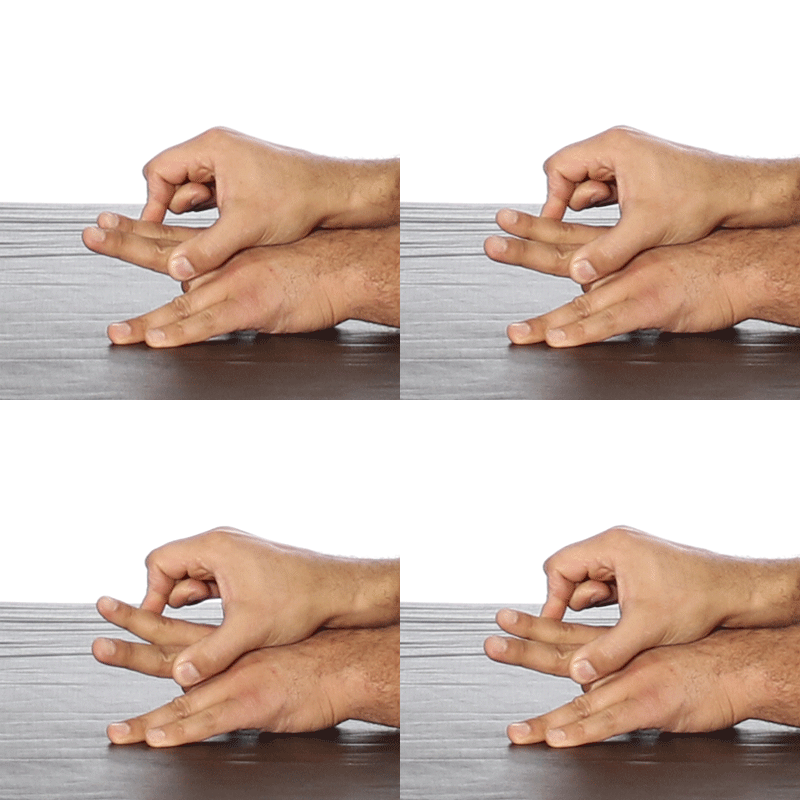
This exercise uses a bit of resistance to start increasing the strength in your fingers and tendons.
- Place your hand out on a flat surface, palm down.
- Extend your affected finger and an unaffected finger next to it.
- Gently press the extended fingers with the thumb and index finger from your opposite hand to apply resistance.
- Extend the affected finger and the unaffected finger against the resistance. Hold this for 2 seconds, then return to the starting position.
This counts as one repetition.
Once you feel comfortable performing hand gliding exercises and active stretches, move on to strength exercises. These can help develop your hand muscles and improve dexterity.
Try performing 10 repetitions of each exercise at least 2 times daily.
7. Elastic band finger spread
For this exercise, you’ll need a hair elastic or a rubber band. Start with a lighter resistance band, then increase the resistance as you get stronger.
- Pinch the tips of your fingers and thumbs.
- Put an elastic band around your fingers. Slightly move your fingers away from your thumb so that the band becomes tight.
- Extend your fingers and thumb out, then bring them back in to the starting position. You should feel tension in the elastic as you perform this action.
This counts as one repetition.
8. Ball squeezes
For this exercise, you’ll need a small, squishy ball. These are often referred to as stress balls.
- Pick up a stress ball, place it in your palm, then lay your hand out, palm facing the ceiling. You can lay this hand on top of the other one for extra support.
- Squeeze the ball tightly for 2 seconds.
- Release by opening your fingers wide.
This counts as one repetition.
9. Object pickups
Focusing on picking up small objects can help improve your dexterity and overall hand function, which is often affected by trigger finger.
- Place an assortment of 10 small objects, such as coins, buttons, and tweezers, on a table.
- Pick up one object at a time by grasping it with your affected finger and thumb.
- Move the object to the opposite side of the table.
- Repeat with each object.
10. Towel scrunch
A towel scrunch can help you regain grip strength, which is often impacted by trigger finger. For this exercise, you’ll need a small hand towel.
- Place the palm of your hand on a small towel on a flat surface.
- Use your fingers to squeeze and scrunch the towel into as small a ball as possible. Apply pressure to your fist while you’re squeezing and hold this position for a few seconds.
- Slowly straighten your fingers and release the towel.
This counts are one repetition.
Self-massage may also help support trigger finger and reduce the risk of further injury by increasing circulation. It’s especially helpful when practiced before hand gliding and strength exercises.
To self-massage the affected finger, apply firm but gentle pressure to it, then rub in a circular motion for about 30 seconds.
You can massage the specific joint or the entire area, such as your hand, wrist, and forearm, as all of these areas are connected and can help promote circulation.
Consider speaking with a primary care doctor if your trigger finger is painful, affects your daily activities, or doesn’t get better with hand exercises after 2 weeks.
While hand exercises help support trigger finger management and rehabilitation after surgery, the condition often requires medical treatments like corticosteroid injections or surgery to get better.
A doctor can evaluate your symptoms and help determine the best treatment plan for you.
Trigger finger is a condition that causes inflammation, pain, and reduced mobility in the tendons of the finger.
Some hand gliding and strength exercises may help relieve trigger finger pain and increase mobility when combined with other treatments, such as steroid injections and surgery.
However, they’re unlikely to treat trigger finger on their own.
Speak with a doctor if you have trigger finger and it affects your daily functioning. They can help develop a treatment plan for you.