














Home workouts can get a bit meh. Enter: the rebounder. We tested these tiny trampolines to shake up our stale fitness routines.
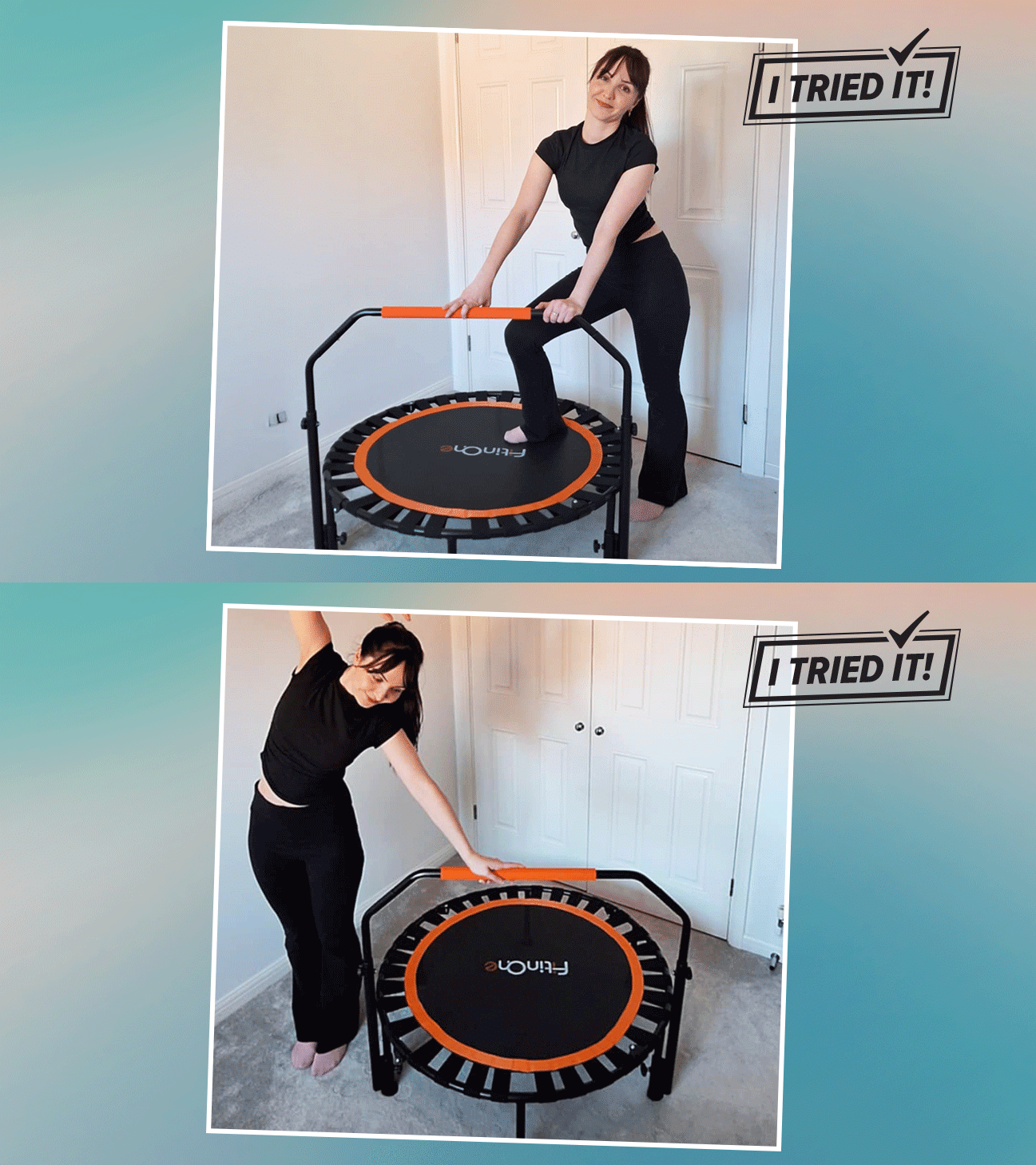
If you’re anything like me, winter takes a serious toll on your fondness for fitness. I wake up in the morning, take one peek at the bleak weather outside, and instantly snooze my alarm.
Braving the elements to pound a treadmill at the gym? Not the vibe.
With that in mind, I was excited to try the rebounder as part of my home workout.
I did have a few concerns, though:
- Would my downstairs neighbors file a noise complaint?
- Would this thing eat up half my (already very small) living room?
- Would it provide a good workout?
Spoiler: NASA gives it the thumbs up
NASA, yes, NASA, first weighed in on rebounding back in the 80s. Their conclusion? Rebounding delivers cardio benefits on par with running, but with far less joint impact.
More recent research suggests rebounding may support circulation, oxygen delivery, bone health, lower limb strength, balance, blood glucose levels, and overall quality of life.
Not bad for something that also lets you tap into your inner child while you’re at it.
Psst…but what about the lymphatic benefits?
You may have heard rumblings that rebounding boosts the lymphatic system. As a devoted dry brusher, I, too, was curious. But it turns out no real research backs it up, unfortunately.
I ran into some issues with the setup. The rebounder arrives folded, along with some instructions that I found to be somewhat unclear.
My struggle mostly stemmed from being unable to pry open the steel frame. Eventually, I realized I was being too delicate. After putting in a bit more effort (by applying all 121 pounds of my body weight to it), it finally popped open.
I’ve since learned that some rebounders may require two people to open them up. Consider yourself warned.
Brief set-up woes aside, I was ready to bounce.
A humbling, sweaty journey
I began my rebounder era boldly, borderline cocky, convinced that 30 minutes of bouncing would be nothing. It was not nothing. The sweat arrived swiftly, and the overconfidence vanished just as fast. After that first session, I humbly scaled back to a more realistic 15 minutes.
I noticed the burn most in my thighs, legs, and calves, and I wouldn’t say it got any easier. My 15 minutes always left me sweaty and out of breath.
Cardio has never really been my go-to. Typically, I gravitate toward stretch classes, like reformer pilates, and strength training.
This rebounder became a fun, easy way to sneak some movement into my day while working from home. Short bursts worked perfectly, and I often found myself bouncing mid-workday to shake off the desk slump.
Great for injuries and low impact cardio
While I was busy bouncing around my apartment, my colleague Shelby was busy putting her rebounder through its paces, too.
Despite experiencing chronic knee pain from a 2021 surgery, Shelby remains active. But high impact workouts? Totally off-limits. She figured rebounding might be a fun, low impact way to burn calories, lift her spirits, and keep her pesky knee out of trouble.
To her surprise, the rebounder delivered more than she expected.
“One of the first things that surprised me was how quickly my calves started to burn during the sessions. I hadn’t expected such a targeted muscle engagement from what seemed like simple bouncing movements,” she said.
“Additionally, the workouts actually made me out of breath, providing a more intense cardiovascular challenge than I initially anticipated. This was a pleasant surprise.”
Mostly complementary, and the hype fades a little
Does the novelty wear off? Sure. Personally, I’m someone who thrives in gym classes and enjoys the community element, so solo bouncing doesn’t quite hit the same.
Still, I appreciate that it’s a fun, no-pressure way to switch up my cardio on days I can’t make it to the gym, and I’ll definitely keep using it.
It also doesn’t quite replace full-body strength workouts.
“It doesn’t provide much of a workout for my arms, so relying solely on the rebounder may leave some muscle groups undertrained,” says Shelby.
She also sees herself incorporating the rebounder as a supplemental tool.
“It’s perfect for warming up, light cardio sessions, or simply enjoying some movement for mental refreshment.”
You can freestyle or follow along
Call me boring, but I mostly preferred simple up-and-down bouncing. The mat was wide enough for jumping jacks and springy enough for squats or tuck jumps if I felt like switching things up. Generally, bouncing along to a TV show or listening to a Spotify playlist worked well for me.
Shelby, meanwhile, followed along with various YouTube videos designed specifically for rebounder exercises. Many of the routines were set to upbeat, modern music, which helped keep the energy high and made the experience enjoyable.
Space might be an issue if you live in a small apartment. But the convenience, low impact nature, and initial childlike joy of bouncing make it a surprisingly solid addition to your home workout arsenal.
After nearly a month of use, the rebounder has proven to be solid and sturdy. I never worried about it taking my weight, and it’s surprisingly quiet (something I had initially been concerned about).
As a bonus, I observed that I slept better since the rebounder motivated me to engage in more consistent cardio.
Ultimately, we recommend a rebounder for people seeking a gentle yet effective cardio option at home, especially those managing injuries or joint concerns.
Thinking about getting a rebounder yourself? Here are a few things to consider before you hit ‘add to cart.’
Size
A bigger surface = more room to bounce and a softer landing. But it’ll take up more space in your home.
Portability
Planning to go to a rebounder class? Or have minimal space? Check whether it folds or stores flat.
Max weight
Make sure your rebounder is sturdy enough to handle your weight. Higher weight limits = added safety.
Coil vs bungee
Metal springs typically give a firmer, noisier bounce, while elastic bungee cords are quieter but may wear out faster.
Mat material
Prefer a mat that’s firm and springy, or something softer that absorbs more impact? Some mats are also slip-resistant.
Snazzy extras
Some rebounders come with support handles, grip socks, resistance bands, and digital training plans.