














Resistance bands come in various shapes, materials, and resistance levels, allowing you to personalize your workouts at home. Exercises can be done sitting, standing, or lying down.
Resistance bands are a low cost, versatile exercise tool that can help improve muscle strength, flexibility, and range of motion, as well as support injury recovery.
The three most common types of resistance bands are standard, looped, and handled bands:
- Standard: These are long, continuous pieces of material. They can be tied together to form a loop.
- Looped: These connect end-to-end to form an elastic loop. Superbands are large, thick, and made of heavy rubber, while minibands are smaller, thinner, and lighter.
- Handled: These are similar to standard bands, but they feature handles on each end and are typically more expensive.
All three types come in various resistance levels, ranging from light to extra heavy. Manufacturers typically offer multi-packs, in which the bands are color-coded by resistance for easy identification.
Keep reading to learn more about resistance band exercises, the possible benefits and risks of using them, and what to consider when buying them.
Before getting started
Check your resistance bands for any small tears or damage. If there’s a tear, the band could snap when it gets stretched during an exercise, possibly leading to injury.
You may also wish to start with a lighter resistance band, especially if you’re recovering from an injury or are new to exercising. Focus on controlling each movement and moving through the full range of motion.
Some muscular discomfort is normal during exercise, but the pain shouldn’t be bothersome. Stop immediately if you experience sudden or severe pain, and remember to prioritize form over resistance.
Speak with a healthcare professional, physical therapist, or personal trainer if you’re unsure how to get started with resistance bands. They can help develop a program tailored to you.
Here are seven resistance band exercises that target the major muscle groups. There are two common approaches to performing these exercises:
- Circuit: Perform one set of each exercise, aiming for 8 to 15 reps per set, to complete one circuit. Rest for 1 to 2 minutes, then repeat the circuit. Try to complete 5 to 8 circuits, or do as many as you can within a 20- to 30-minute period.
- One by one: Perform all the sets of one exercise, then move on to the next exercise. Try to complete 3 to 5 sets of 8 to 15 reps for each exercise.
For both approaches, take a 15- to 60-second rest between each set.
In the starting position of each exercise, make sure there’s little to no slack when holding the bands. The bands should just be taut, but not so tight that you’re already working against resistance.
Resistance band squats
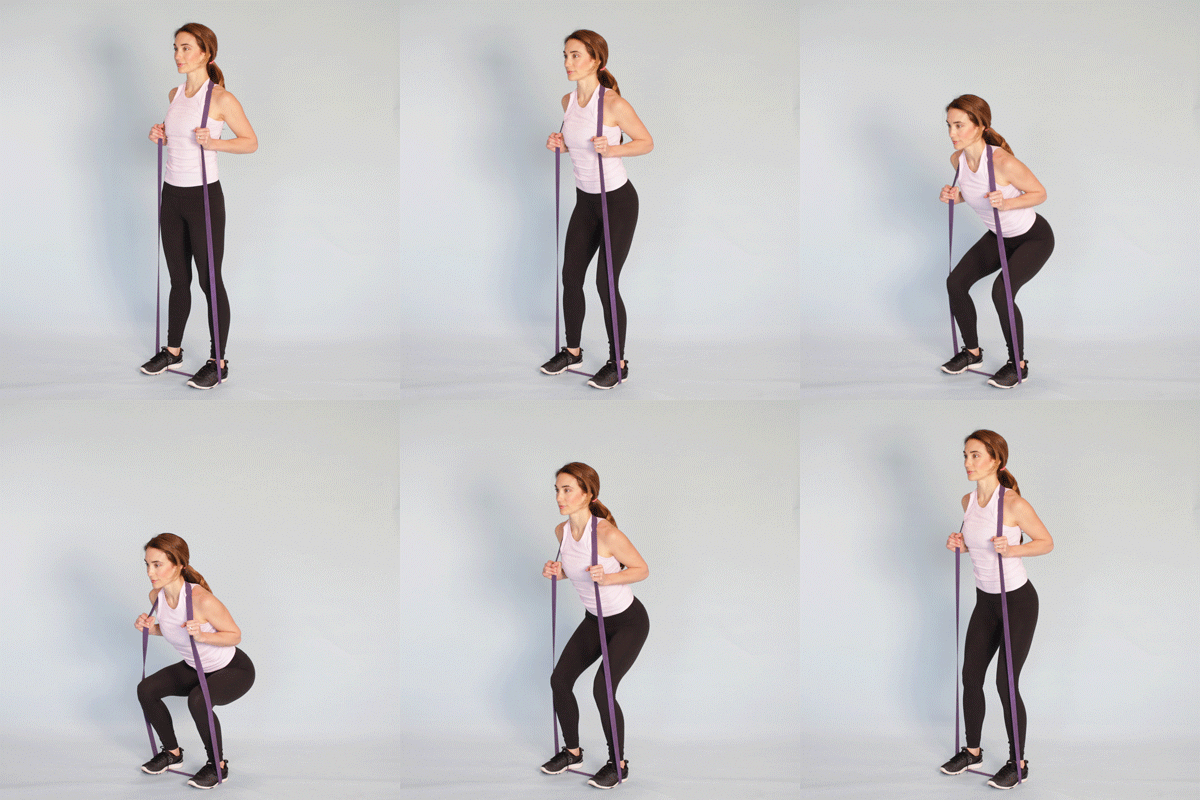
Squats are an effective exercise for building lower-body muscle mass, strength, and balance. Using a loop band may further engage the hip muscles and improve range of motion, which can support your walking gait and posture.
There are several ways to perform banded squats. This variation uses a loop band. If you don’t have a loop band, you can create a loop with a standard band by connecting both ends with a knot.
To perform this exercise:
- Wrap the top end of the resistance band around your shoulders, and the bottom end under your feet.
- Stand with your feet shoulder-width apart, with your toes pointed slightly outward. Hold the band at chest height.
- Bend your knees and push your hips back, as if taking a seat. Bring your buttocks toward the floor until your thighs are parallel with the ground. Make sure to keep your back straight.
- Push back up into the standing position.
Seated row
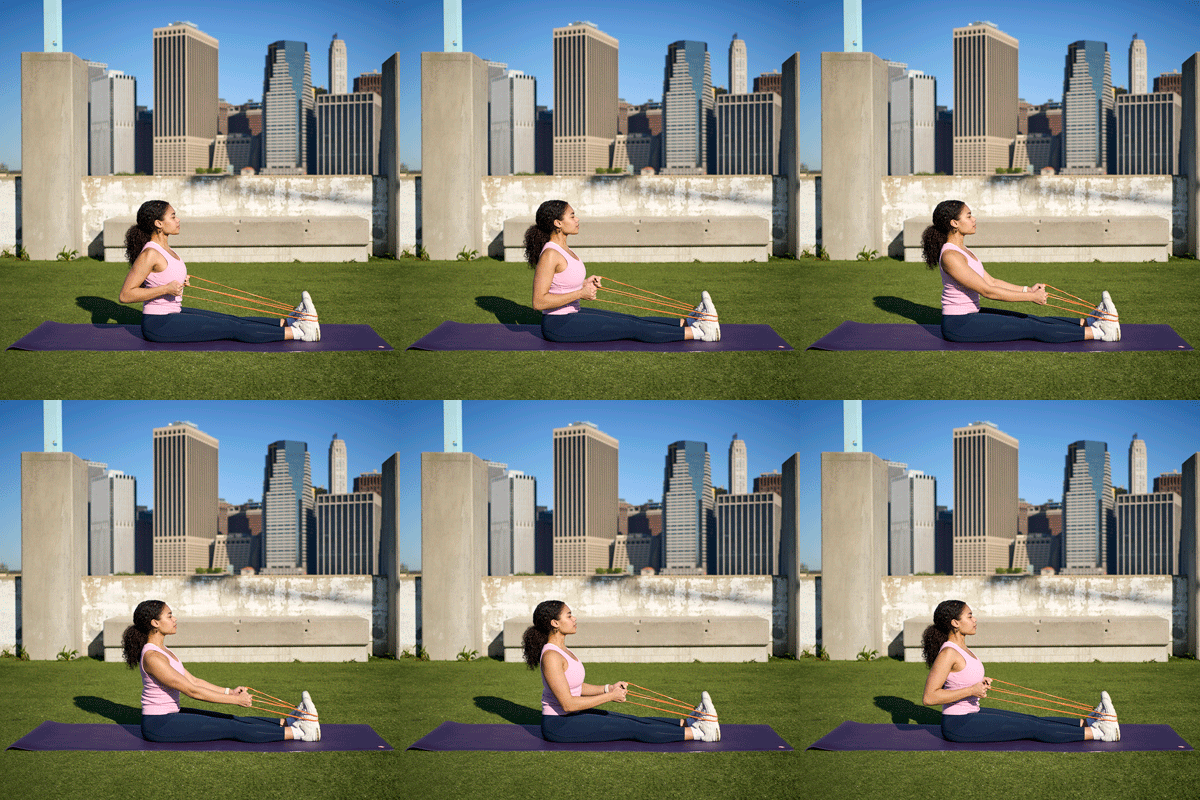
Seated rows target several muscles in your back and arms, which can help improve a slouching posture. This exercise can be performed with any type of resistance band.
To perform this exercise:
- Sit on the ground with your legs straight out in front of you.
- Wrap the middle of the resistance band around the middle part of your feet, and hold one end in each hand.
- Start with your arms outstretched, then pull the resistance band toward you until your hands reach just below your chest. Imagine initiating the movement with your elbows, and maintain a proud posture.
- Slowly bring your arms back to the starting outstretched position.
Chest press
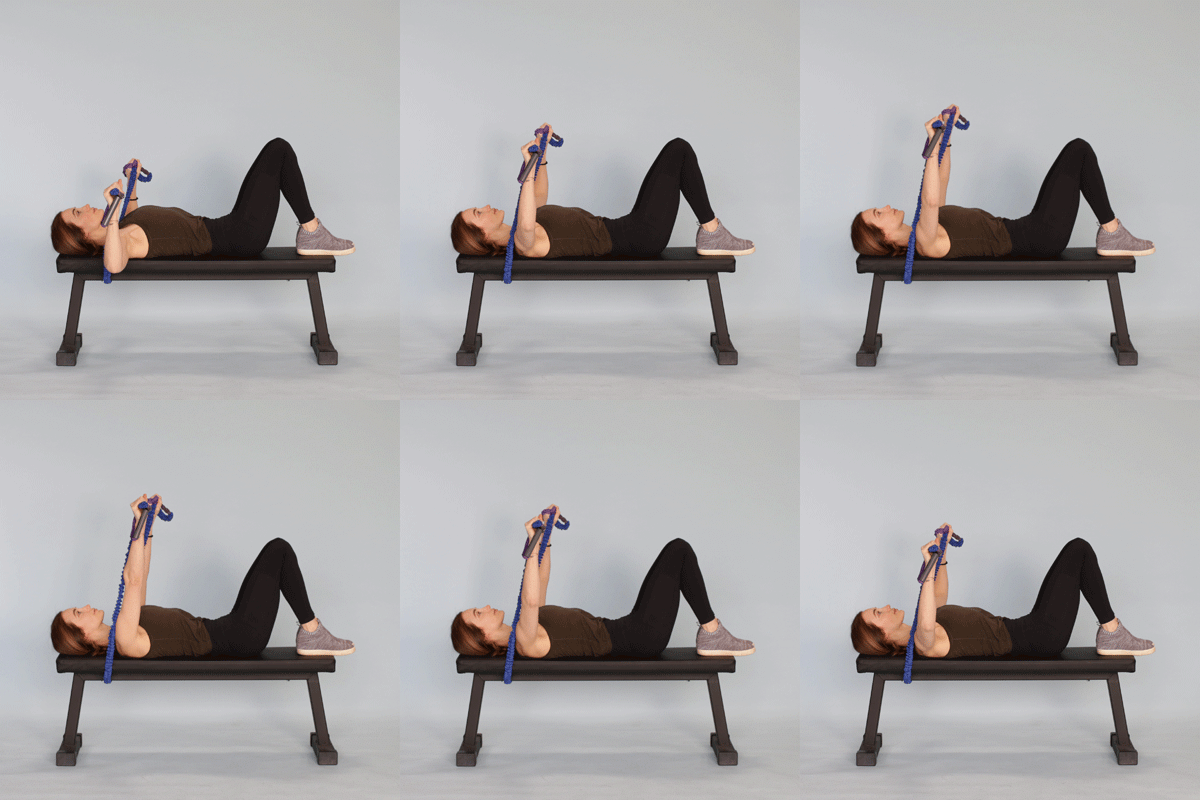
The chest press is a popular exercise for building strength and mass in your chest, shoulders, and triceps.
Lying on a flat bench and using handled loops can help you generate more force during this exercise, but it’s also effective if you lie on the ground and use other resistance bands.
To perform this exercise:
- Wrap the resistance band under the bench. Lie flat on a bench with your feet bent at a 90-degree angle on the edge of the bench. Hold one end of the band in each hand.
- Push your hands up toward the ceiling, slightly flaring your elbows out. Avoid arching your back during the exercise by keeping your back flat.
- Bring your hands down to your pecs, controlling the movement.
Lying skull crushers
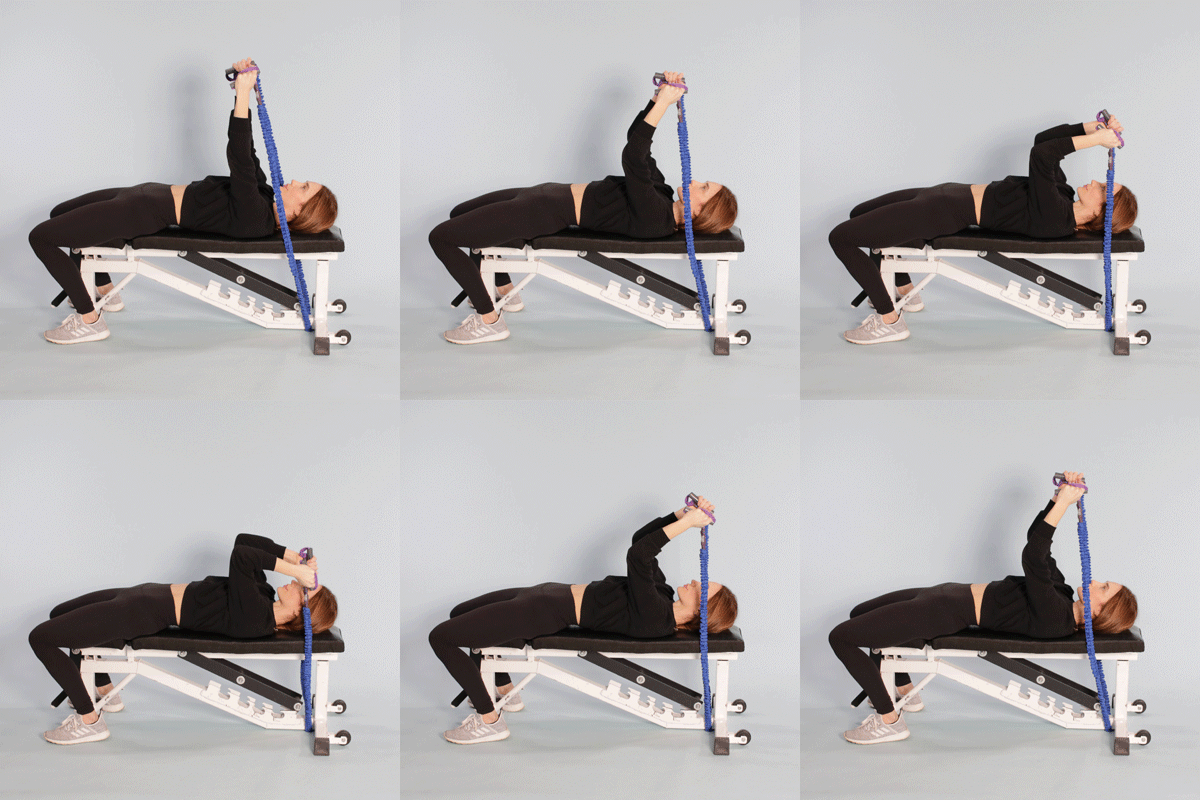
Skull crushers are an effective exercise for targeting the triceps muscles. Building triceps strength can help you get stronger in other lifts, such as the chest press and overhead press.
This exercise can be performed using any type of resistance band. Lying on a bench may also help increase your range of motion, but it’s not necessary.
- Wrap the resistance band around the bottom of the bench.
- Lie on your back with your arms fully extended above your head. Hold one end in each hand and pull it up so your arms are straight up toward the ceiling. The outside of your hands should be facing up.
- Bend your elbows, lowering your hands to your forehead.
- Straighten your elbows, bringing your hands back over your chest.
Standing biceps curl
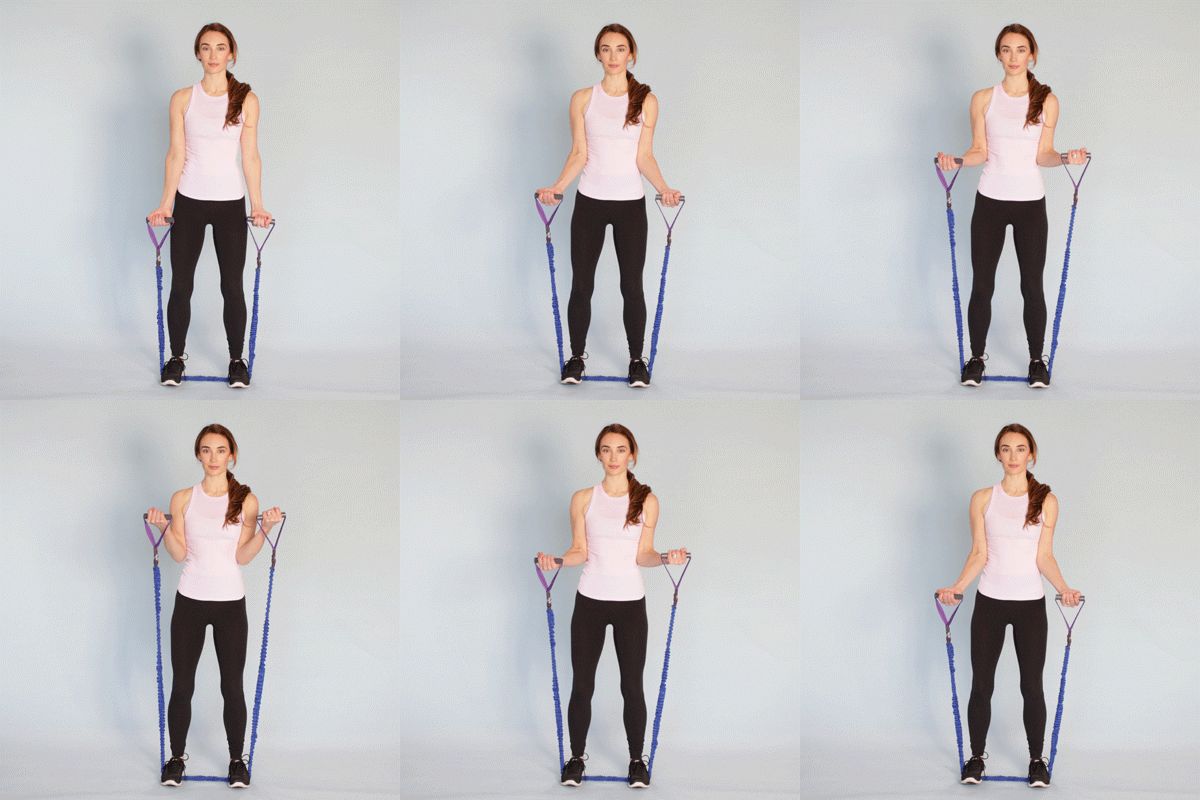
Biceps curls are a popular exercise for working the biceps and forearm muscles. You’ll likely be able to use a heavier handled resistance band than a standard one, since the handles offer more stability.
To do this exercise:
- Stand shoulder-width apart and place your feet on the middle section of the band.
- Hold one end in each hand with your palms facing forward.
- Bring your hands up toward your shoulders in a curling motion. Keep your elbows close to your sides.
- Bring your hands back down, controlling the movement.
Bicycle crunch
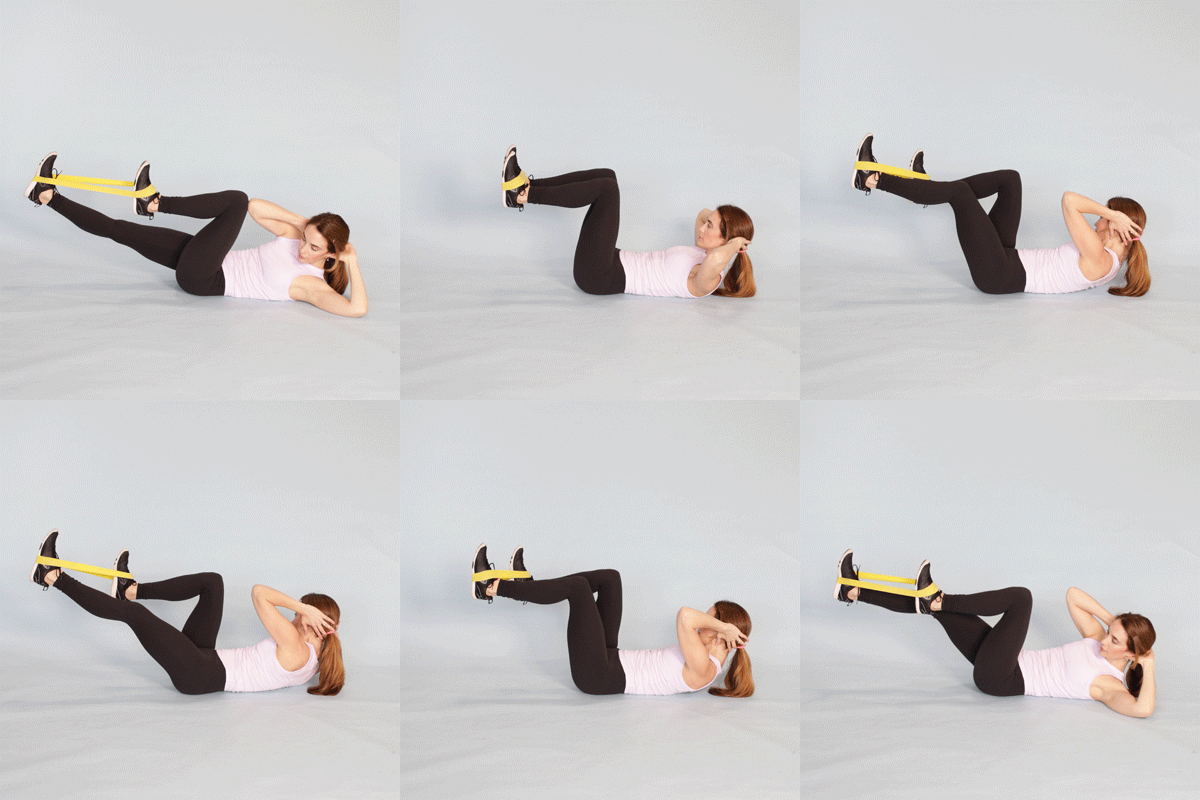
Adding resistance to bicycle crunches can help activate your abdominal, lower body, and stabilizer muscles more effectively.
This exercise is best performed with a looped miniband. You can form a loop with a standard band by tying a knot in it.
To perform this exercise:
- Sit on the ground and place a resistance band around the middle of your feet.
- Lie on your back and place your fingers behind the base of your skull. Your fingers shouldn’t push your skull forward during this movement, but instead only provide support.
- Bend your knees at 90 degrees and lift them off the ground.
- Extend your right leg straight out, and twist the right shoulder and elbow toward your left knee.
- As you bring your right leg back to 90 degrees, extend your left leg and twist your left shoulder and elbow toward your right knee.
- Continue this movement, alternating sides.
Standing overhead press
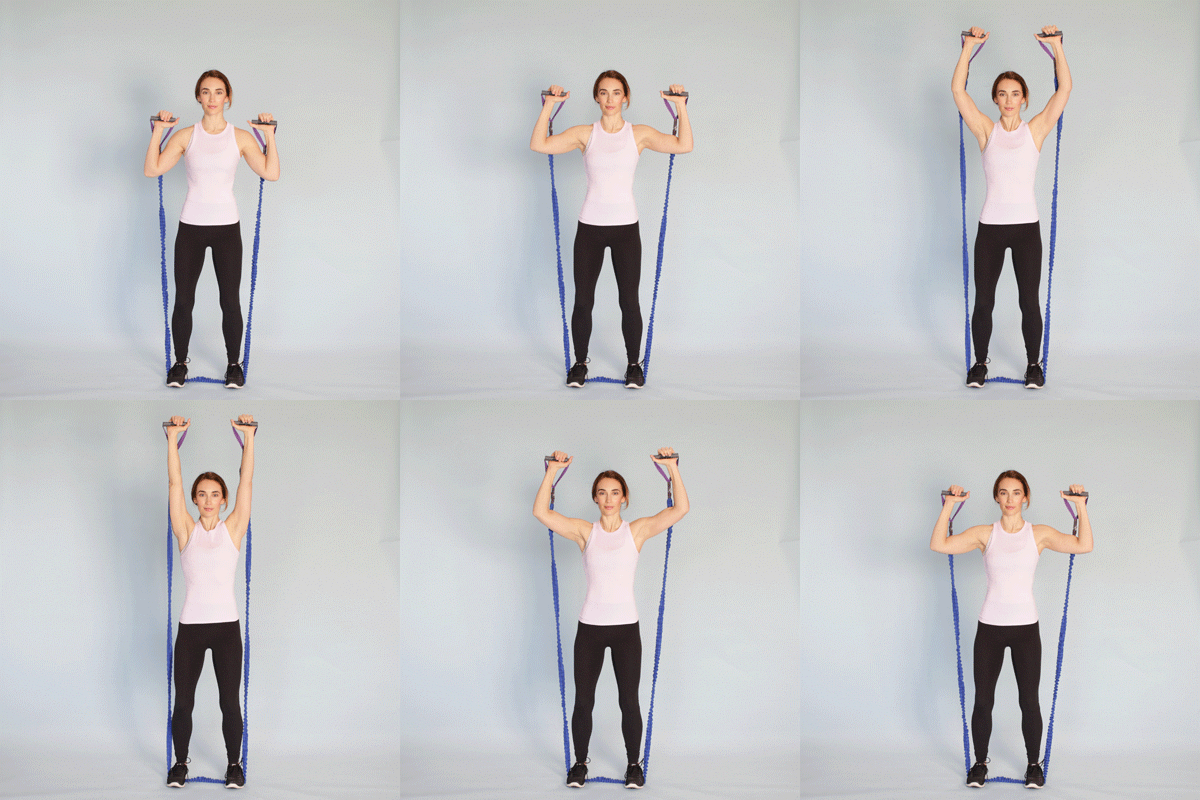
The overhead press targets the shoulders, upper chest, and triceps muscles, which may help improve your upper body strength and posture.
This exercise is also best performed with handled bands, but can also be performed with other types.
To do this exercise:
- Stand shoulder-width apart and place your feet on the middle section of the band.
- Hold one end in each hand and bring your hands up to near your collarbone, with your palms facing forward.
- Brace your core and squeeze your glutes, then push your hands up toward the ceiling.
- Bring your hands back down to the starting position, controlling the movement.
Looking for more specific workouts?
The following resistance band workouts are designed to target specific muscle groups or support certain populations:
A healthcare professional, physical therapist, or personal trainer can also develop a resistance band exercise program tailored to your needs.
Along with the type of resistance band and its resistance level, other factors to consider when buying resistance bands include their thickness, width, and material.
Thicker bands typically have more resistance. Wider bands may provide more comfort when wrapped around body parts, such as your thighs or shoulders, but they may also be bulkier and heavier.
The most common materials used include natural latex and rubber, as well as alloy steel, cotton, foam, and polyester. Be sure to read the materials on the packaging label if you have any allergies, such as to latex.
You may wish to purchase lighter, standard resistance bands if you’re recovering from injury or are training a variety of smaller muscles.
On the other hand, you may wish to purchase heavier, looped bands if you’ll be training larger muscle groups and want to increase muscle strength, mass, and power.
Speak with a personal trainer, healthcare professional, or physical trainer if you’re unsure which resistance bands to purchase. They can help you select the best ones for you.
Resistance bands may offer comparable increases in muscle strength to using free weights, such as dumbbells and machines. They can help maintain resistance through exercise, especially at the beginning and end phases.
They may also help improve:
- range of motion by moving at different angles
- joint and muscle stability by engaging stabilization muscles
- explosiveness, such as jump, sprint, and change of direction
They’re also extremely lightweight, compressible, and portable compared to free weights and machines, allowing you to travel with them and exercise almost anywhere, such as at home, outside, or in a hotel room.
While resistance bands can provide extra resistance to help build muscle, they can also relieve some body weight in some exercises to help you progress.
For example, they’re commonly used for resistance band pullups to help you progress to performing unassisted pullups with only your body weight.
They’re also commonly used physical therapy programs to help support recovery, rehabilitation, and flexibility.
Like other exercise equipment, using resistance bands may cause injury and carry other possible risks.
The biggest risk is that resistance bands can sometimes snap or break. This can potentially cause the material to backfire and hit you, or the body part pushing against resistance to jerk forward, leading to a joint or muscle strain.
Some people may also find it difficult to grip resistance bands, especially standard or looped bands. Overgripping or wrapping a band around your hands may cause bruising or temporarily cut off circulation, leading to a feeling of pins and needles.
Resistance bands are an exercise tool that can effectively help build strength, improve range of motion, and increase muscle mass.
The most common types are standard, looped, and handled resistance bands. Some types may be more beneficial for certain goals, but they can often be used for a wide range of exercises.
If you’re unsure how to use resistance bands, consider speaking with a healthcare professional or personal trainer. They can help develop a program for you and advise you on proper form.