














Laser surgery for cataracts is an effective, safe procedure in which an eye doctor uses a laser beam to remove the clouded lens and replace it with a clear artificial one. This can help improve vision.
Laser surgery for cataracts is a minimally invasive procedure that uses a femtosecond laser to remove cataracts and improve vision. It’s a safe and effective surgical approach, but it’s typically more expensive than traditional cataract surgery.
Learn more about laser surgery for cataracts, including its purpose, procedure, preparation, and recovery.
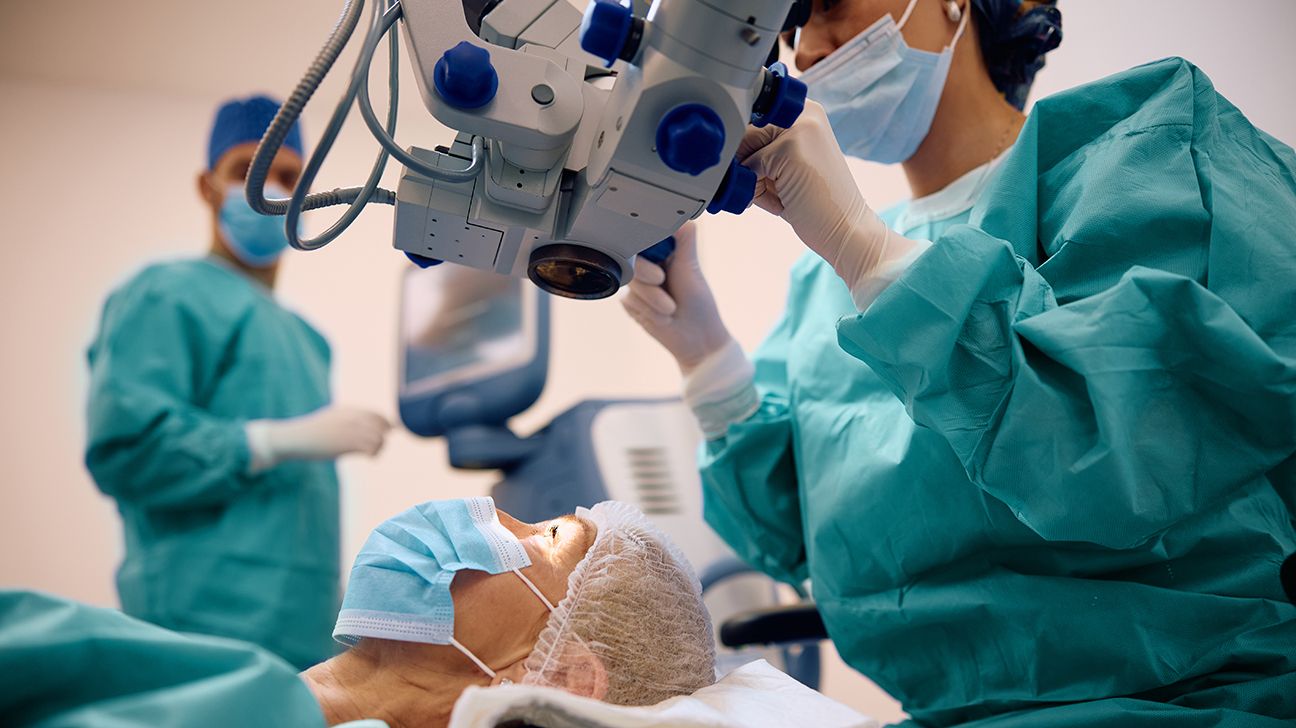
The main purpose of laser surgery for cataracts is to improve vision by removing the clouded lens and replacing it with an artificial one, known as an intraocular lens.
This technique has several benefits. For example, it can provide more correction than traditional cataract surgery in some cases. It also requires less energy and time, reducing corneal damage that can affect vision.
Preparation for laser surgery for cataracts is typically straightforward. First, an eye doctor will perform a thorough medical evaluation to assess your eye health and the severity of your cataracts. This evaluation may include eye measurements and other tests to help plan the surgery.
The eye doctor
To reduce the risk of infection, you may need to clean your eyelashes and eyelids with a gentle shampoo the night before and the morning of the procedure.
It’s also important to make sure someone is able to drive you home after the surgery, as it’s common for your vision to be blurry immediately after the procedure.
On the day of your laser cataract surgery, you’ll arrive at the outpatient surgical center or hospital for the procedure. It can be helpful to dress comfortably and make sure someone is with you and able to drive you home afterward.
The medical team will explain the procedure again and answer any questions you may have. A healthcare professional will then test the following to make sure you’re healthy for surgery:
- your vital signs, including your blood pressure
- your temperature
- your pulse rate
- your respiratory rate
- your oxygen saturation
During the procedure, the eye doctor will perform the following steps:
- Clean your eye with an antiseptic solution to reduce the risk of infection.
- Place a device called a speculum in the eye to keep your eyelids open during the procedure.
- Give you eye drops to dilate your pupils and local anesthesia to numb your eye.
- Place a camera device over your eye to guide the procedure.
- Use a femtosecond laser to make a precise incision in the cornea and create an opening in the lens capsule. The laser beam may also help soften the cataract, making it easier to remove the clouded lens.
- Break the cataract into small pieces and remove it.
- Implant the artificial lens to replace the removed natural lens.
The type of artificial lens implanted can vary depending on your vision needs. Possible options
The incisions are usually self-sealing, so no stitches are needed. The entire procedure is typically quick, often completed within a few minutes. However, you’ll need to stay at the surgical center for a few hours for initial recovery and observation.
After the surgery, a healthcare professional will guide you through the initial recovery phase. You’ll rest for a short period in a recovery area, and the medical team will monitor you for any immediate complications.
They’ll then cover your eye with a protective shield to prevent accidental rubbing or injury. An eye doctor will prescribe eye drops to prevent infection and reduce inflammation. They’ll also give you detailed instructions on caring for your eye, including any activity restrictions.
Some people notice significant vision improvements within a few days, although full recovery can take up to 12 weeks. You may experience mild discomfort, which you can manage with pain medications.
Depending on your healing process, you can typically return to normal activities within a week. However, healthcare professionals typically advise avoiding strenuous activities and heavy lifting for 1 to 2 weeks to ensure proper healing. It’s also best to avoid driving until a healthcare professional confirms it’s OK to do so.
During recovery, it’s important to attend all scheduled follow-up appointments with the eye doctor to monitor your healing process. These visits enable them to check for any signs of complications, such as infection or increased intraocular pressure, and to make sure your vision is improving as expected.
What are the disadvantages of laser cataract surgery?
The biggest disadvantage of laser cataract surgery is often the cost, as the procedure can be expensive even with health insurance.
How painful is laser cataract surgery?
Laser cataract surgery is typically painless, as a local anesthetic is used. However, some people may feel a slight pressure or tightness during the procedure.
How long does it take to fully recover from laser cataract surgery?
It can take up to 12 weeks to fully recover from laser cataract surgery. However, some people notice significant vision improvements within a few days.
Laser surgery for cataracts is a safe and effective procedure that uses a femtosecond laser to break up a cataract and improve vision.
This advanced surgical method replaces the clouded lens with an artificial lens with high precision and minimal invasiveness, ensuring quick recovery.
If you’re experiencing cataract symptoms, consider talking with an eye doctor to determine if laser surgery for cataracts is the right option for you.