














Irregular periods are a telltale symptom of starting the menopause transition. Other menopause-related symptoms will occur throughout the month and not just before a period, unlike PMS symptoms, due to hormone flucuations.
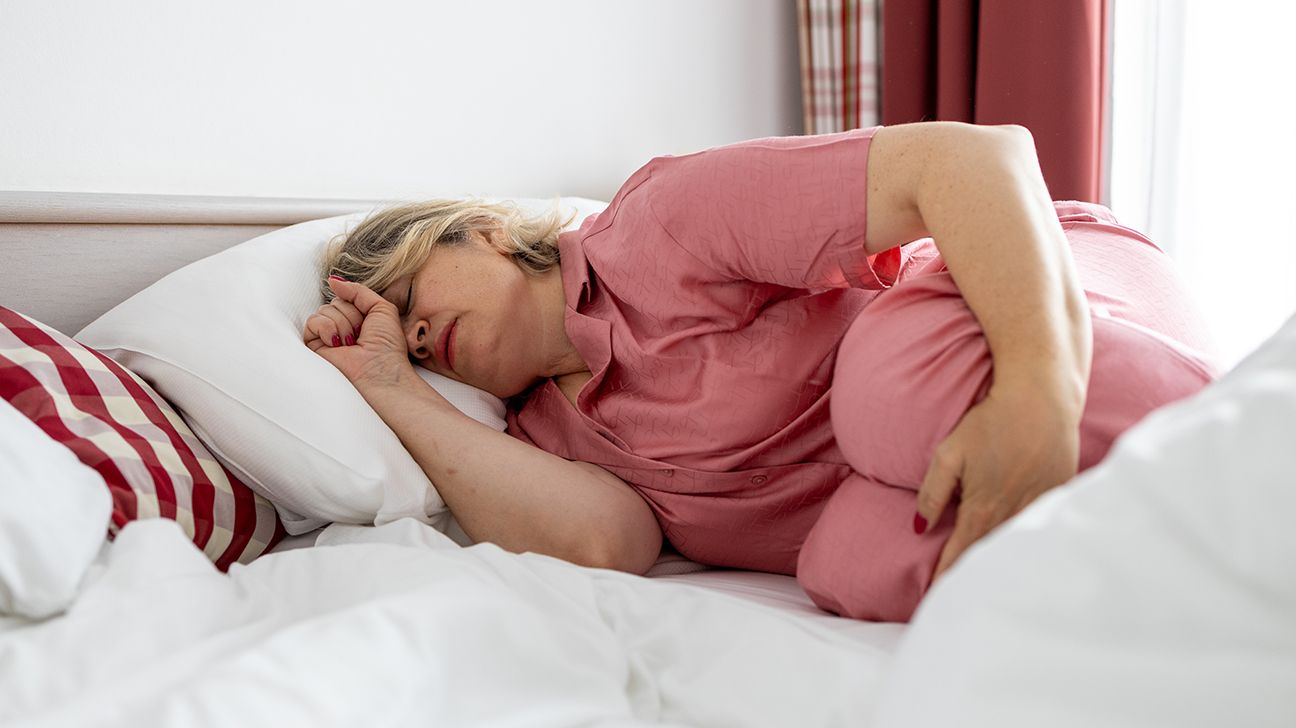
Your periods will continue as you reach menopause, but they may become more irregular, meaning your cycles may be longer, shorter, or both.
If you’re unsure about whether you’re in perimenopause or experiencing premenstrual syndrome (PMS), some symptoms may be more noticeable during the menopause transition and persist after a period has ended.
Healthline aims to bolster the discourse around menopause, which is why we recently asked Shilpa Amin, MD, CAQ, FAAFP, about how you can tell perimenopause and PMS apart.
Perimenopause typically starts in your late 30s to mid-40s, though it can occur before or after these ages.
Perimenopause is associated with spikes and drops (flucuations) in estrogen levels that are more sporadic than in premenopause (before perimenopause) cycles. Overall, estrogen levels decline in perimenopause.
Your periods may continue as they typically would, but they’ll likely become more irregular due to hormone fluctuations.
Other signs of entering perimenopause include a change in the blood clots during your period and bleeding after sexual activity.
If in perimenopause, you may still experience PMS symptoms the weeks before a period. These symptoms may be more or less intense than usual. Some common examples include:
During a perimenopause period, the following signs and symptoms may also be more noticeable:
- forgetfulness
- concentration difficulties
- heart palpitations
- muscle or joint aches
- urinary tract infections
- hair changes, including hair loss
- weight gain and other changes in body composition
- breast tenderness
- fertility issues
Some symptoms may improve after a period has ended, but others may persist throughout the month. Those that persist are related to perimenopause rather than PMS.
Can symptoms of PMS and perimenopause overlap?Many of the PMS symptoms above double as symptoms of perimenopause due to hormone flucuations not related to PMS. These symptoms will occur more randomly and persistently throughout the month, not just before a period.
For example, weight changes are common throughout perimenopause as your appetite and body’s metabolism might be affected. You might also see weight changes due to PMS right before a period.
The table below summarizes key differences between symptoms of perimenopause and PMS.
| Perimenopause symptoms | PMS symptoms | |
|---|---|---|
| Timing | throughout the month | align with a period, appearing 1 to 2 weeks before one starts |
| Key symptoms | hot flashes, night sweats, irregular periods | cramps, bloating, breast tenderness |
| Intensity | may worsen | may be mild to severe |
| Cause | flucuation and overall decline of estrogen | predictable monthly drop in estrogen and progesterone (luteal phase) |
| Duration | persistently and randomly throughout the month, sometimes continuing after reaching menopause | 1 to 2 weeks before a period starts |
Remember: Symptoms associated with perimenopause will occur persistently and randomly throughout the month, while symptoms of PMS will occur in the days to weeks before a period starts.
Perimenopause may change which and the intensity of PMS symptoms you may experience during your period.
Changes in your cycles and symptoms may be due to fluctuations in your hormone levels, particularly estrogen.
These drops and spikes can explain other symptoms you may experience during the whole month, even after a period has ended and outside of the 1 to 2 weeks before a period starts.
Speak with your primary care doctor or a Menopause Society Certified Practitioner to create a treatment plan that aims to relieve your symptoms.