














The Fast Facts
- Taking a metabolism test at home can provide information about how your body turns what you consume into energy.
- We’ve vetted and chose myLAB Box and Everlywell‘s at-home tests as our favorites.
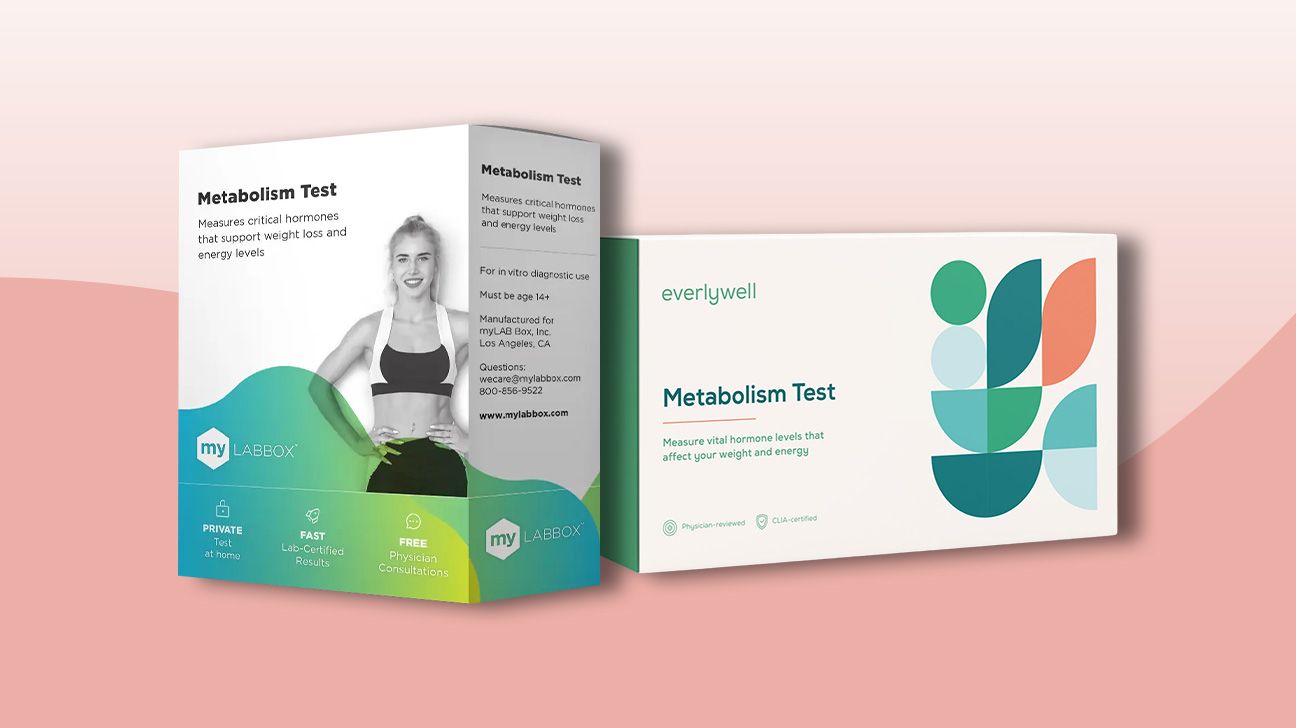
A metabolism test provides a snapshot of certain hormone levels to understand how your body converts calories into the energy that fuels every physical, biological, and mental activity.
These tests are typically conducted in a medical setting, allowing a medical professional to interpret the results and identify any concerns. For your personal information, there are also simple metabolism tests that you can take at home.
In this article, we’ll explain how metabolism tests work, speak with a pharmacist about when you might consider using one, and share our recommendations for the best at-home test options.
Pros
- no need to go to a medical office or lab to give a sample
- no prescription required
- may provide insight to help with fitness goals
- relatively affordable
Cons
- Tests provide limited information. These tests are most beneficial when combined with a physical examination and evaluation of your medical history.
- These tests don’t explain your basal metabolic rate (BMR).
- They’re not covered by health insurance, but you can often use HSA/FSA.
- Some people may find it challenging to take a blood sample at home.
- Some people struggle to produce enough saliva to fill the sample tube.
- Faulty results can be caused by various factors, including human error, medications you are taking, or substances you consumed prior to testing.
The kits on this list come from vetted manufacturers. Each manufacturer has stated that they comply with the Health Insurance Portability and Accountability Act (HIPAA) and use
We didn’t select kits from manufacturers that make medical claims or provide medical advice. Each manufacturer recommends discussing your test results with a doctor.
Each kit gets more positive than negative reviews for accuracy, customer service, and speed.
Metabolism tests done at home measure markers that affect how your body converts food and drink into energy. They require you to give a saliva sample, blood sample, or both, to analyze hormones, including:
- Cortisol: Cortisol is known as the stress hormone. It helps regulate blood glucose, which the body uses as fuel.
- Free testosterone: Free testosterone levels can be useful for diagnosing metabolic conditions in women, such as polycystic ovary syndrome. They can also indicate testosterone deficiency (low T) in men.
- Thyroid-stimulating hormone (TSH): TSH manages thyroid hormone production. Thyroid hormones stimulate a wide range of the body’s metabolic activities. Your TSH level provides information about your basal metabolic rate.
These tests can be the first step in determining whether your metabolism is functioning properly. It’s important to note that they’re less complete than metabolic panels you’d get at a doctor’s office, which generally measure up to 14 substances instead of just a few, and can test for multiple conditions, including diabetes and kidney and lung issues.
Healthcare professionals may also order comprehensive metabolic panels (CMPs) to screen for potential medication side effects.
At-home metabolism tests also differ from metabolic testing, which measures aspects such as how your body utilizes oxygen and burns calories, also known as your basal metabolic rate (BMR).
Currently, we recommend only a few at-home metabolism tests on the market, although you’ll encounter a good number of them during your search. Here are some tips to help you decide:
- Consider brands that use at least a
CLIA-certified laboratory to get accurate results - Check reviews for comments about accuracy, ease of use, and result turnaround times
- Does the test company offer support or education to help you understand your results?
Whichever test you choose, check that the kit hasn’t expired before opening it, and follow the provided instructions carefully to get the most accurate results.
Following up with a doctor is the next best step after completing an at-home metabolism test.
At-home metabolism tests can provide a snapshot of cortisol, free testosterone, and TSH levels, and may offer suggestions for lifestyle changes based on your results. You may even receive a phone call from one of the brand’s on-hand physicians if you receive abnormal results.
However, these kits shouldn’t replace routine wellness exams, nor should they replace talking about issues like weight gain, fatigue, or increased stress with your healthcare professional.
“The key thing is that [at-home tests] are all meant to be considered preliminary results. These results are not meant to be definitive,” said Philip Ngo, PharmD, a pharmacist in Houston.
This is particularly important when talking about hormone ranges, “which can be subjective from one person to another,” he said.
A result outside the typical range may also indicate underlying conditions.
You can purchase an at-home metabolism test to check cortisol, free testosterone, and TSH levels. Depending on the kit, you’ll be required to provide blood or saliva samples and ship them to a certified lab to receive results online.
myLAB Box At-Home Metabolism Test uses both CLIA- and CAP-certified labs, offers 2-day shipping, and offers test results in 2–5 days.
An RMR test analyzes the amount of oxygen you breathe in and the amount of carbon dioxide you breathe out. This test helps determine the number of calories your body burns while you’re resting. It’s done while you’re sitting or reclining.
At-home metabolism tests analyze hormones and other markers that can affect metabolism, weight, libido, and energy levels.
At-home tests are convenient and private, although handling your own blood at home may not be for everyone. These test kits can be a beneficial first step toward getting information about your health and metabolism. However, these tests shouldn’t be used in place of medical advice.