














Key takeaways
- Consider talking to your doctor about switching medications if your migraine patterns change, your attacks don’t improve with current treatment, or if the medication isn’t as reliable as it used to be.
- You may also want to revisit your migraine treatment plan if side effects begin to interfere with daily life or if changes in your overall health could affect how your medication works.
- Recognizing these signs early and sharing them with your doctor can help you adjust your treatment approach, maintain migraine management, and protect your quality of life.
Migraine is a type of neurological disorder. It features intense, often debilitating throbbing or pulsing head pain and can be accompanied by a variety of other symptoms, such as nausea, vomiting, muscle aches, numbness, sensory sensitivity, and fatigue.
If you’re among the
But even the most effective treatment plan might not control migraine forever. By recognizing the warning signs that your treatment isn’t working, you can take steps to protect your health and maintain your quality of life. Here’s what to watch for.
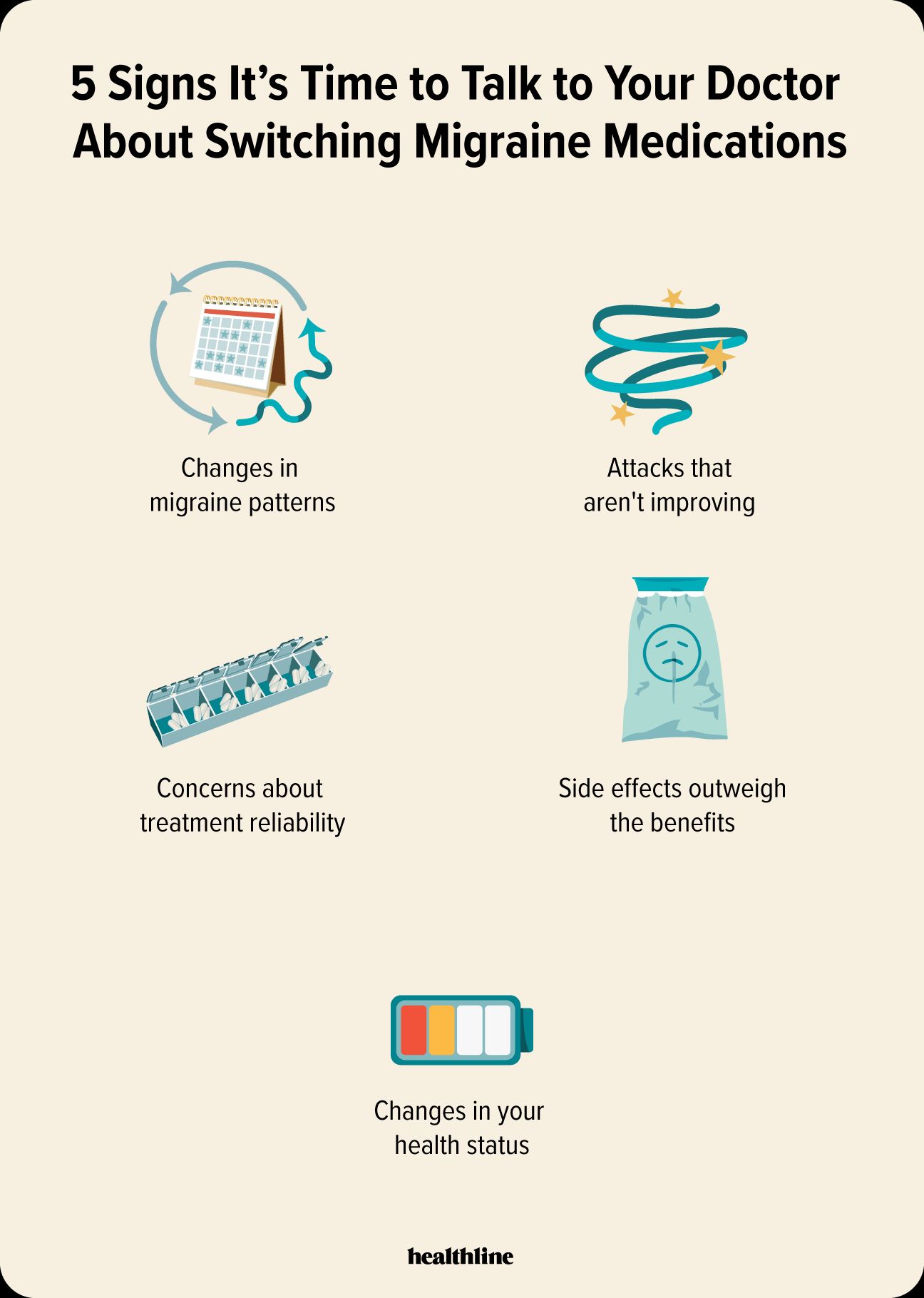
Migraine treatment plans are tailored to address the symptoms you and your doctor observe and discuss. If those symptoms or patterns change, it could be a sign your current treatment plan no longer meets your needs.
Migraine can evolve over time. Your brain and nervous system may become more sensitive to pain signals and inflammation. This is known as “central sensitization,” and it can make migraine attacks:
- feel more intense
- occur more often
- include new symptoms
- last longer
Let your doctor know about any changes in your migraine symptoms or patterns as soon as possible.
If migraine attacks aren’t improving with treatment, or still require additional rescue medications for relief, it may be a sign that your prescription medication isn’t fully effective. However, it’s important to give the medication time to work.
Migraine medications often don’t start working right away. Many take time to reach their full effectiveness, and doctors typically start you with low doses to allow your brain to gradually adjust.
To determine whether your migraine treatment is working, most people need a trial period of 8 to 12 weeks. Observing your treatment response during this time also helps your doctor track your symptom patterns and assess overall changes.
When medications take longer to work, wear off quickly, or need higher doses to manage an attack, it could be a sign that your treatment plan needs re-evaluation.
Sometimes a medicine just isn’t the right fit, but over time, even effective medications may need to be adjusted.
If migraine medication suddenly feels unreliable for relief, it’s possible you’re experiencing a medication overuse headaches (MOHs).
MOHs can develop when the frequent use of migraine medications increases central sensitization and lowers your pain tolerance. Your brain starts to rely on the medications, making you more likely to get a return headache when the medication wears off.
Migraine medications can cause side effects. This is one reason why your doctor usually starts you out on a low dose.
Some side effects are common and manageable, but if they significantly interfere with your daily life or outweigh the benefits of the medication, it might be time to discuss a treatment change with your doctor.
Possible side effects of migraine medications
- nausea and vomiting
- fatigue
- tightness in the chest, jaw, or neck
- skin flushing or tingling
- dizziness
- weight fluctuations
- sleep disturbances
- mood changes
Changes in other areas of your health can affect both your migraine symptoms and how well your medication works. It’s important to let your doctor know about:
- pregnancy or menopause
- weight fluctuations
- new diagnoses or medications
- changes in health insurance coverage
- significant life stress
- new diets
- long or unusual work schedules
- increases or decreases in activity level
Even if you haven’t noticed a change in how well your medication is working, these factors can still influence treatment effectiveness. Keeping your doctor updated on your overall health status helps ensure your migraine treatment approach remains as effective as possible.
Migraine is more than just a bad headache. It’s a neurological disorder that can significantly impact daily life. Medications help reduce migraine frequency and severity, but even a successful treatment plan can lose effectiveness over time.
Changes in your migraine patterns, uncontrolled symptoms, and frequent use of rescue medications can be signs to re-evaluate your treatment plan with your doctor. The earlier you discuss any changes you’re noticing with your doctor, the sooner you can make adjustments to help you stay on top of migraine management.