














Key takeaways
- B-cell lymphoma may cause abdominal swelling, chest pressure, and bone weakening as lymphoma cells affect different organs.
- Treatments like chemotherapy and immunotherapy for B-cell lymphoma may increase infection risk, lead to tumor lysis syndrome, and affect your immune response.
- Long-term effects of B-cell lymphoma and treatments may include infections, autoimmune diseases, immune deficiencies, hormonal issues, and late treatment complications, needing ongoing care.
B-cell lymphomas are the
Symptoms of B-cell lymphomas may take some time to develop as the cancer progresses. In some cases, it takes a long time. This is most common with indolent (slow-growing) lymphomas. Aggressive (fast-growing) lymphomas may cause more severe complications.
Additional complications may develop with either type of B-cell lymphoma due to treatment or long-term effects of the cancer on the immune system.
In this article, we explore the possible complications associated with B-cell lymphoma, including those caused by the disease itself and its treatments.
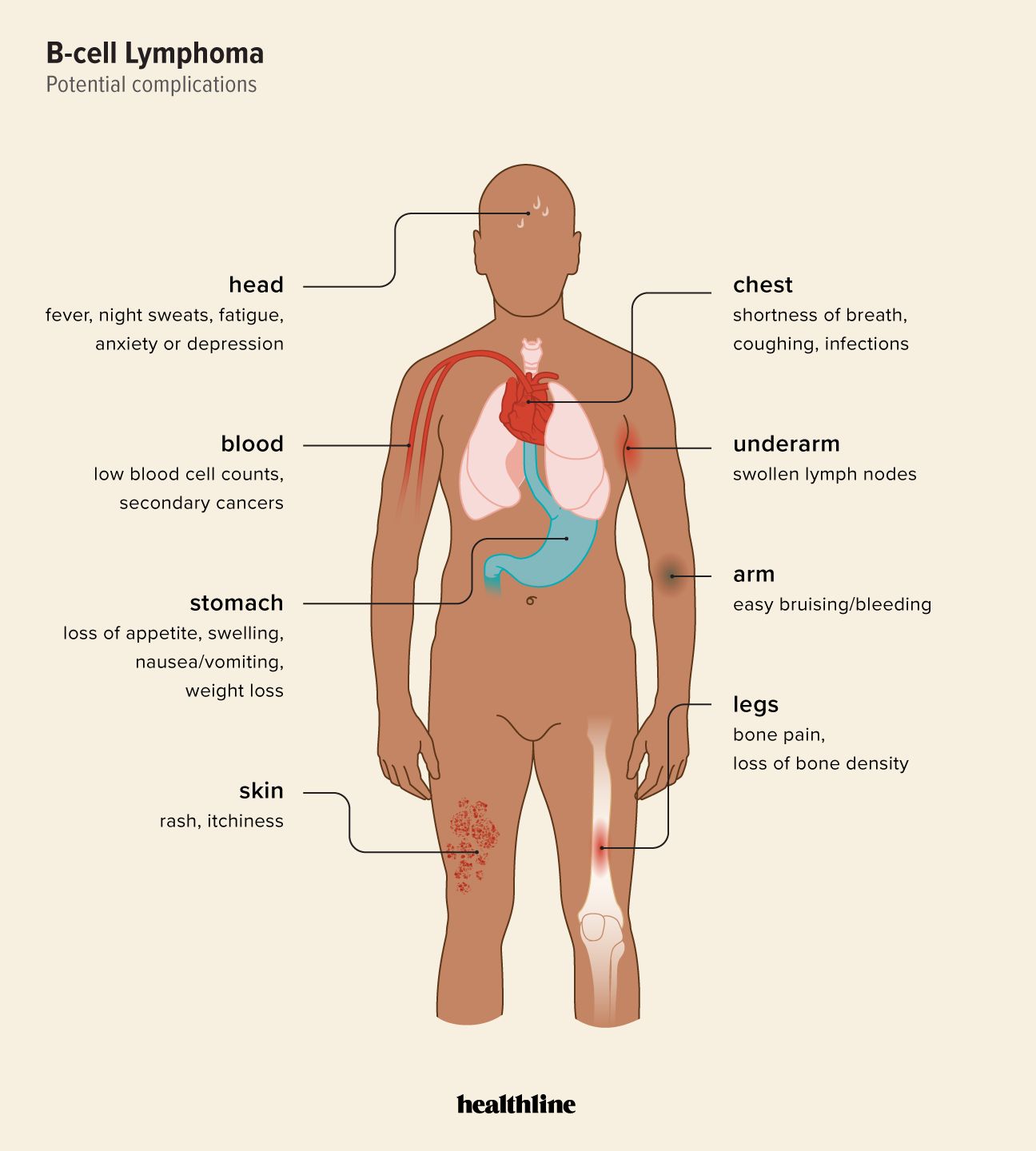
Some of the most common signs and symptoms of B-cell lymphomas are:
- swelling of lymph nodes, particularly in the neck, underarm, or groin
- unexplained fever
- night sweats
- unexplained weight loss
- fatigue
- shortness of breath
- skin rash or itchiness
- pain in the chest, abdomen, or bones
Fever, night sweats, and weight loss are sometimes called “B symptoms” and are considered hallmarks of lymphoma.
Additional complications can develop due to the bodily effects of B-cell lymphoma.
Abdominal complications
If lymphoma cells accumulate in the abdomen, it can cause swelling or pain. The spleen or liver can become enlarged, putting pressure on other organs and causing feelings of pain, pressure, or discomfort. Stomach lymph nodes can also become swollen if lymphoma cells accumulate there, potentially causing more pain and pressure.
Swelling that pushes on the stomach may cause feelings of fullness (after eating a small amount of food) or a general loss of appetite. It can also cause nausea and vomiting.
Chest complications
Swelling due to a buildup of lymphoma cells (or lymph nodes) in the chest can also cause complications by pushing on the windpipe or lungs and can lead to:
- coughing
- difficulty breathing
- chest pain or pressure
Serious complications can develop if chest swelling presses on the superior vena cava, the large vein that carries blood from the head and arms to the heart.
Pressure on this vein can block blood flow, leading to swelling and discoloration of the arms, upper chest, and head. Too little blood flow can cause breathing or swallowing problems and may affect consciousness. Superior vena cava obstruction is a serious and potentially life threatening complication that requires immediate medical attention.
Bone effects
Blood cells — including immune cells like B cells — are produced by cells in the bones. In some cases, B-cell lymphomas may start in these cells; other times, lymphoma may spread to the bone marrow as it progresses.
As lymphoma cells take over the bone marrow space, they crowd out healthy cells that produce normal blood cells. This can lead to changes in blood cell counts, such as:
- reduced number of red blood cells (anemia)
- low platelet counts (thrombocytopenia)
Low blood cell counts can cause complications, such as easy bruising or bleeding, or fatigue.
Cancer cell growth within the bone marrow can also weaken bones, potentially leading to:
- bone pain
- broken bones
- elevated blood calcium levels (hypercalcemia)
- spinal cord compression
Spinal cord compression is a potentially severe complication that can cause a variety of neurologic problems, such as:
- back, neck, or limb pain
- muscle weakness and coordination difficulty in the legs or arms
- loss of sensation in the feet
- loss of bowel or bladder control
- difficulty concentrating or thinking
Mental health effects
Symptoms of B-cell lymphomas, treatment outlook, and the effects of a cancer diagnosis can have a significant effect on a person’s mental health.
According to one study, involving 200 people with blood cancer:
- 52% had symptoms of anxiety
- 27.5% had symptoms of depression
In this study, mental health effects worsened in people with financial concerns or limited social support.
A variety of treatments are used for B-cell lymphomas, including:
- chemotherapy
- immunotherapy
- radiation therapy
- bone marrow transplant
Each treatment type has its own side effects. Some common complications with B-cell lymphoma therapies are described in the following discussions. Note that this is not all the complications that can arise from treatment. Your oncologist can discuss potential side effects before starting any new treatment.
Infections
B-cell lymphomas are cancers of the immune cells (B-lymphocytes) that create antibodies, which help fight off infections. Treatments for these cancers — chemotherapy and radiation — can lead to a decrease in neutrophils, the body’s main infection fighters, which can increase the risk of infection.
Certain types of immunotherapies (medications that leverage the body’s own immune system to fight cancer cells) can “exhaust” the immune system, which can further increase your infection risk.
A weakened immune system can cause typically mild infections to become severe. Your care team may prescribe medications to prevent infections and provide recommendations for lifestyle changes to help lower the risk of infection.
Tumor lysis syndrome
Tumor lysis syndrome is a possible complication caused by the rapid killing of lymphoma cells. It typically occurs with chemotherapy treatment in people with aggressive forms of lymphoma.
When the cells die, they burst open and release their contents into the bloodstream, which can overwhelm the kidneys if it happens too quickly. Toxic minerals can build up in the blood as a result, which can lead to heart problems, neurological effects, and even kidney failure.
Doctors typically prescribe medications and recommend fluid intake during treatment to lower the risk of tumor lysis syndrome.
Cytokine release syndrome
Newer types of immunotherapies for B-cell lymphomas — specifically bispecific antibodies and chimeric antigen receptor (CAR) T-cell therapies — can cause a potentially serious treatment complication known as cytokine release syndrome, or CRS.
CRS occurs when immune cells release large amounts of signaling molecules (cytokines) into the blood, which activate more immune cells. This immune system overactivation can overwhelm the body, leading to:
- fever
- headache, lightheadedness, or confusion
- nausea, vomiting, or diarrhea
- difficulty breathing
- low blood pressure
- elevated heart rate
- swelling
- fatigue or weakness
CRS is a potentially life threatening complication.
Close monitoring is required with these treatments so that your healthcare team can quickly treat complications if they occur.
Bispecific antibodies and CAR T-cell therapy can also cause neurologic effects.
As treatment options for B-cell lymphomas improve, people are living longer and longer with these cancers. This can lead to a variety of complications due to the long-term use of different treatments and the chronic stress on the immune system.
Long term, people with lymphoma have been found to be more likely than survivors of other cancer types to develop infections, autoimmune diseases, and immune deficiencies. Long-term cancer treatment — lasting several months or even years — can lead to fatigue, hormonal effects, and problems with heart health.
Additionally, some types of cancer treatment may cause “late effects,” or treatment complications that develop many years after completing treatment. These may include:
- infertility in young people
- osteoporosis (bone loss)
- secondary cancers
- heart disease
Complications from B-cell lymphoma are highly variable and arise due to the disease itself or its different treatments. More specifically, they’re caused by the effects of the cancer or its treatments on immune and blood cells, which can affect many different systems.
Many lymphoma-related complications can be managed with medications or other types of treatments.
If you’re experiencing any symptoms or side effects related to your cancer or its treatment, it’s important to talk with your healthcare team right away to discuss how to relieve them and to reduce the likelihood of more serious complications.