














Making some bathroom safety changes can help reduce the risk of serious falls, which is especially high in older age and in slippery environments.
The bathroom is an environment in which you are particularly susceptible to falls. Slippery floors, hard surfaces, and tight spaces make it easier to lose your balance and get hurt.
This is an even greater risk for older adults, who are already much more prone to falls and serious fall-related injuries than people who are younger.
Since balance and strength naturally change with age, it’s important to be extra careful in this part of the house. Read on to learn a few simple safety changes you can make in your bathroom (or the bathroom of an older loved one) to address these problem areas.
Falling in the bathroom can happen for various reasons. You’re more likely to lose balance during transitions, such as sitting down or standing up from the toilet, or getting in and out of the shower.
Wet floors and surfaces make slipping easier, and small bathrooms with clutter or obstacles can increase the risk. Insufficient lighting, especially at night, can also cause you to trip.
To make your bathroom safer, start by
Simple changes
These may include:
- using nonslip mats in wet areas like the shower.
- keeping the floor dry by cleaning up spills right away
- removing clutter or tripping hazards both in and near the bathroom
- storing items like soap and shampoo within easy reach
- adding nightlights to improve visibility.
- setting the water temperature to a safe level
- getting a non-slip shower chair, stool, or transfer bench for the shower or bath
- adding a clamp-on tub bar for extra support
- adding a raised toilet seat or safety frame
- replacing glass doors with a shower curtain for easier movement.
- removing door locks so help can reach you quickly in an emergency
- unplugging electrical appliances when you’re not using them, and keeping them away from water
Bigger upgrades
These may include:
- replacing dim lighting with brighter fixtures
- adding overhead lights in the shower
- adding a walk-in shower or a taller, comfort-height toilet
- installing grab bars near the toilet and shower
- adding a shower seat with a handheld showerhead.
- installing an emergency help button in case of a fall
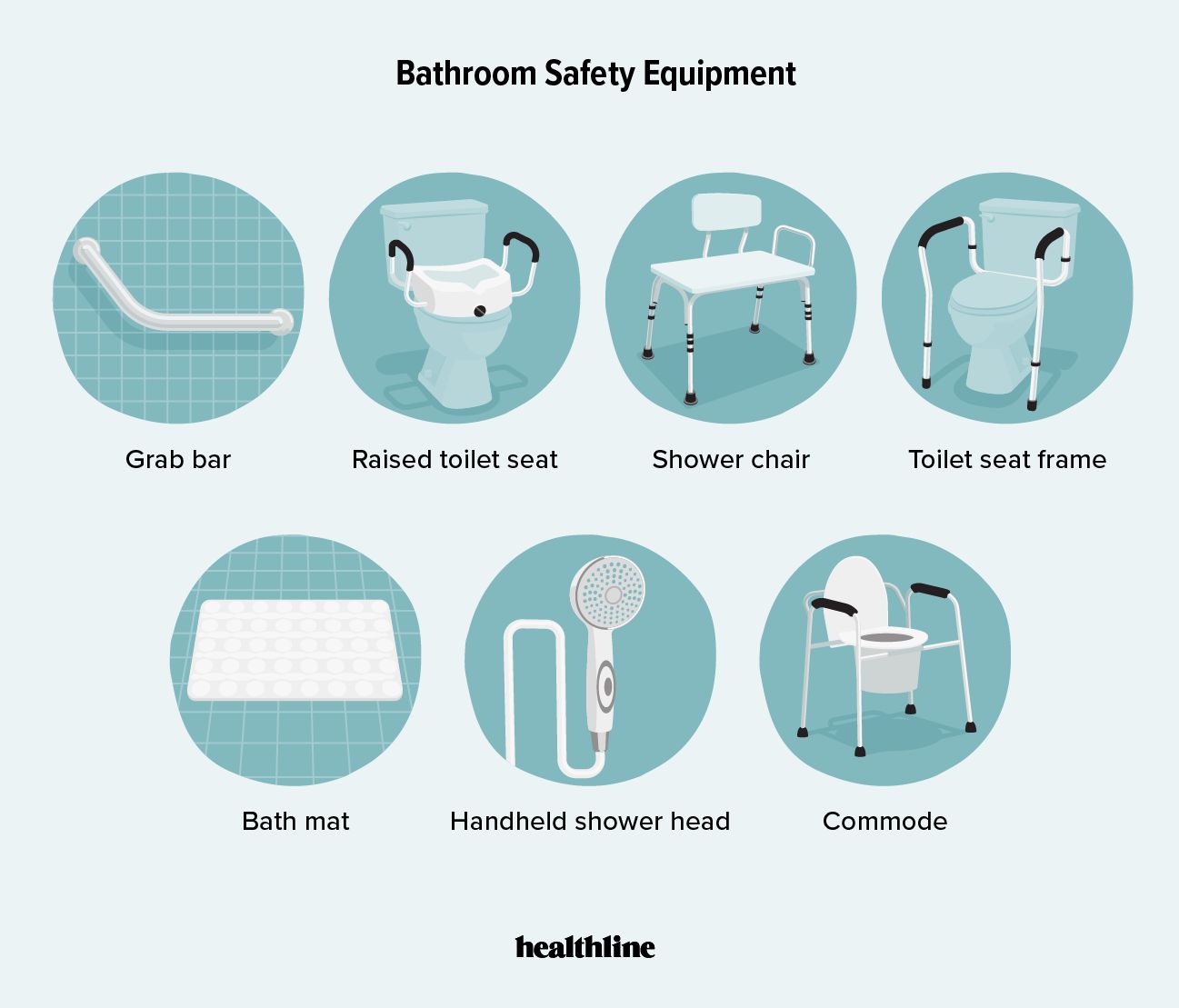
Bath and shower safety for older adults involves installing equipment and decluttering, as well as maintaining safe habits.
The following are some tips that can help a caregiver better support their loved one in the bathroom. Even if you or your loved one is using the bathroom independently, you can still consider these tips when maneuvering around the bathroom.
Getting on and off the toilet
- Have the person stand close enough so the backs of their legs touch the toilet.
- Have them reach back and grab a grab bar, the toilet, or a sturdy surface for support.
- Assist them in slowly lowering into a seated position, then reverse the steps to help them stand.
- When seated, make sure their feet touch the floor. If not, the seat is too high and should be adjusted.
Transferring in and out of a tub
- Have the person stand so the backs of their legs touch the tub, aligned with the chair.
- Using one hand, they should hold the chair’s backrest, and with the other, a stable surface such as the tub edge, walker, or cane.
- Help them slowly lower onto the chair.
- Once they’re seated, have them move their hand from the support surface to the chair or stool for balance.
- Have them lift and swing each leg into the tub one at a time, making sure they’re centered on the seat.
- Reverse the process to help them exit safely.
Transferring in and out of a shower
- Place the bench so most of it is inside the shower, with two legs outside the threshold for stability.
- Have the person back up until the backs of their legs touch the bench.
- Have them place one hand on the bench and the other on a stable aid, like a walker or cane.
- Assist them in sitting slowly on the edge, then help them scoot across the bench until they can swing their legs into the shower.
Using a walker to get in and out of the shower
- Place the walker near the edge of the shower and have the person step inside the frame for stability.
- Lift the walker into the shower and make sure it’s positioned securely.
- Help the person step carefully over the threshold and into the shower.
- Once they’re inside, position a seat for them and remove the walker.
- Reverse these steps to assist them safely out of the shower.
Making simple changes to bathroom safety is a good idea at any age. That said, there comes a time when more significant changes, both to equipment and habits, may be necessary.
According to the CDC, about a
This can happen to anyone, but if you notice that you or a loved one is having increased balance issues or if you’re living with any chronic condition that might affect your joints, such as arthritis or another condition that may trigger a fall, it may be time to make changes. This is especially true if you or your loved one has already fallen before.
Does Medicare pay for bathroom safety equipment?
If you or your loved one is enrolled in Medicare, Medicare Part B generally won’t cover equipment such as grab bars or walk-in showers because these are considered home safety upgrades, not medical equipment.
But if your doctor prescribes a bedside commode or shower chair, Medicare may cover it if you meet specific eligibility requirements and have a medical need for the item.
The bathroom can be one of the most dangerous places in the home because slippery floors, hard surfaces, and small spaces increase the chance of falling. This danger is even higher for older adults, who are more likely to experience falls and serious injuries.
Since balance and strength often decrease with age, it’s important to take extra precautions. Simple safety upgrades like installing support equipment, keeping the area clutter-free, and moving carefully when entering or exiting the shower or tub can greatly reduce the risk of injury.