














Stretches that target your calves, tibia muscles, and Achilles tendons may help relieve shin splint pain. Other measures, such as rest, icing, foam rolling, and low impact exercises, can also support healing.
Shin splints are lower leg pains along the inside or front of your shin bone (tibia). The medical name for shin splints is medial tibial stress syndrome (MTSS).
MTSS is common in athletes. It
- lower body muscle imbalances or weakness
- wearing shoes that don’t fit properly
- having overweight or obesity
There are no set guidelines for managing shin splints, and the research on the efficacy of stretching is mixed. Some research suggests that stretching can help relieve pain, while
As such, it’s important to listen to your body and to ease into stretches. If you feel any pain, stop immediately and rest, as continuing to stretch can worsen the injury.
Here are seven stretches to help you manage shin splints.
Before getting started
Shin splints primarily affect the anterior (front) tibialis muscles. But when this happens, the surrounding muscles may begin to work harder to compensate for or relieve pressure from them.
As such, it’s important to stretch out the muscles on the back and front of your legs.
Hold each stretch for 30 to 60 seconds, then switch sides. Repeat the stretch on each side 2 or 3 times, working your way up to stretching 3 times a day.
For each strength exercise, perform 2 to 3 sets of 8 to 12 repetitions, once daily.
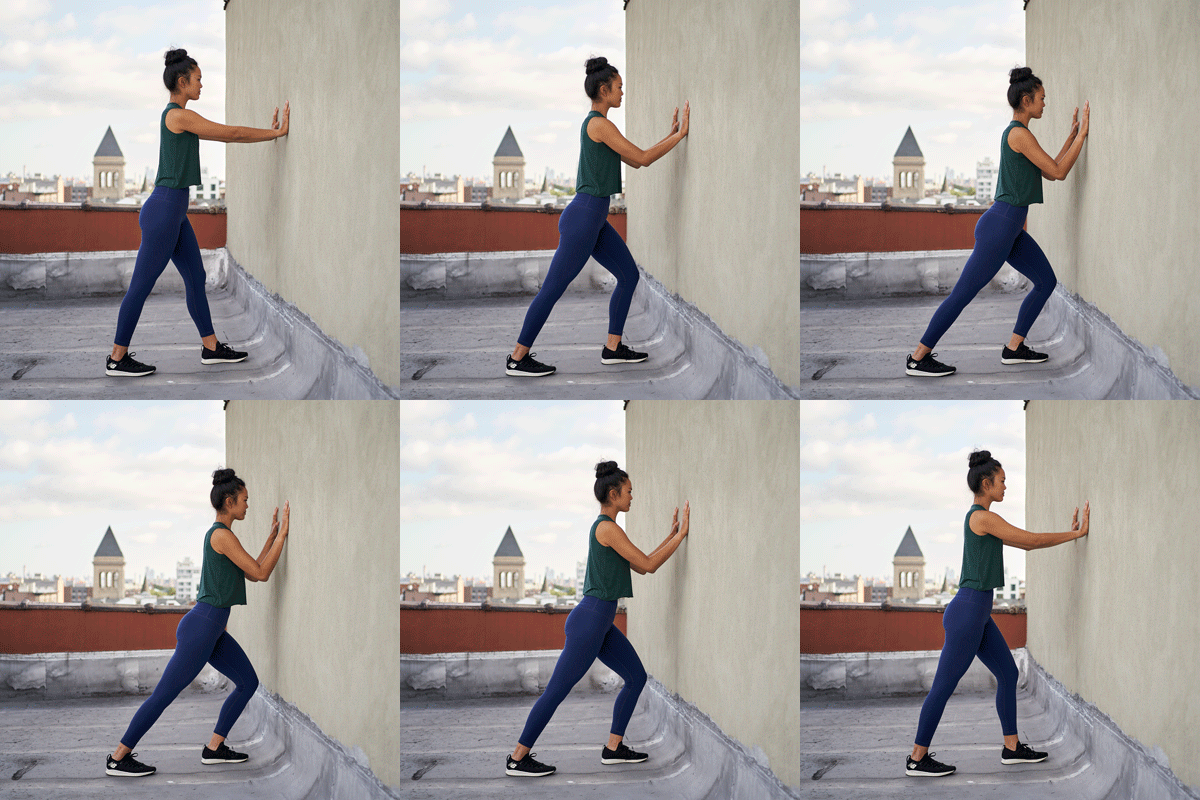
The gastrocnemius is one of the two major muscles in your calves. These large muscles run from the knee to the heel.
Some researchers recommend different variations of calf stretches to help manage shin splints, as tight calves may contribute to shin splint development and pain severity.
- Stand with your hands against a wall or on the back of a chair for support.
- Put one foot behind you. Keep your feet flat and pointed straight ahead.
- With your back heel down and back leg straight, bend the front knee until you feel a stretch in the calf of your back leg.
- Keep your back straight throughout the stretch.
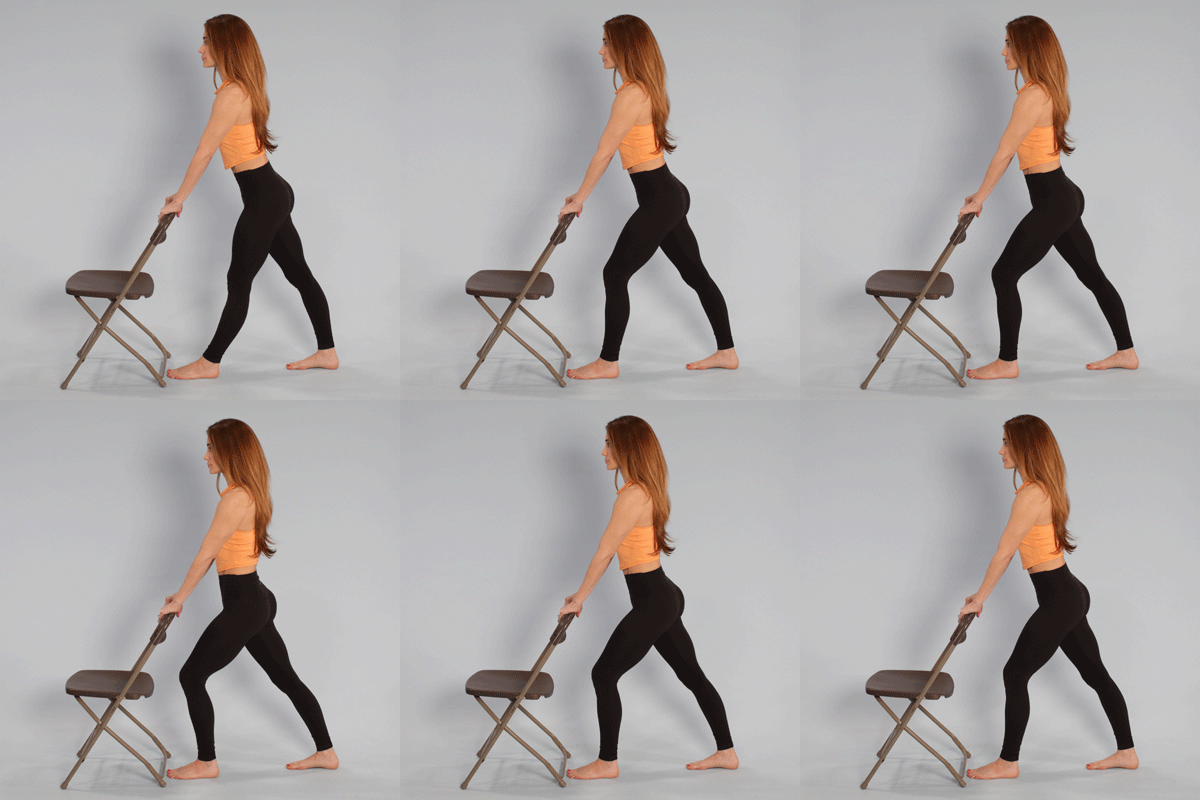
The soleus is the other main muscle in the calf. It plays a key role in walking and maintaining balance when you’re standing. Some
- Stand with your hands against a wall or the back of a chair for support.
- Put one foot behind you. Keep your feet flat and pointed straight ahead.
- Bend your front knee slightly. With your back heel down, bend your back knee. If it’s too hard to keep your heel down, shorten your stride.
The Achilles tendon is a strong, thick tendon that connects your calf muscle to your heel. Injury to the Achilles tendon is another common overuse injury.
You can perform the Achilles tendon standing stretch on a stair step, curb, step stool, or thick phone book. You may wish to hold onto a railing or chair with at least one hand for balance.
- Stand with the balls of your feet on the edge of the stair step (or whatever you’ve chosen to use for this exercise).
- Slowly let one heel hang off the step until you feel a stretch at the back of your leg and the Achilles area.
For this stretch, you’ll need a resistance band, towel, or belt that’s long enough to loop around your foot when you are seated and the leg is stretched out in front of you.
- Sitting on the floor, bend one knee and put the other leg out in front of you, with your heel on the floor.
- Loop an exercise band, a towel, or a belt around the ball of your foot.
- Slowly pull your toe toward you and hold for 15 to 30 seconds.
You can also do this stretch sitting in a chair, with one leg extended and your heel on the floor. Loop the band or towel around your heel and slowly pull your toe toward you.
This exercise stretches the anterior (front) of your tibia muscles. This is the muscle most commonly affected by shin splints.
- Sit on your feet, with your toes pointing slightly in, your hands on the floor in front of you.
- To increase the stretch, lean forward to raise yourself up, resting on your toes.
Strengthening the anterior (front) tibialis can play an important role in shin splint prevention and recovery.
For this exercise, you’ll need a resistance band long enough to wrap around your foot when you’re seated and the leg is stretched out.
- Sit on the floor or a bench.
- Secure an exercise band around something sturdy and loop it around the top of your foot.
- With your toes facing up, flex your ankle toward you to the count of 2. Return your ankle down to the count of 4.
Calf raises are one of the most popular exercises for strengthening your calf muscles.
For beginners, you can stand on a flat surface and hold onto something for support, using only your body weight for resistance.
If you find this too easy, try holding dumbbells in each hand, doing it only on one leg, or standing on the edge of a step, curb, or stair to make the exercise harder.
- Stand with your feet shoulder-width apart.
- Raise your heels to the count of 2, and lower them to the count of 4.
- Make sure you’re on the tips of your toes. Use a chair or wall for support if you need it.
Along with stretching, there are other things you can do to help minimize your risk of shin splints:
- Rest: Minimizing constant loading and impact on your legs is key to managing shin splints. If your shins hurt, rest up and apply a cold compress to help relieve inflammation and pain.
- Footwear: It’s important to wear shoes that fit properly and are supportive and cushioned to provide stability and reduce impact load. Consider speaking to a doctor about orthotics and heel support cups.
- Exercise modifications: If high impact exercises like running, jumping, or skipping hurt your shins, try other activities like yoga, swimming, cycling, weightlifting, and walking on soft surfaces like woods or hiking trails.
- Pain relief medication: Over-the-counter (OTC) pain relievers like ibuprofen and acetaminophen may relieve some pain from shin splints.
In most cases, shin splints will get better with rest and light intensity activity after a few weeks.
However, if your shin splints don’t get better or continue to worsen, speak with a healthcare professional. They can assess your symptoms and develop an appropriate management plan.
Stretches may help some people, but not others. In fact, the research on whether stretching is beneficial for shin splints is mixed.
Massaging and foam rolling your shins and calf muscles could help relieve shin splint pain, but the research on the effectiveness is also mixed.
Yes, some research found that wearing compression garments may effectively relieve pain during physical activity when combined with other remedies.
Shin splint pain can be intense and keep you away from your favorite activity. But you can take measures to prevent them.
Stretches that target the calves, tibialis muscles, and Achilles tendon may help relieve pain and prevent future injury. Other measures, including rest, icing, stretching, and low impact exercise, can also help you heal.
If your pain persists or worsens, speak with a doctor to rule out other problems causing the pain.