














Gentle exercises like towel scrunches, ankle circles, and standing calf raises can help improve ankle strength, mobility, and balance after an ankle sprain.
Mobility, stretching, and strengthening exercises are
Most people can begin ankle rehabilitation exercises within
Generally, researchers and healthcare organizations recommend starting gentle mobility exercises soon after the ankle sprain to help speed up the healing process and maintain a full range of motion.
If you sprain your ankle, speak with a healthcare professional, such as a physical therapist or a sports medicine specialist. They can help you determine the best time to start gentle exercises.
Keep reading to learn more about range of motion, stretching, strengthening, and balance exercises for managing a sprained ankle.
Before getting started
If you sprain your ankle, it’s important to speak with a healthcare professional. They can examine it and determine the severity of the injury.
For the first 2 days after an injury, follow the RICE method to help relieve pain and inflammation, and to prevent worsening the injury:
- Rest: Avoid putting weight on the affected ankle. Using crutches can help you move around.
- Ice: Apply an ice pack to the affected ankle as soon as possible after injury, then in 15-minute sessions every 3 hours. Wrap the ice or ice pack in a cloth to protect your skin.
- Compression: Wrap your ankle with a compression bandage to help reduce swelling and keep it immobilized.
- Elevate: Keep the affected ankle elevated above your heart by using a pillow.
A doctor may
When you begin exercises, control the movements by going slowly, and stop if you experience any pain. Work your way up to performing the exercises 3 times daily.
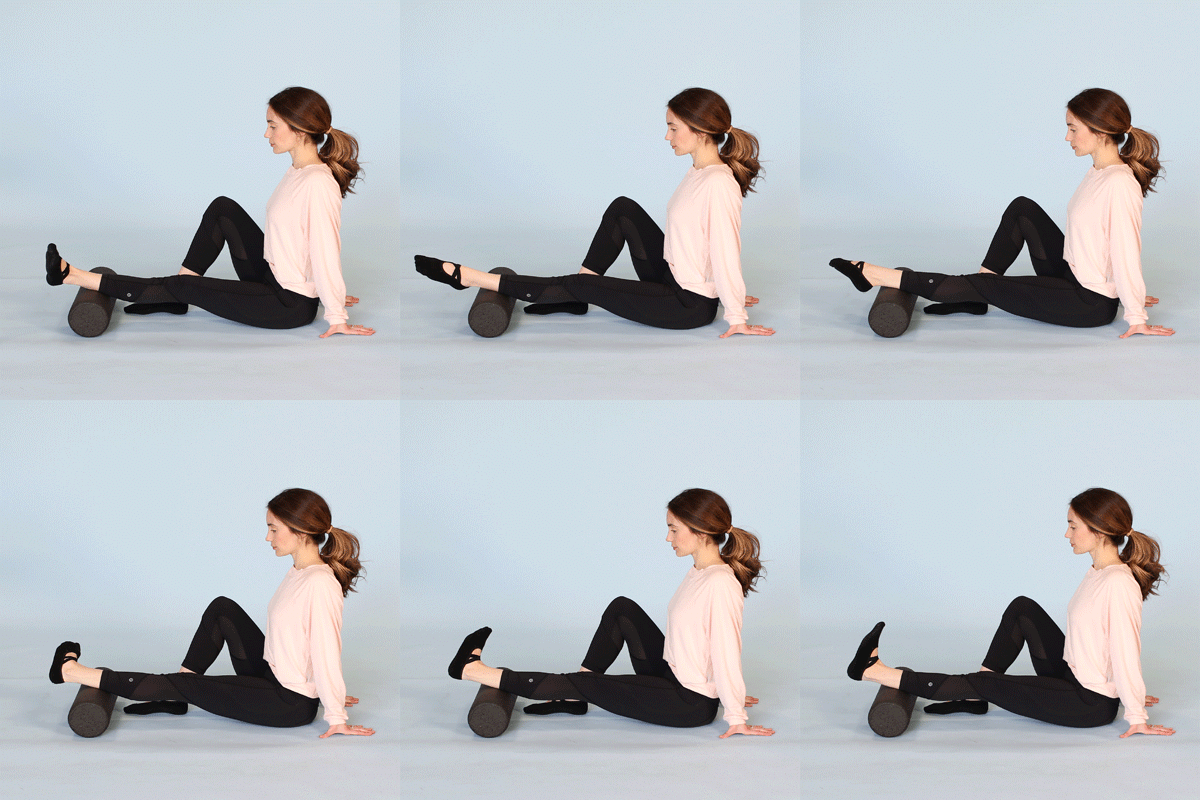
Range of motion exercises can help promote blood flow and maintain the full range of movement in your ankle. Ankle circles are one of the
- Sit on the floor and prop your leg up on a rolled-up towel, pool noodle, or foam roller to keep your heel off the floor.
- Slowly move your ankle in a circular motion clockwise. Perform this 10 times, then move the ankle in the other direction for the same number of reps.
If there’s no pain, you can repeat this 2 or 3 times.
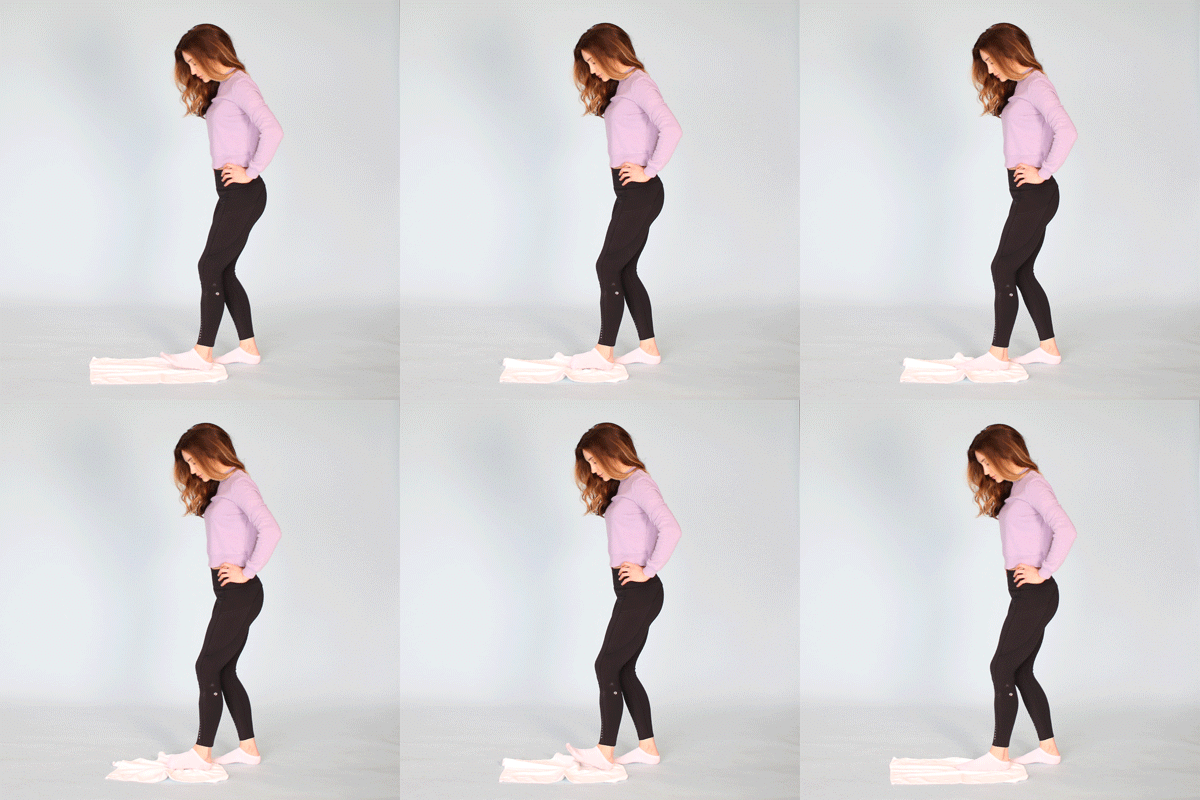
Towel scrunches are a gentle exercise that may help improve the flexibility, movement, and strength in your feet and ankles. You can perform this exercise seated or standing.
- Place a small towel on the floor in front of you.
- Gently grab the towel with your toes and scrunch it up. Do this twice.
- Release the towel and, in the same position, push it back out with the outside of your toes.
- Perform this 8 to 10 times.
The towel stretch can help gently stretch your calf muscles and Achilles tendon, which attaches the muscles of your calf to your heel bone, passing behind your ankle.
You can perform this exercise with a towel, a lightweight resistance band, or a hip belt.
- Sit on the floor with your leg stretched out in front of you.
- Wrap a towel around the ball of your foot. Gently pull back on the towel so your toes move toward you.
- Hold the stretch for 15 to 30 seconds.
Don’t overdo the stretch. You only need to feel a mild to moderate stretch on your calf muscle.
This is a popular exercise for stretching the back of the leg.
- Stand facing a wall or in front of a countertop and put your hands on it for support.
- Place your injured ankle about one step back and your good foot forward.
- Keeping your back heel flat on the floor, slowly bend the forward knee until you feel a moderate stretch in the calf on your injured side.
Repeat this 3 times, holding each stretch for 30 seconds.
This exercise can be performed seated or standing. If standing is too difficult or causes pain, then sit on a chair.
- Stand with your hands in front of you, resting against a wall, countertop, or chair back for support.
- With your feet shoulder-width apart, slowly rise up on your toes. Hold this position for 5 seconds.
- Come back down and slightly rock back on your heels, lifting your toes.
- Start with 10 reps and gradually work up to 20 or more.
Remember, you only want a moderate stretch and no pain. When these become easy, you can switch to doing it only with the toes on your injured side.
Once you have a good range of motion and can comfortably bear weight on your sprained ankle, then you can add strengthening exercises to your routine.
This is a variation of the towel stretch, but it uses a resistance band for added resistance.
- Sit on the floor. Extend your injured leg out and place the elastic band around the ball of your foot. Hold the two ends.
- Bend the other leg at around 90 degrees.
- Slowly push your ankle forward like you’re pointing your toe. Then slowly bring it back.
Repeat this 10 times. Don’t use the band if you experience any pain or if your ankle feels unstable.
This exercise can help strengthen the muscles and ligaments on the top of your foot and ankle.
- Tie your resistance band around a heavy object such as a desk or table leg.
- While sitting on the floor, hook your toes and upper foot into the band.
- Slowly pull your foot back toward you and return it to vertical position. Repeat this 10 times.
Two variations of this exercise can further help strengthen the muscles in your ankle and allow it to move through its full range of motion. Instead of facing the band directly, you’ll want it on the outside or inside of the injured ankle.
- Ankle out: Start with the resistance band on the inside of the injured ankle. Place your foot inside the end of the band, then slowly move your foot outside against the resistance band and back.
- Ankle in: Start with the resistance band on the outside of the injured ankle. Place your foot inside the end of the band, then slowly move your foot inward against the resistance band and bring it back.
A
When you have a sprain, nerve fibers are damaged. As you recover strength, your brain has to regain its sense of where your ankle is and how precisely to move it. This sense is called proprioception.
Use a chair back or a countertop for extra support when you begin this exercise.
- Stand on your injured foot and slowly lift the other foot off the floor behind you.
- Hold this for a few seconds at first. Then build up to 30 seconds and 1 minute, if you can.
As your balance gets better, there are several ways to make this exercise more difficult:
- don’t use any additional support
- close your eyes during the exercise
- stand on a pillow instead of the solid ground
- stand on a pillow, close your eyes, and don’t use additional support
Single-leg calf raises combine elements from all of these exercises to help strengthen the muscles that support your ankle, while working on stabilization, balance, and range of motion.
Use a chair back or a countertop for extra support when you begin this exercise.
- Stand with your hands on a wall, countertop, or chair back, then lift up your good leg behind you so that your weight rests on the leg with the injured ankle.
- Push yourself up, raising your heel until you feel your calf working. Hold this position for 2 seconds, then lower yourself.
As you get stronger, try performing this exercise with the support of a few fingers. When you’re stronger, do this without any additional support.
Speak with a primary care doctor if you injure your ankle and experience symptoms like sharp, sudden pain, bruising, swelling, and skin discoloration.
They’ll help develop a treatment plan that may involve rest, exercises, and pain relievers. If your symptoms don’t improve after 10 days, then make another appointment to see a doctor.
They’ll reevaluate your treatment plan and can refer you to a physical therapist.
If you repeatedly experience ankle sprains, a doctor may recommend
Exercises that focus on stretching, strengthening, and moving the ankle through its full range of motion are important aspects of an ankle sprain management plan.
Speak with a doctor if you experience an ankle injury. They can help develop the best treatment plan for you and an exercise program to suit your specific needs.