















Tips for keeping your home clean and managing germs in winter include having a regular disinfecting routine, managing humidity, revamping your entryway, and more.
More indoor activity and dry indoor air can increase the likelihood of getting sick during the winter.
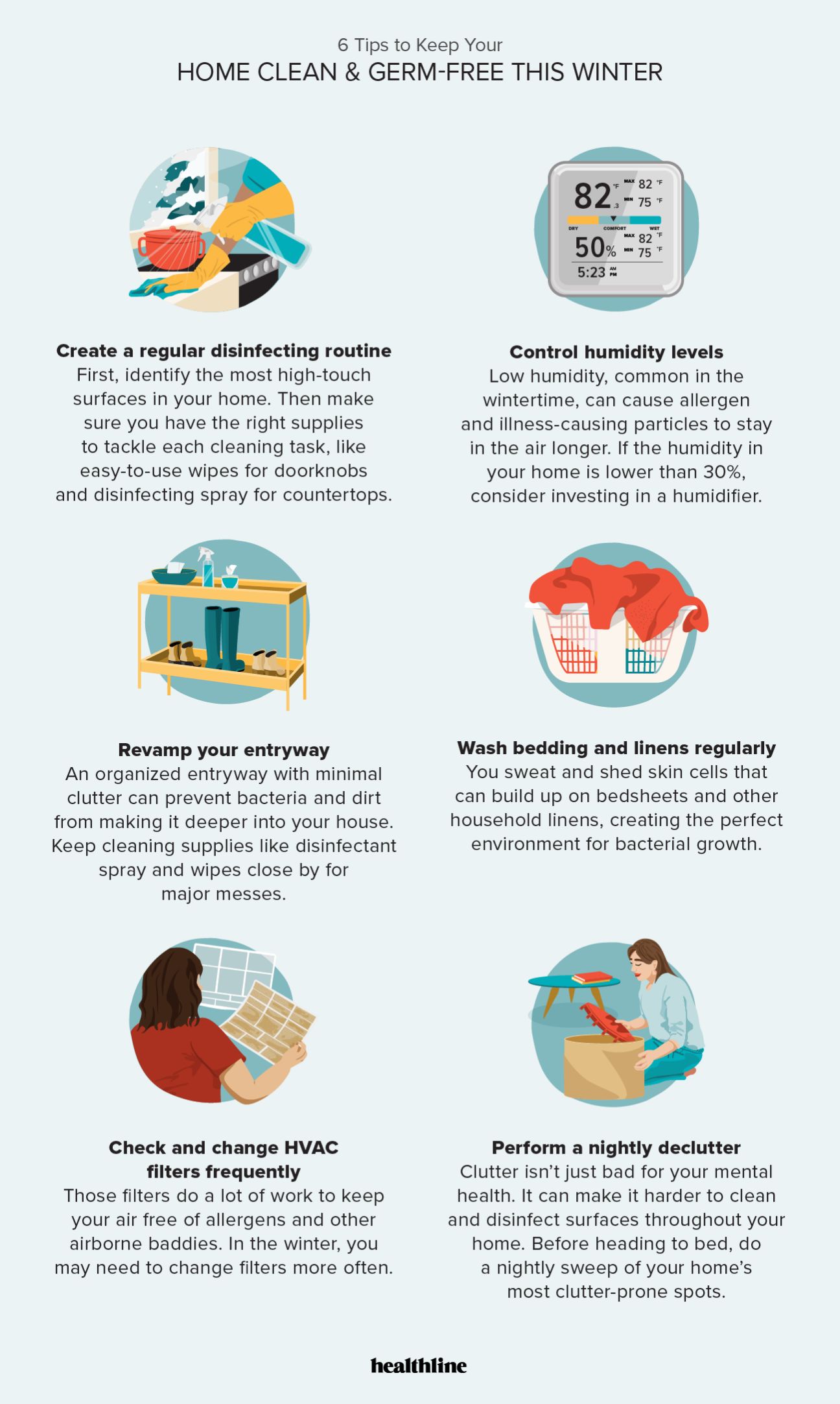
The infographic and accompanying article below provide tips on keeping your home clean and germ-free throughout the winter.
First, let’s break down the difference between cleaning, sanitizing, and disinfecting. According to the
- Cleaning: This process involves scrubbing a surface with water and soap. It can help remove most, but not all, germs and dirt from a surface.
- Sanitizing: This process involves using diluted bleach or sanitizing sprays to reduce the germs on a surface. Clean and sanitize items and surfaces that come into contact with the mouth, including toys and food-contact surfaces. Cleaning a surface before sanitizing it is important.
- Disinfecting: This process involves the use of stronger bleach solutions or chemicals. It can help clear most germs on a surface or object. Cleaning a surface before disinfecting it is a good idea.
Before you start sanitizing and disinfecting, it’s a good idea to identify your home’s most high-touch surfaces, such as:
- doorknobs
- light switches
- countertops
- appliance handles
Clean these surfaces most often. Also, regularly wipe down visibly dirty surfaces.
Take extra care to sanitize or disinfect if someone in your household feels unwell or has been in close physical contact with someone who is or feels unwell.
Keeping a list in your head of surfaces to clean can feel overwhelming. Create a paper or digital checklist of daily and weekly cleaning tasks to help alleviate some of this overwhelm.
The humidity level in your home may affect your risk of getting sick with a viral illness.
A
Additionally, very dry indoor conditions may worsen allergy symptoms, while excessive humidity can promote other allergens, such as mold growth. It is best to keep indoor relative humidity below 60%, ideally between 30% and 50%.
Many home thermostats can detect and display indoor humidity levels. If your home’s humidity drops under 30%, consider investing in a humidifier and taking extra precautions as cold and flu season arrives, which can include more frequent handwashing and disinfecting surfaces.
You regularly shed sweat and skin cells throughout the day and at night. All that grime can build up on soft surfaces around your home, including bedsheets, pillows, and blankets.
Aim to change and wash your sheets weekly to prevent the buildup of bacteria-causing dirt and grime. If you have a skin condition such as eczema, it may be beneficial to change the sheets more regularly, such as twice per week.
Regularly laundering bedclothes can also help minimize allergy symptoms by targeting allergens and dust mites hidden in your sheets.
Here are a few tips to maximize your efforts:
- Use hot water when washing sheets and bedding.
- Get a second or third set of sheets to make swapping them out easier.
- Depending on care instructions, use a high heat dryer setting to dry your sheets or iron them after air drying.
A tidy, organized entryway with minimal clutter may help prevent germs from entering your home.
Here are a few tips for maintaining a clean and decluttered entryway:
- Take off your shoes as soon as you enter your home.
- Create a designated spot for outdoor footwear, such as a boot tray or shoe rack.
- Use a basket or another receptacle to collect items that don’t belong in the entryway. Then, regularly empty it.
- Install a light fixture to ensure proper entryway lighting, making spotting dirty surfaces easier.
- Organize cleaning supplies, like disinfectant spray and wipes, especially for your entryway, and keep them nearby on a shelf or in a basket.
If you have a heating, ventilation, and air conditioning (HVAC) system, it’s important to regularly change the filters to keep your home’s air clean.
How frequently you need to change the filters can depend on the thickness of the filters. Thicker filters tend to last longer and trap more allergens and illness-causing particles.
Some smart thermostats take the guesswork out of filter maintenance and can remind you to change your filter based on your usage.
If you don’t have an HVAC system, consider investing in an air purifier to help with indoor air quality.
For some people, going to bed in a messy house may cause anxiety and high stress levels in the morning.
Waking up to a tidy kitchen, living room, or bathroom can help remove some of that stress you might feel when you wake up.
Even a minimal cleanup before bed can help provide peace of mind. Plus, removing clutter can make it easier to clean and disinfect your home’s surfaces.
Before heading to bed, put away loose items in clutter-prone spots such as countertops, entryways, and bathroom sinks.
If putting everything in its rightful place sounds time consuming, collect everything in a basket and start by putting away just one or two items before going to sleep.
Tips for managing germs and keeping your home clean in winter include creating a disinfecting routine, managing humidity levels, regularly changing bedding and HVAC filters, revamping your entryway, and decluttering.
A bit of preparation and the right tools can help you keep your indoor environment clean and germ-free, minimize germ transmission, and stay healthy during the winter months.
30 Days of Winter Wellness
Day 12
Here are some quick ways you can help keep your home clean and germ-free this winter:
- Create a disinfecting routine. Begin by identifying high-touch areas, such as countertops and door handles, and then regularly wiping them down and disinfecting them.
- Regularly wash bedding and linen, ideally once per week. You may benefit from washing bedding more frequently if you have a skin condition such as eczema.
- Manage humidity levels to help reduce the risk of viral transmission. You may wish to invest in a humidifier if you do not already have one.