














Rearranging your space can reduce stress, boost mood, help you embrace change, increase calm, and help you feel more grounded in your home.
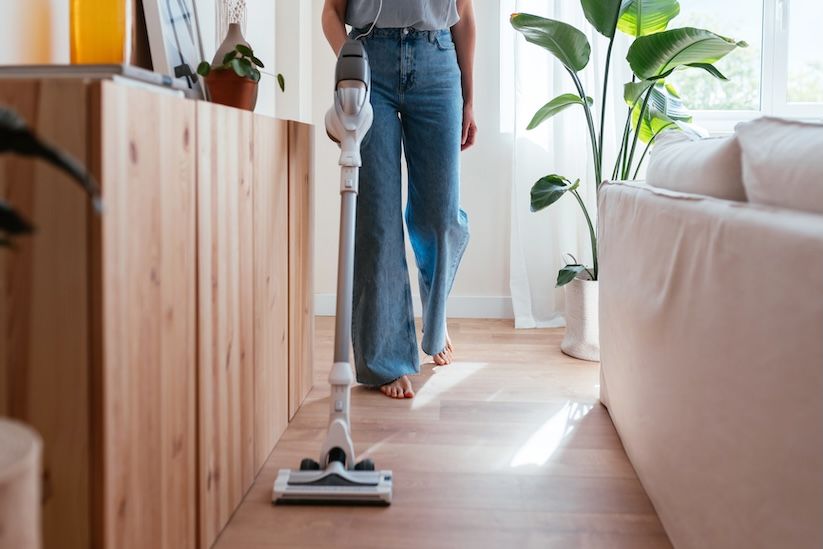
A few times each year, I find myself pausing in the room I’m in — sometimes the living room or the bedroom, sometimes my home office — and with quiet determination, suddenly channeling the urge to move things around. I have experienced this since my childhood.
When I was around 9 years old, I dragged my mattress around so that the head of it was in my closet. It felt suddenly new, exciting, and cozy. When I was in my teens, my room was quite small, but I still managed to shift my bed and dresser between the two layouts at least once per year. In various apartments, I moved furniture around as space allowed.
Now that I own a home, I continue to find rearranging things an indispensable way to boost my mood in the middle of winter, to create a sense of fresh beginnings in the spring, or to cozy in during the fall.
Turns out, it’s not just my own proclivity for decluttering and organizing, or exposure to my parents’ work in interior design, that influences this. There are some serious benefits to rearranging your space.
Rearranging your space can help to:
- break up seasonal stagnancy (hello, long winters)
- create a sense of control and forward momentum after a major life change, such as a breakup
- reduce stress and boost mood
- tap into creativity
- align your inner growth with your outer environment
- provide a chance to declutter and deep clean
- increase function and comfort
Your space should reflect who you are now, the life you have, and the life you aspire to, not who you were in the past.
Though it mostly happens on a subconscious level, your environment strongly affects your emotions and behavior — and your home is likely where you spend a lot of time. Especially if you work from home.
The home environment directly impacts the restorative effects on stress and fatigue, well-being, attention, and happiness.
While you can’t change your window views or room sizes without moving, you can improve your home environment by rearranging, decluttering, and choosing decor that is pleasing to you.
Having a clean, organized living space can help you feel calmer and more in control.
If you currently live somewhere that doesn’t quite feel like “home” for whatever reason, rearranging furniture and decor is a way to participate in the nonstructural design of your environment, which can create a deeper sense of ownership over your space (not to mention an increase in dopamine).
You control the mood. You control the atmosphere. Rearranging and decluttering is a grounding process that also helps you embrace change.
When looking at the room you wish to rearrange, one of the most important things to consider is the flow of traffic and how you wish to move through the space. There should be a good flow of energy through the space. This also aligns with principles of feng shui.
If you don’t have the space or the layout to move the main pieces of furniture, and there’s only one way the bed or the couch can go, focus on shifting supporting pieces around — the art on your walls, the way you organize a shelf, or shifting things like a side table or lamp.
Also consider things like:
- Lighting: Natural light can significantly impact your well-being at home. Is there a reading chair that would be used more if it were near the window? A piece of furniture that is currently blocking a window that could move elsewhere? Maybe moving your bed to the other side of the room means you can watch the sunrise from bed. Make sure your windows are clean and, if possible, avoid heavy curtains. Reflective surfaces, like light-colored walls and mirrors, can also help illuminate your existing space.
- Proportions: In general, larger area rugs are better for pulling a room together, but depending on your space, it may look better to have all the legs of the furniture in the room on a large rug, just the front legs of the furniture on a medium rug, or just a center piece like a coffee table on a small rug.
- Social space vs. personal refuge: A small cluster of seating invites social interactions, while a small reading nook or cozy craft corner on the other side of the room can be a personal safe space. Both of these are important.
- Spaces between: Have a porch, balcony, window seat, sunroom, or alcove? These are in-between spaces. Avoid stagnation and encourage use by keeping them tidy.
When you rearrange a room (or several rooms), you may also wish to use this time to consider what you want to keep and what to let go of that no longer aligns with your life.
Ask yourself what feels good. Take a tour of your home as if with fresh eyes and take your time. Once everything is moved to your liking, your new-yet-familiar surroundings will feel more satisfying.
And if in 6 months or a year you want to change it up again, that is A-OK. Though be warned: this may inspire you to take things to the next step by repainting walls and starting DIY decor projects. Have fun!