














The Fast Facts
- Grocery delivery services have become a more desirable way to get groceries as it offers convenience and control.
- Grocery services like Misfits Market and Thrive Market can deliver product, snacks, pantry items and other food-related products.
- Services like Walmart and Instacart can deliver groceries, as well as electronics, personal items, household items, and more.
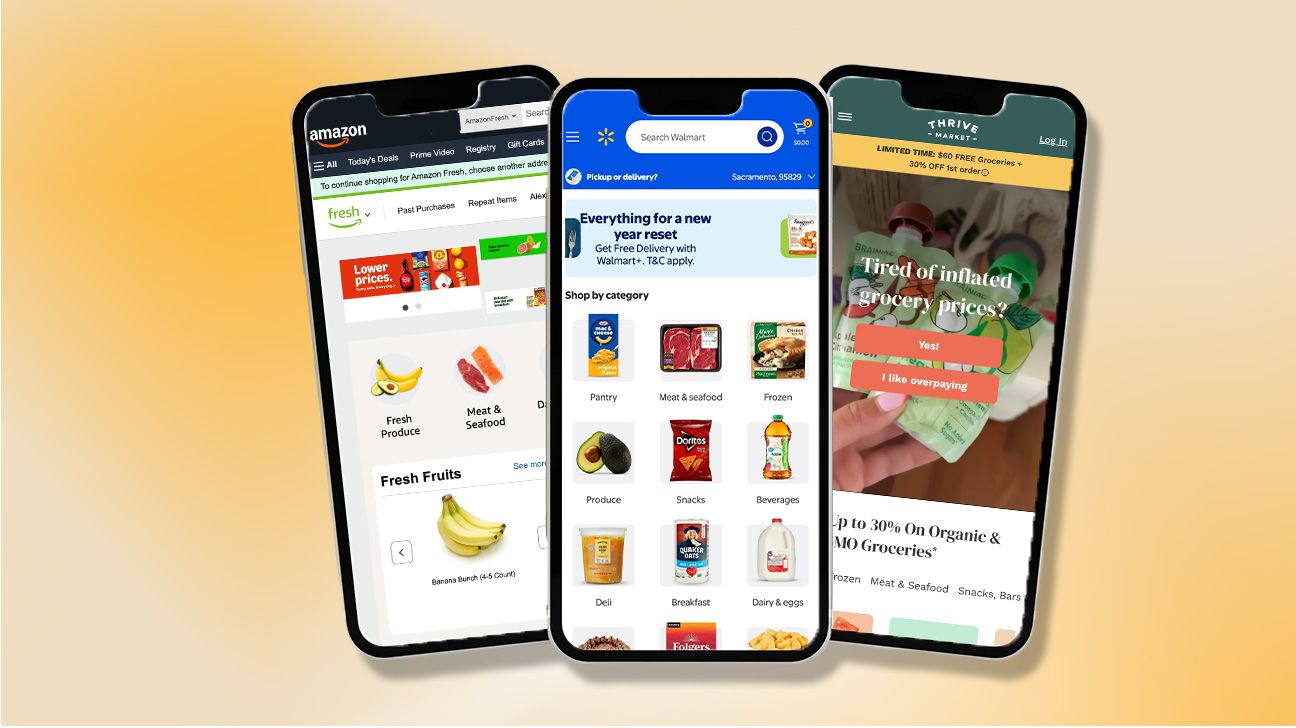
Grocery delivery can be a convenient option when you have a busy lifestyle, lack easy access to grocery stores in your vicinity, have particular requirements, or more.
Now, there are a variety of grocery delivery services that offer plenty of dietary options, price points, and delivery times.
To round up the best grocery delivery services, we looked at factors like membership fees, geographic availability, variety of food, and more. However, the best grocery delivery could vary based on what you’re looking for, how soon you need it, and whether you can give any input in the shopping.
To get started, take a look at our picks, take note of what you like, and go from there.
Here’s how we chose the best grocery delivery services:
- Service area. There are many small- and big-name grocers that were considered for this roundup.
- Fees and membership options. All grocery delivery services have some fees involved, but we tried to choose those that offered cost-saving memberships for people who order grocery delivery regularly.
- Product availability. There are many small grocery delivery services that offer a very narrow selection of groceries, but the ones on this list offer a wide selection of many different types of grocery items — comparable to what you may find at your local grocery store.
- Quality and reliability. All of these services are large, popular, and widely used. They also provide groceries at a variety of quality levels to meet the needs of various households.
First and foremost, choosing a grocery delivery service depends on which services are available in your area. If you live in a large city, you’ll have many more options than if you live in a more rural area.
Next, you’ll want to consider which delivery service offers food that fits your dietary needs and preferences.
For example, you may want to evaluate whether it also offers staple foods, fresh produce, and frozen or refrigerated foods, or whether you’d need to make an additional grocery order from a different service for those items.
Then, you should consider pricing and how often you plan to use the delivery service. If you’re only going to use grocery delivery services infrequently — for example, less than once per month — you’ll want to choose the service that has the lowest per-order fees.
However, if you plan to use grocery delivery regularly, you’ll want to consider a membership option that would give you the best bang for your buck.
Finally, you’ll want to weigh other factors, like the availability of same-day delivery, if they have an app or just a website, and how their customer service is.
Grocery delivery has become a much more desirable option, as many people appreciate the convenience of having their groceries delivered.
There are several grocery delivery services available, some of which cater to unique dietary needs, and some of which are only available in certain areas.
A tip is not required, but it’s customary and highly suggested to tip your delivery driver if your grocery delivery service hires its own drivers.
Instacart, GoPuff, and Walmart, for example, hire third-party drivers to deliver eligible same-day orders.
Many people use grocery delivery. It’s a good choice for elderly people who may have trouble getting to the store or carrying groceries, as well as families with small children who don’t want to get the kids out while shopping. This is actually the reason I started using grocery delivery after my youngest child was born.
Additionally, grocery delivery is a good choice for people who find it difficult to get to the grocery store because they’re busy with work or other obligations.
Finally, many people used grocery delivery during the COVID-19 pandemic to maintain social distance, and people who are immunocompromised may choose to continue to do so for this reason.
Grocery delivery is more expensive than in-store shopping, but it offers a number of benefits that may be worth the added price, such as:
- convenience
- fewer impulse purchases
- more saved time
- fewer trips to the grocery store
This depends on your needs, where you are located, and what services are available in your area. For instance, if you follow a specialty diet, you may benefit the most from Whole Foods or Thrive Market.
If you’re looking to save as much money as possible, Walmart or Amazon Fresh may be a good fit.
Very few grocery delivery services offer completely free delivery. You may be able to unlock free delivery with a paid membership, for instance, with Walmart+, Instacart Express, or Amazon Fresh.
From what we’ve seen, all grocery apps require you to pay with a credit or debit card or SNAP/EBT.
Yes, groceries themselves may be more expensive through third-party apps like Instacart, and you may also need to pay service and delivery fees.
Some grocery delivery services may also mark up products, so you may be paying more for an item online than in-store.