














Diabetes alert dogs can offer a significant benefit for poeple with diabetes who may experience high and low blood sugar emergencies. These medical service animals do not replace blood sugar management tools and technologies, but may help those who need additional diabetes care support.
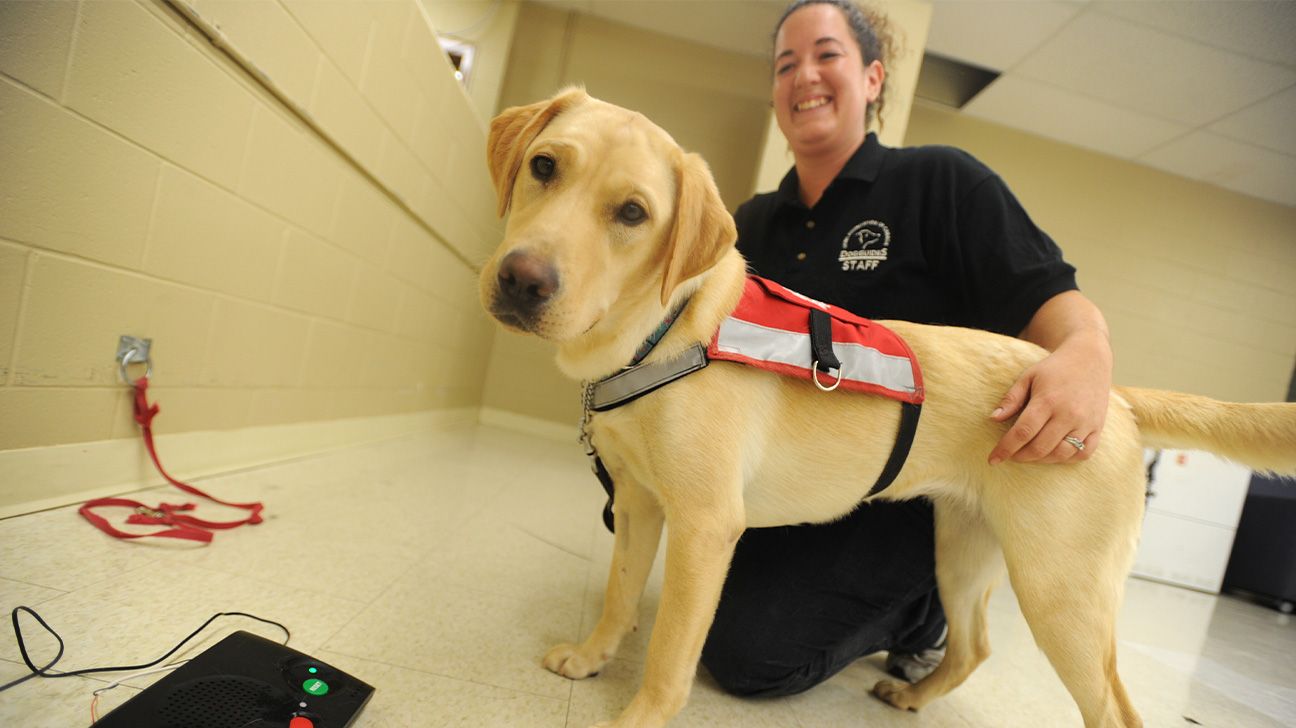
Diabetes alert dogs, or DADs, are trained to recognize the distinct scents linked with this condition, including when someone with diabetes experiences a low or high blood sugar level.
With specialized training, these medical service dogs can detect specific smells. This often includes the fruity-smelling ketones a person’s body produces during high blood sugar, or the unique scent of low blood sugar in the body.
A diabetes alert dog isn’t a replacement for checking blood sugar levels. But having one of these service animals may serve as another safeguard for those who experience fluctuating blood sugar levels, including those who may not experience any symptoms to alert them to their blood sugar level.
A diabetes alert dog is trained to recognize changes in a person’s plasma and blood chemistry, which often allows the dog to alert the person or the caregivers to take action 15 to 30 minutes before symptoms occur.
Dogs are trained to react differently when their owner is experiencing one of these blood sugar changes, including
- jumping on the owner
- pawing at or putting a paw on the owner’s leg or body
- sitting and staring at the owner
- touching the owner with its nose
- holding a particular toy in their mouth as a signal
Dogs may also perform other activities along with alerting their owners to changes in blood sugar levels. These can include:
- bringing needed objects, such as medications or low treatment
- alerting other family members if an owner needs assistance
- retrieving a cellphone for assistance
- possibly dialing 911 using a special device if assistance is needed
There are several service dog-training programs across the country. These groups include the National Institute for Diabetic Alert Dogs (NIDAD).
When a person’s blood sugar drops, there are spikes of the chemical isoprene in their breath. It’s believed that dogs can smell this change of chemical makeup on a person’s breath.
These dogs not only smell the low and high blood sugar, but they can detect when you’re rapidly falling or rapidly rising, too, well before you cross the threshold you’ve trained them to acknowledge as low.
Those who’ve researched diabetes alert dogs point to something in our saliva, though researchers don’t clearly understand what the dogs smell when they alert for low or high blood sugars.
Not all people with diabetes smell the same way when their owners’ blood sugars are high, low, or rapidly rising or falling — whatever that smell is, all dogs can smell it.
Dog breeds trained to perform diabetes-related alert dog duties may include:
- golden retrievers
- Labrador retrievers
- mixed sporting dog breeds
- poodles
Most service dogs are between 1 and 2 years old when they are placed with their owners, according to the NIDAD.
If a person wishes to train a dog to become a diabetes alert dog, they can submit it for testing to determine if the dog has the required temperament and scenting ability.
Not everyone with diabetes may benefit from or need a diabetes service dog. People who might benefit from diabetes service dogs include:
- those with hypoglycemia unawareness
- those who use an insulin pump or insulin injections
- those who experience low blood sugar levels frequently
- children who require frequent blood sugar checks while sleeping
- college students living away from home or those who live alone who may require additional support
Research is mixed on the benefit and overall success of diabetes alert dogs, but this 2019 study and many others do show that diabetes alert dogs can detect changes in their owner’s health and act differently in those scenarios.
Along with countless anecdotal stories of how these dogs work for diabetes management,
This older study by the American Diabetes Association (ADA) reported the following benefits for those who have a diabetes alert dog:
- decreased worry about hypoglycemia/hyperglycemia (61.1% of respondents)
- improved quality of life (75% of respondents)
- enhanced ability to participate in physical activities (75% of respondents)
However, this
You can contact a professional organization, such as Assistance Dogs International, to learn more about programs in your area that train diabetes service dogs. You may also ask your endocrinologist for recommendations for potential dog-training organizations.
You can also contact organizations that train service dogs directly. Many of them have online applications where individuals interested in obtaining a service dog can learn more about the process. Many organizations will ask for:
- your medical history
- letter(s) of reference, which may be personal or professional
- application form with information such as your address and age.
The selection and match process can vary based on the organization.
The selection process can be extensive and often requires a potential owner to meet with a dog several times before the dog is specifically trained to recognize the owner’s unique scent.
Having a diabetes service dog is an investment in time and funds, and is a relationship that will ideally last at least a decade for the dog and owner
A legitimate service dog of any kind can easily cost more than $10,000 or $15,000, depending on how much of the training you’re willing to do yourself and where you get your dog from.
The diabetes alert dog organization Dogs 4 Diabetics estimates the cost of breeding, raising, and training an alert dog at around $35,000.
Certain nonprofit agencies may provide diabetes alert dogs at low cost, and sometimes even for free, but their waiting lists tend to be long.
The most expensive option is acquiring a fully trained dog, but keep in mind that you’ll still need to train the dog to alert you after it becomes yours. Regardless of the dog’s stage of training when you acquire it, you’ll need to commit time and effort to the process for it to be successful.
Insurance companies may pay for the costs associated with a diabetes service dog.
However, their owners are often required to carry health insurance for the dog, as well as provide for food and other veterinary expenses associated with caring for it.
Resources to help get a diabetes alert dog
Here are a few trusted sources for service dog training and service dogs:
- Medical Mutts
- Service Dog Academy & YouTube Channel
- Diabetes Alert Dogs of America
- National Institute of Canine Service and Training
- Canine Partners for Life
- Early Alert Canines
- 4 Paws for Ability
- Can Do Canines
Regardless of how much you spend on a service dog, do your homework and ensure they are reputable and legitimate.
Diabetes alert dogs can offer a significant benefit for poeple with diabetes who may experience high and low blood sugar emergencies.
While these service animals do not replace blood sugar management tools and technologies like continuous glucose monitors (CGMs), they can offer another option for those who might need additional support in managing their condition.
These diabetes-related service dogs can be quite expensive and difficult to access, but reputable organizations can assist in understanding the costs and deciding if a DAD might be an option to consider.