














The Fast Facts
- Growing research on CBD oil for joint and arthritis pain suggests it may help.
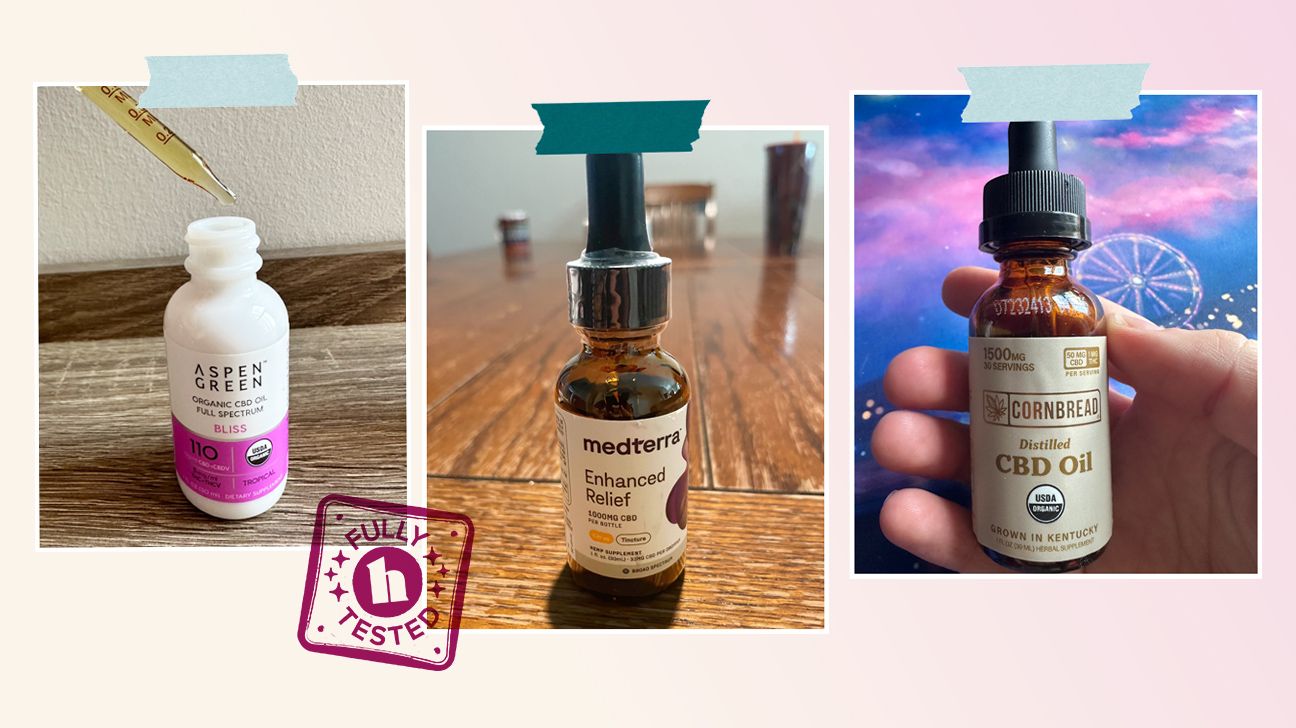
- Our editors tested CBD oils for managing pain. Read about their experiences and learn more about CBD oils.
- Our testers’ top picks are Medterra Enhanced Relief for its fast-acting pain relief and Cornbread Hemp for its quality and effectiveness, with our reviewers noting they both eased tension and aided relaxation.
Joint pain from conditions like arthritis can be incredibly uncomfortable and disruptive. It can affect daily life, interrupting sleep and limiting activity. Sometimes, the pain can feel debilitating.
As CBD has gained popularity, some people are trying it to help manage their joint pain — and many are finding that it helps.
While more research is needed on its effectiveness, there’s some indication that CBD may be a viable alternative to medications like anti-inflammatories and opioids for some joint pain relief.
Read on to learn more about the potential benefits of CBD oil for pain, see which items made it to our editors’ top picks, and learn about our experiences testing each product.
Expert reminder about CBD
We offer our testers hands-on experiences using these CBD products, but it’s important to remember that CBD affects everyone differently.
“Each formulation has a different bioavailability,” Alex Nguyen PharmD, RPh, CPh, explains.
Bioavailability refers to how much of a substance, like CBD, is available for use after the body has processed it and it has reached its intended destination. Many things
When buying CBD, Nguyen says that buyers “can consider many factors [that may affect how a product affects you], such as taking full-spectrum vs. isolate products. You may also take into consideration the type of CBD.”
Finding the right type of CBD product for your needs can take some trial and error. Always be sure to follow directions closely and don’t exceed the stated doses. Stop taking products if you experience side effects, and speak to a doctor about how to safely incorporate CBD into your life.
—
Price per mg
—
$0.06
—
$0.05 to $0.07
—
$0.03
—
$0.07
—
$0.07
Before a CBD product lands on our “best of” list, it undergoes a rigorous vetting process, including careful screening and analysis by our medical review team.
We selected and tested each CBD oil for joint pain based on criteria we think are strong indicators of safety, quality, and transparency.
As a part of our vetting process, we consider important factors, including:
- the product’s composition, ingredients, and overall quality
- any third-party certifications
- the company’s reputation and business practices
- any lab test results
- marketing claims
Research into how CBD actually interacts with the body is still ongoing, but it seems to affect pain receptors.
According to a
However, studies on CBD for joint pain have primarily been done on animals.
An older
Recent preclinical research also supports its potential for rheumatoid arthritis. A 2025 study in cells and mice found that a high-CBD extract reduced inflammation and helped regulate immune function, highlighting possible benefits for humans.
While anecdotal reports suggest that CBD helps treat joint pain, more studies in humans are needed to understand the benefits of CBD for joint pain.
Pros
- Easy to use: Whether you’re going with CBD massage oil or an ingestible CBD oil, CBD products are fairly easy to use.
- Variety of potencies: It’s best not to go for a super strong product straight away, so many people starting out with CBD try out low potency products first. But many high-potency CBD oils are also available for experienced users, so there’s plenty of opportunity to find out which strength works best for your pain levels.
- Few side effects: Experts seem to agree that using CBD is relatively safe and shouldn’t produce serious side effects in most people. But it’s still important to talk with a healthcare professional before you take CBD, especially if you take any medications or supplements.
Cons
- Potential allergic reactions: When using topical CBD products, there’s always a possibility that you may experience a skin reaction. That’s why it’s best to patch test before applying topical CBD oil.
- More studies needed: We need more clinical research to say that CBD can definitively help treat joint pain.
- May interact with medications: Note that CBD may interact with certain medications and supplements. This includes those with a grapefruit warning, such as some blood pressure, heart rhythm, and mood medications. Before trying CBD, be sure to speak with a healthcare professional to help prevent any adverse reactions or interactions.
Arthritis encompasses any condition that causes joint inflammation. Joint pain is a common symptom of arthritis, but it may be caused by other conditions as well.
Arthritis-related joint pain is typically chronic, may come and go, and may have no obvious preceding cause.
How can you tell if you’re experiencing arthritis symptoms? Some clues can include having:
- pain that doesn’t go away
- discomfort, pain, and swelling
- stiff joints
- difficulty using your joints’ full range of motion
Acute joint pain comes on more suddenly than arthritis pain. Some potential causes of acute joint pain include:
Remember that arthritis is usually diagnosed with X-rays and only after symptoms have been present for some time.
MRI scans can offer more information, and you can request an MRI scan if the pain persists even after receiving normal X-ray results.
Here’s what to consider when shopping for CBD oil for joint pain.
CBD type
Not all types of CBD produce the same effects.
Some research suggests that CBD and THC together produce the entourage effect. This means that when the two cannabinoids are used together, they may be more effective than using either THC or CBD alone.
In other words, CBD products that are full-spectrum may be more effective for joint pain than CBD isolate, which only contains CBD.
Third-party testing
The FDA doesn’t regulate CBD products in the same way as pharmaceutical drugs. The FDA can issue warning letters to companies making wild health claims, but despite this, companies can still mislabel and misrepresent their products.
You’ll have to do your own research to ensure a company sells quality products. Check that the products come with an up-to-date, comprehensive certificate of analysis (COA) from a reputable third-party lab that shows exactly what the product was tested for and what was found in it.
Ingredients
Companies should be transparent about where they grow or source their hemp. If a company doesn’t provide information about how and where it makes its products, that’s a red flag.
If you’re specifically looking for CBD oil to help with joint pain, any quality CBD product may help.
However, ingredients like arnica and essential oils may provide additional pain relief in topical products. Warming or cooling ingredients, like menthol, may provide an added sensation that may help dull pain.
Always read the label on your CBD oil before using the product. Some oils are meant to be applied topically, while others are meant to be ingested. Some oils can be used either way.
You can rub topical CBD oil directly on the painful joint. But it’s important to do a patch test first to ensure you have no adverse reactions on your skin. Also, be sure not to put the oil on broken or irritated skin, and avoid generally sensitive areas of your body.
To take an ingestible oil, place it under your tongue and hold it there for up to a minute before swallowing. Alternatively, add the oil to your food or drinks.
For improved absorption, you can hold the oil under your tongue for around 2 to 3 minutes before swallowing.
Additionally, taking your dose after a meal that contains fat can also improve how well the oil absorbs in your body.
Dosage
Most CBD products, whether topical or ingestible, have recommended dose information on the bottle or packaging.
Dosage also depends on the person. An amount that works for someone else might be too much (or too little) for you. Start with the smallest dose and work your way up when in doubt.
If you don’t notice any effects immediately, don’t immediately take more. It can take time to feel the effects of CBD.
Research suggests that CBD is generally well-tolerated and does not cause serious side effects in most people. Topical CBD products are even less likely to cause adverse reactions because they don’t typically enter the bloodstream.
While CBD is considered safe, it’s not unusual to experience some side effects, including:
- appetite changes
- diarrhea
- weight changes
- fatigue
Topical CBD products may also cause allergic reactions in some people.
Talk with your healthcare professional before using CBD products if you take any of the following:
- prescription medication
- supplements
- over-the-counter (OTC) medication
CBD may interact with medications or supplements that have a grapefruit warning.
If you’re experiencing pain, swelling, or stiffness in your joints, you should contact a healthcare professional for a diagnosis and treatment plan. Other symptoms that may indicate it’s time to consult a professional include redness or discoloration of a joint, a joint that feels warm to the touch, or difficulty completing day-to-day activities.
It’s also important to speak with your healthcare professional if you’re considering trying CBD to relieve joint pain.
CBD interacts with the body’s endocannabinoid system (ECS), which helps regulate pain and immune responses. By influencing ECS receptors, it may help lower inflammation and calm overactive immune responses, which could reduce pain and swelling. However, more human studies are needed to confirm these effects.
fCPCPeople do use CBD oil for arthritis, but evidence showing that its effective for this condition is limited. A 2022 study found that CBD use was associated with improved perceived effects on arthritis symptoms. However, more human trials are needed to better understand the role of CBD in treating joint pain.
If you have joint pain in a specific area, applying a topical product right where it hurts may deliver better results. But people with chronic, full body pain may find they get more relief from ingesting CBD.
Ultimately, it comes down to your preference. Some people don’t love swallowing earthy-tasting CBD. If that’s you, you might want to try a flavored oil or a topical product.
This will vary from person to person. Start with a low potency option and work your way up to stronger options until you feel the effects of the CBD. Ultimately, it may take some time to find the right strength and dosage for you.
There is no definitive strength of CBD that is best for treating pain as everyone will react differently to CBD. Plus, studies specifically looking into which strengths are best for pain are limited.
If you are new to CBD, it’s best to start with a low dose and work up, never exceeding the recommended daily dose on your product’s packaging. Speak to a healthcare professional to get support while trying CBD.
There’s no guarantee that CBD oil will get rid of your joint pain. But there’s minimal risk in trying CBD products, so long as you choose a high quality product and talk with a healthcare professional before taking it.
More research is needed to confirm the link between CBD and pain relief, but what we know so far is promising. CBD may help relieve joint pain without serious side effects and habit-forming risks.
Before you try CBD for joint pain, talk with your healthcare professional. They can inform you about potential drug interactions and help you determine the right dosage.
Healthline has sole editorial control over this article. Potential uses for the products listed here are not health claims made by the manufacturers. The information in this article is intended to be general in nature. It’s not intended to be a substitute for medical advice from a healthcare professional. Healthline encourages you to make any treatment decisions with your healthcare professional.
Is CBD legal? The 2018 Farm Bill removed hemp from the legal definition of marijuana in the Controlled Substances Act. This made some hemp-derived CBD products with less than 0.3% THC legal at the federal level. However, CBD products containing more than 0.3% THC still fall under the legal definition of marijuana, making them illegal at the federal level. Some states have legalized CBD, so be sure to check state laws, especially when traveling. Also, keep in mind that the FDA has not approved nonprescription CBD products, and some products may be inaccurately labeled.